
The 2027 exam at a glance
| What to expect | |
|---|---|
| Date | Wednesday, May 5, 2027, Session 2 (the afternoon slot) |
| Start time | 12 p.m. local time at most US schools (look up your school) |
| Length | 3 hours of testing |
| Section I | 42 multiple-choice questions in 85 minutes, 50% of your score |
| Section II | 4 free-response questions in 95 minutes, 50% of your score |
| How you answer | Multiple choice in the Bluebook app; free response handwritten in a paper booklet |
| Calculator | Allowed in both sections: four-function, scientific, or graphing, and Bluebook has Desmos built in |
| Equations | College Board's reference sheet, printed and in Bluebook |
| Late exam | Wednesday, May 19, 2027, Session 1 (morning) |
| Scores | July 2027 expected; the exact release date has not been announced |
The noon start holds for every school in the lower 48 states, Hawaii, and Washington, D.C. College Board moved the start times in some other places for 2027, so if you test outside those areas, check your school's time with the lookup tool.
What changes in 2027, and why old practice tests look different
AP Physics 1 was redesigned for the May 2025 exam. The course grew from seven tested units to eight, with fluids added, and the free-response section became four questions of four fixed types. For May 2027, College Board has adjusted the timing again: the multiple-choice section gets two more questions and five more minutes, and the free-response section loses five minutes. The four free-response questions and their points stay the same.
| Exam | Multiple choice | Free response |
|---|---|---|
| May 2024 | 50 questions in 90 minutes (5 of them had two correct answers) | 5 questions (7, 12, 12, 7, and 7 points) in 90 minutes |
| May 2025 and May 2026 | 40 questions in 80 minutes | 4 questions (10, 12, 10, and 8 points) in 100 minutes |
| May 2027 | 42 questions in 85 minutes | 4 questions (10, 12, 10, and 8 points) in 95 minutes |
The multiple-choice pace barely moves. It was 2 minutes a question in 2025 and 2026, and it is still about 2 minutes in 2027. You feel the change in the free response, where the same 40 points now have to fit into 95 minutes instead of 100. When you practice with the released 2025 and 2026 papers, set the timer for 95 minutes, not the 100 printed on them.
Section I: 42 multiple-choice questions in 85 minutes
Some questions stand on their own. Others come in sets that share one setup or one table of data, so a single misread diagram can cost you several answers at once. Read the setup of a set slowly; the questions after it go faster.
Only right answers count. A wrong answer costs nothing, so never leave a question blank, even when time is running out.
What each unit is worth
| Unit | Share of Section I | Roughly this many questions |
|---|---|---|
| 1. Kinematics | 10–15% | 4–6 |
| 2. Force and Translational Dynamics | 18–23% | 8–10 |
| 3. Work, Energy, and Power | 18–23% | 8–10 |
| 4. Linear Momentum | 10–15% | 4–6 |
| 5. Torque and Rotational Dynamics | 10–15% | 4–6 |
| 6. Energy and Momentum of Rotating Systems | 5–8% | 2–3 |
| 7. Oscillations | 5–8% | 2–3 |
| 8. Fluids | 10–15% | 4–6 |
Forces and energy, Units 2 and 3, make up 36–46% of the multiple choice between them, roughly 15 to 19 questions. That is where a shaky understanding costs the most. Units 6 and 7 are the lightest, but a 5–8% unit is still two or three questions, and the free-response section can come from any unit: 2026's last question turned on rotational work and kinetic energy, which are Unit 6 topics.
What the questions ask you to do
College Board also weights Section I by skill, and those weights say more about how to study than the unit list does. Calculating a number with units gets only 20–25% of the weight. Another 15–20% goes to deriving an expression in symbols, which means the answer choices are formulas in letters, not values. The rest asks you to compare a quantity in two situations, predict how one quantity changes when another doubles or halves, or name the law that explains what happens and back it with evidence.
So practice physics in letters. Knowing without a calculator that a pendulum four times as long has twice the period, because the period depends on the square root of the length, is the kind of thinking most of Section I rewards.
Section II: four free-response questions in 95 minutes
The four questions come in the same order every year, one of each type. You read them on screen in Bluebook and write your answers by hand in a paper booklet. Only the booklet is scored: anything on scratch paper earns nothing, so work every step where the reader can see it.
| Question | Points | Suggested time | What it asks you to do |
|---|---|---|---|
| 1. Mathematical routines | 10 | 20–25 min | Analyze one situation with math: derive an expression in symbols, calculate a value, draw a free-body diagram or a graph, then make a claim and justify it with physics. |
| 2. Translation between representations | 12 | 25–30 min | Show one situation several ways: a diagram or bar chart, a derived equation, a graph. Then explain whether two of your answers agree, or predict what changes in a new case. |
| 3. Experimental design and analysis | 10 | 25–30 min | Design an experiment with the equipment you're given, then plot real data, draw a best-fit line, and use its slope or intercept to find a quantity. |
| 4. Qualitative/quantitative translation | 8 | 15–20 min | Make a claim in words and justify it, derive an equation for the same situation, then show whether the equation agrees with your claim. |
Look at what the section actually rewards. College Board weights it by skill too: 20–35% for drawing diagrams and graphs, 30–40% for the math, and 35–45% for designing experiments and arguing from evidence. Explaining in words and planning experiments are worth about as much as the algebra, or more. A page of correct algebra with no sentence about what it means leaves points on the table. Our FRQ guide goes through each type, with worked solutions and links to the complete official rubrics.
What the released questions were about
| Question | 2025 | 2026 |
|---|---|---|
| 1. Mathematical routines | A block dropped onto a moving cart sticks to it: momentum in an inelastic collision | A droplet from a fountain: projectile motion, then the volume flow rate out of the nozzle |
| 2. Translation between representations | A block slides down a ramp into a spring: energy bar charts, the spring constant, and energy–position graphs | Two disks collide on a track: momentum arrows, kinetic energy, and position graphs of each disk and the center of mass |
| 3. Experimental design and analysis | A meterstick balanced on a pivot with a spring scale: find a mass from torques, then from the slope of a graph | A block slides down a ramp onto a rough floor, then down a rough ramp past a photogate: find the coefficient of kinetic friction from a linear graph |
| 4. Qualitative/quantitative translation | A block released underwater, once in fresh water and once in salt water: how the liquid's density changes its acceleration | The same force pulls a string off each of two toys with different rotational inertia: which one ends up spinning faster |
Two exams is a small sample, but a pattern shows. By our count, seven of the eight questions drew on two or more units, so a question that opens on a collision can end on kinetic energy, and a projectile can turn into a flow-rate problem. Momentum or energy sat at the center of five of the eight. Fluids, the newest unit, appeared on both exams.
A time plan for 95 minutes
| Question | Points | Our plan |
|---|---|---|
| 1. Mathematical routines | 10 | 22 min |
| 2. Translation between representations | 12 | 27 min |
| 3. Experimental design and analysis | 10 | 25 min |
| 4. Qualitative/quantitative translation | 8 | 16 min |
| Back to anything blank | 5 min |
The last five minutes are there for a reason. On the 2025 and 2026 exams the on-screen clock turned red with 5 minutes left, and the proctor gave no warnings. When it turns red, stop polishing and go back to any part you left blank. Points are awarded one rubric line at a time, so a half-finished part can still earn a point or two, and an empty one can't. You can move between the four questions in any order.
Where students lost points in 2025
After the scoring, College Board publishes a report from the Chief Reader, the college professor who leads it, with the average score on every rubric point. The 2025 report is the latest, and the only one so far for the current format. The averages for the four questions were 4.74 out of 10, 6.09 out of 12, 4.93 out of 10, and about 4.6 out of 8: roughly 20 of the 40 points, or half.
The least-earned points share a pattern. Most of them asked students to connect a result back to the situation, and most students stopped one step short:
- 10% explained why friction between a sliding block and a cart doesn't change the block-cart system's momentum: the friction is internal to the system, so the net external force is still zero.
- 20% said how the slope of their proposed graph would give an unknown mass, and 28% used the slope of their best-fit line to calculate a mass.
- 22% justified a change in speed from an energy graph using both the gravitational and the spring potential energy.
- 32% said that a submerged block weighs the same in fresh water as in salt water, which is half of why it accelerates faster in salt water.
- 17% finished a derivation with a correct spring constant. Here the trouble was algebra: the report singles out operations with fractions, and written as .
Physics 1 is algebra-based, but the algebra is done with symbols and fractions, and that is where a correct idea most often turns into a lost point. The percentages are the average scores on one-point rubric lines, from the Chief Reader report and College Board's scoring statistics.
Habits the rubric rewards
- Start every derivation with a principle or an equation copied from the sheet. The prompts ask for it, and the rubric gives a separate point for a derivation that includes the named law, such as conservation of energy or Newton's second law. On most derivations in the 2025 and 2026 scoring guidelines, a correct final answer with no work earned the later points but not that one. Copy from the sheet rather than memory: the Chief Reader saw many derivations go wrong from a missing square.
- Answer in the letters the question gives you. An expression that still contains a quantity you were supposed to eliminate isn't finished.
- When a part says “justify,” write sentences. College Board defines it as reasoning beyond the math. Name the physical cause, and say which quantities change and which stay the same.
- Give every graph axis a quantity and a unit, such as “Force (N).” In 2025 many students wrote one without the other and lost the point.
- Draw one straight best-fit line with a straightedge, never connect-the-dots, then show the slope calculation and the equation that links the slope to the quantity you want.
Our FRQ guide takes each of the four question types apart, point by point, and the experimental design guide does the same for Question 3, where the slope points went missing.
Calculators and the equation sheet
Calculators
A calculator is allowed in both sections. Bluebook has Desmos scientific and graphing calculators built in, and you may also bring up to two handheld calculators of your own: four-function, scientific, or graphing. Graphing models must be on College Board's approved list, which includes the TI-84 Plus and TI-Nspire families. Bring one you already know well; exam day is a bad time to learn where the square-root key is.
On numbers, the course has a convention worth knowing: when a question needs a value for g, the exam uses . You won't lose credit for using 9.8 or 9.81 correctly instead. The equation sheet prints 9.8.
The equation sheet
College Board gives you its equation sheet, officially the exam reference information (the page itself is headed “Table of Information”), on paper and inside Bluebook, for the whole exam. It's the same sheet that's in the Course and Exam Description, and you can download it now. Only College Board's sheet is allowed. You can write on the printed copy, but nothing on it is scored and it stays in the room.
Make sure you study from the current sheet, dated 2025. If yours has a section on electricity or the wave equation , it's an old one from before the redesign. The current sheet adds center of mass, rotational inertia, rolling, and a whole fluids block: density, pressure, buoyancy, continuity, and Bernoulli's equation.
The sheet gives you equations, not judgment. It doesn't tell you when an equation applies, and some things you'll use in nearly every problem aren't on it at all:
- weight near Earth's surface, (the sheet lists , but not this);
- kinetic friction as an equation, (the sheet prints only the inequality );
- average velocity, ;
- , which links the rotation and oscillation equations;
- general conservation statements for momentum, mechanical energy, and angular momentum, or the conditions under which each one holds. Continuity and Bernoulli’s equation are printed applications of conservation to fluids.
Watch one symbol: means power in the sheet's left-hand column and pressure in the right-hand one. You don't need to memorize the rotational inertia of a rod, disk or sphere: when a question needs one, it gives it to you. Our equation sheet guide goes through every line of the sheet.
How the exam is scored
A machine scores the multiple choice. The free response is scored by AP Readers, college professors and experienced AP teachers trained on the rubric, who award its points one line at a time. In 2025, 840 Readers scored the Physics 1 answers of 174,992 students. The two sections count equally. College Board combines them into a composite score and converts that to the 1–5 scale.
There is no curve. AP scores are criterion-referenced, which means every student who meets the standard for a score gets that score, however many students that turns out to be. College Board also equates scores across years and across paper and digital formats, so a harder or easier version of the exam doesn't move the bar.
College Board hasn't published how many raw points each score takes on the current exam. Any calculator that shows exact cutoffs is estimating. Our score calculator says plainly what its estimate is based on.
| Score | College Board's recommendation | Equivalent college course grade |
|---|---|---|
| 5 | Extremely well qualified | A+ or A |
| 4 | Very well qualified | A−, B+, or B |
| 3 | Qualified | B−, C+, or C |
| 2 | Possibly qualified | None given |
| 1 | No recommendation | None given |
How many students score a 5
| Year | 5 | 4 | 3 | 2 | 1 | 3 or higher |
|---|---|---|---|---|---|---|
| 2024 | 10.2% | 17.9% | 19.2% | 26.1% | 26.6% | 47.3% |
| 2025 | 19.8% | 24.7% | 22.9% | 13.4% | 19.2% | 67.3% |
| 2026 | 19% | 24% | 25% | 15% | 17% | 68% |
Since the redesign, about one student in five has earned a 5, close to twice the 2024 rate, and the share earning 3 or higher jumped from 47% to 67% in a single year. Two things changed in 2025: the course and exam were new, and College Board set the score standards a new way.
The old method was a small panel. In 2015, 8 professors from 8 colleges set the Physics 1 standards. For 2025 College Board used what it calls evidence-based standard setting: 205 professors from 189 colleges judged the exam against their own courses, using the actual grades of 43,323 college students.
That doesn't make the exam easy. The professors estimated that their own students would do worse on the AP exam than in their classes: 86% of those students earned a C or better in the course, but the professors judged that only 64% would earn the equivalent on the AP exam. And a 3 holds up later. AP students with a 3 who took the next college physics course averaged a 3.21 grade in it, against 2.20 for the college students College Board compared them with.
A study plan for May 5, 2027
College Board recommends that you've finished geometry and are taking Algebra II at the same time. You'll also use basic trigonometry, sines and cosines in right triangles, which the course itself can teach you.
The plan has three stages. Through the year, close each unit properly before the next one starts. From March, practice the whole exam under time. In the last two weeks, fix what your mistakes say is broken.
Through the year: close each unit before the next
- Learn the topics. Watch the lessons for the unit, then explain each idea out loud without notes. If you can't, rewatch that part.
- Read the unit's cheat sheet and find every equation it uses on the official sheet, so you know where it lives on exam day.
- Do one released free-response question that uses the unit, timed, then score it yourself, point by point, with College Board's scoring guidelines. The notes below say which ones.
- Keep a mistakes log. For every point you miss, write the principle you missed and the corrected reasoning in one or two lines. In April this log becomes your study guide.
Unit 1: Kinematics (10–15%)
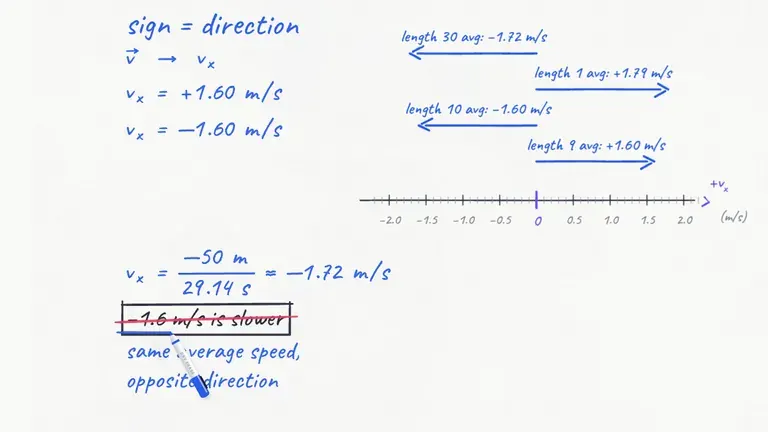
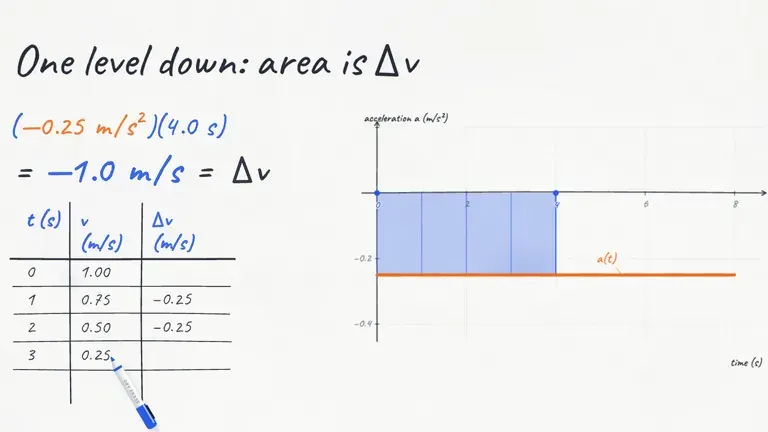
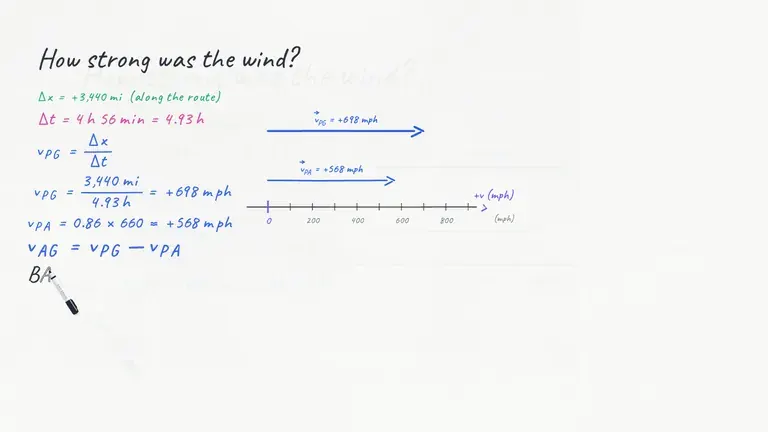
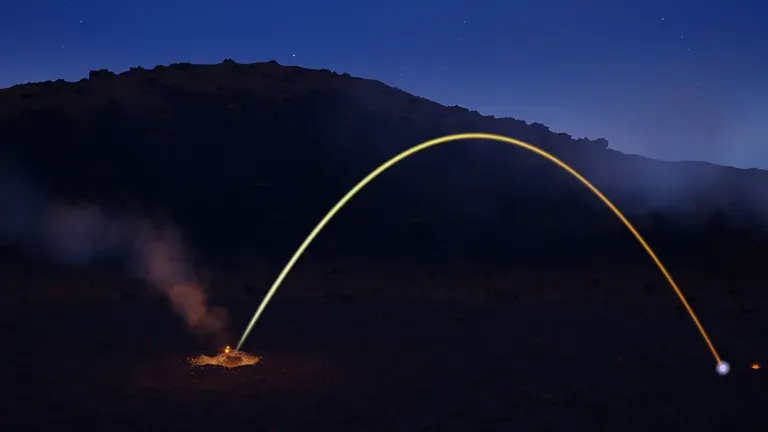
Most of this unit is reading and drawing motion graphs. The slope of a position–time graph is velocity, the slope of a velocity–time graph is acceleration, and the area under a velocity–time graph is displacement. Topic 1.5 carries the same ideas into two dimensions, for projectiles. Practice with 2026 Question 1, Part A, where the first two points went to graphing the droplet's velocity: the horizontal component as a flat, nonzero line, and the vertical one as a straight line sloping down through zero. Then review with the Unit 1 cheat sheet.
 Topic 1.126 minScalars and Vectors in One Dimension
 Topic 1.226 minDisplacement, Velocity, and Acceleration
 Topic 1.325 minRepresenting Motion
 Topic 1.425 minReference Frames and Relative Motion
 Topic 1.523 minVectors and Motion in Two Dimensions
Unit 2: Force and Translational Dynamics (18–23%)
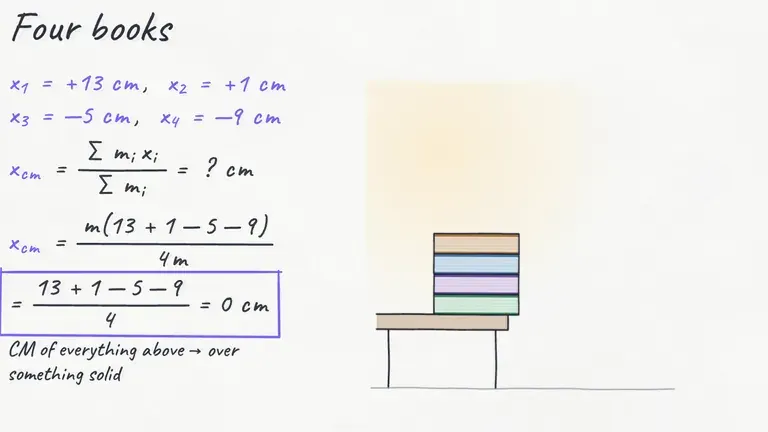
This and Unit 3 are the two biggest units. Everything starts from a correct free-body diagram: one arrow for each real force, starting on the object, labeled with what exerts it. Systems and center of mass (Topic 2.1) look minor here but carry the momentum unit later. Practice with the friction experiment in 2026 Question 3, and for diagrams, Question 1 of the 2024 exam (old format, still good physics). Then review with the Unit 2 cheat sheet.
 Topic 2.125 minSystems and Center of Mass
 Topic 2.228 minForces and Free-Body Diagrams
 Topic 2.323 minNewton's Third Law
 Topic 2.426 minNewton's First Law
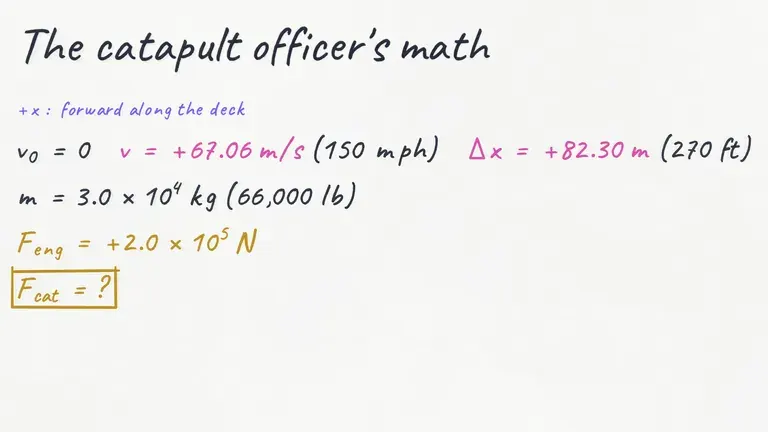 Topic 2.521 minNewton's Second Law
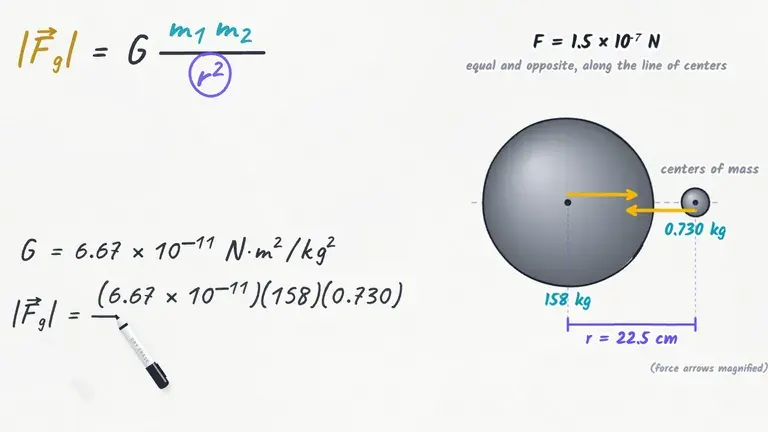 Topic 2.622 minGravitational Force
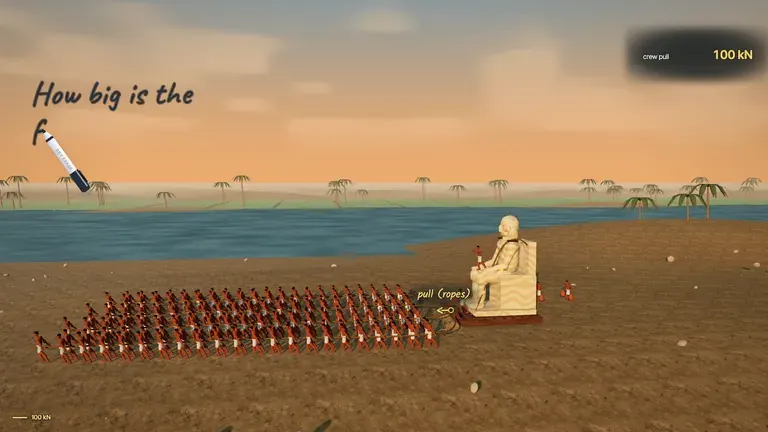 Topic 2.722 minKinetic and Static Friction
 Topic 2.825 minSpring Forces
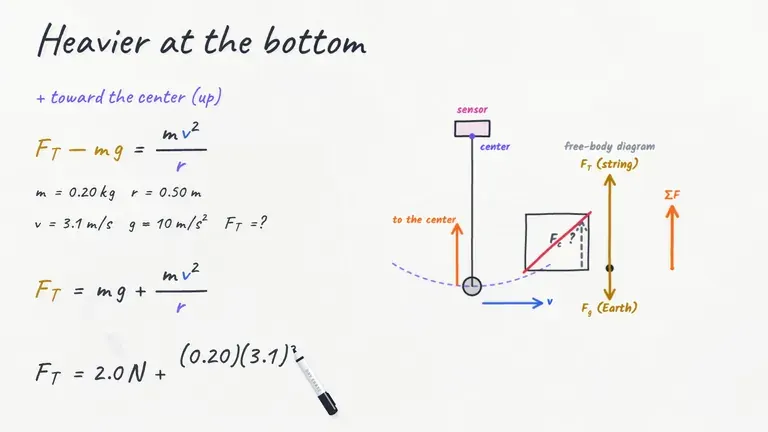 Topic 2.924 minCircular Motion
Unit 3: Work, Energy, and Power (18–23%)
Energy turns up all over the free response, often inside a question about something else. Learn to draw energy bar charts for a named system, because the exam asks for them, and practice derivations that start with conservation of energy. Practice with 2025 Question 2, the block sliding into a spring, where fewer than 1 in 5 students finished the derivation. Then review with the Unit 3 cheat sheet.
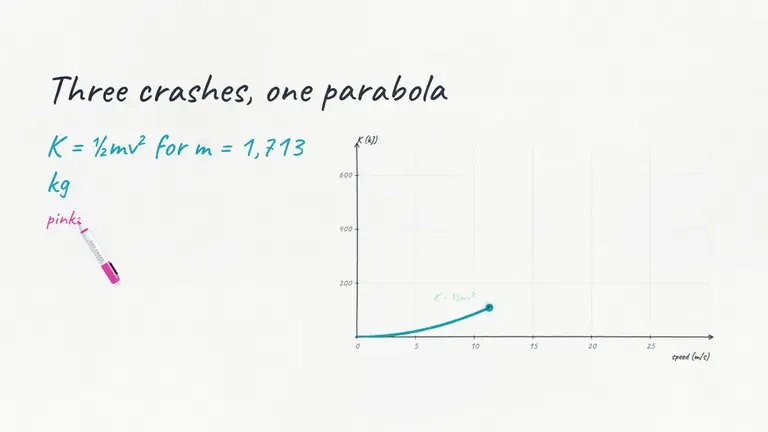 Topic 3.122 minTranslational Kinetic Energy
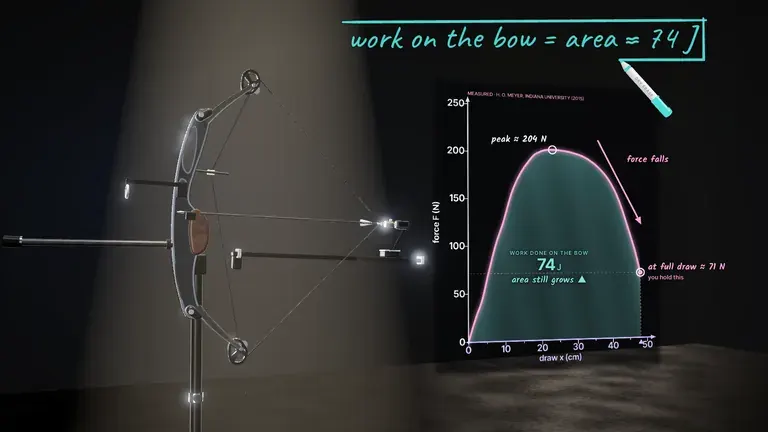 Topic 3.223 minWork
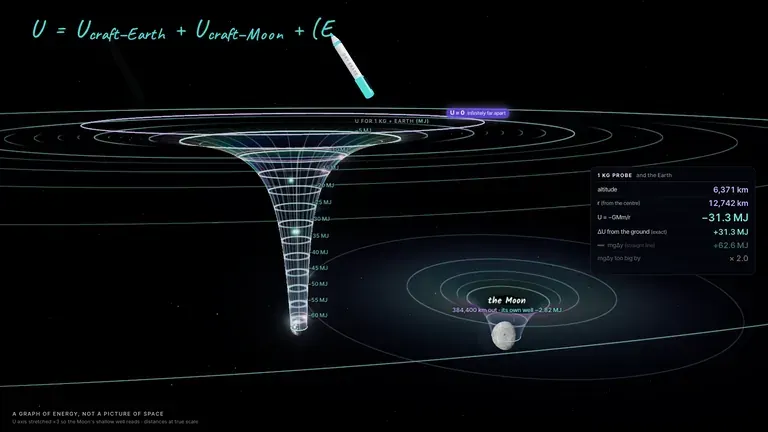 Topic 3.331 minPotential Energy
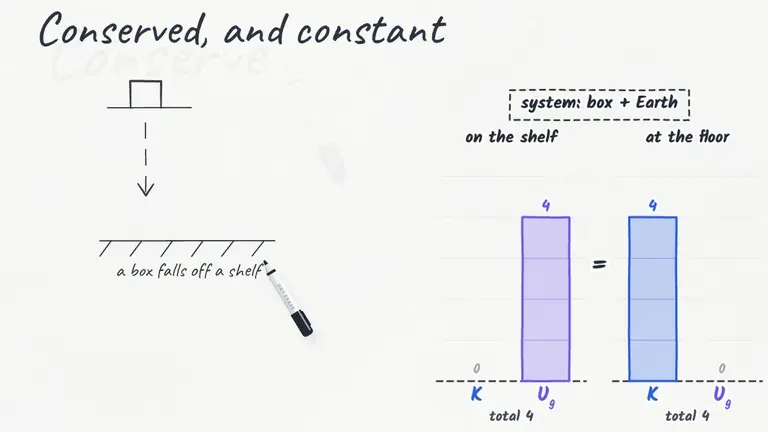 Topic 3.427 minConservation of Energy
 Topic 3.522 minPower
Unit 4: Linear Momentum (10–15%)
Momentum showed up on both new-format exams: 2025 Question 1 (a block landing on a moving cart) and 2026 Question 2 (two disks colliding). Do both. The unit's hardest idea is the system: momentum is conserved when the net external force on the system is zero, and forces between objects inside the system don't count. Then review with the Unit 4 cheat sheet.
 Topic 4.121 minLinear Momentum
 Topic 4.221 minChange in Momentum and Impulse
 Topic 4.322 minConservation of Linear Momentum
 Topic 4.428 minElastic and Inelastic Collisions
Unit 5: Torque and Rotational Dynamics (10–15%)
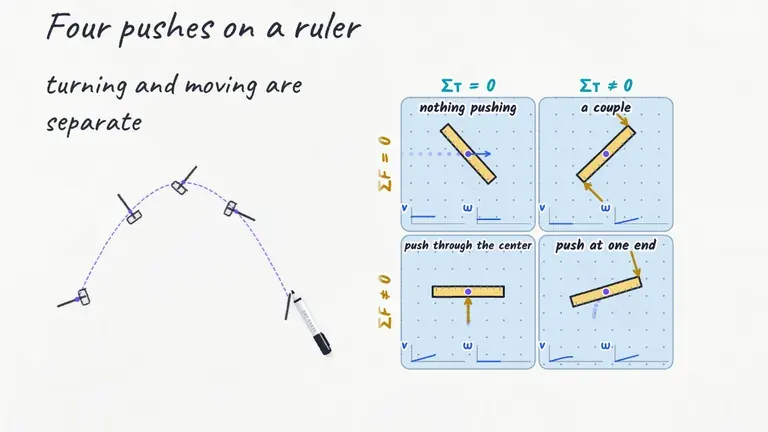
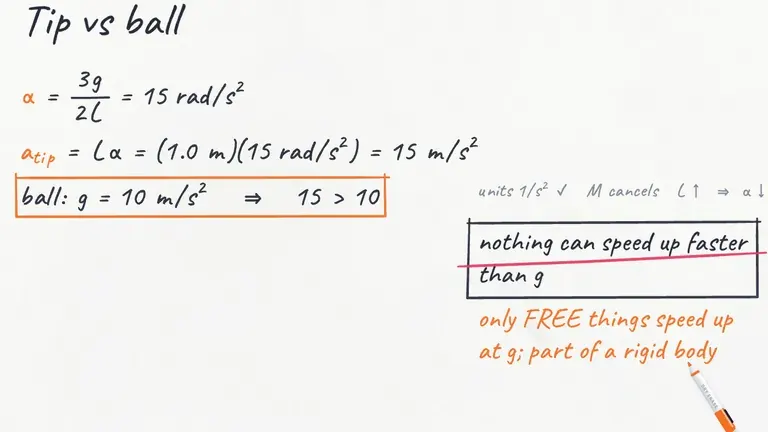
This is Unit 2 again for objects that turn: torque, rotational inertia, and Newton's laws in rotational form. Practice with the meterstick experiment in 2025 Question 3, then the hinged beam in Question 3 of the 2024 exam. Then review with the Unit 5 cheat sheet.
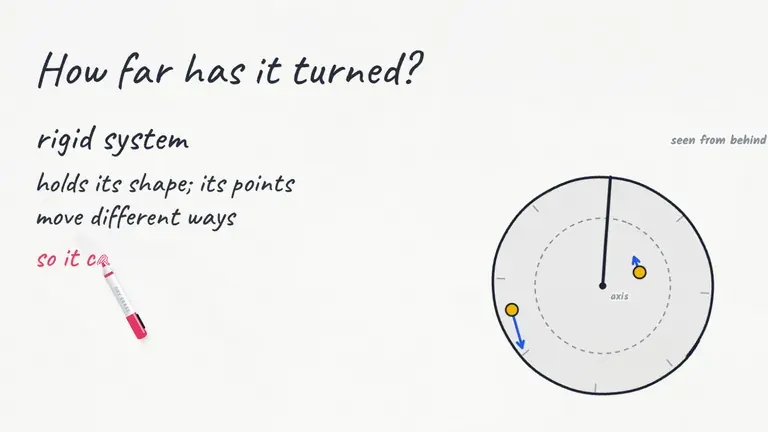 Topic 5.122 minRotational Kinematics
 Topic 5.226 minConnecting Linear and Rotational Motion
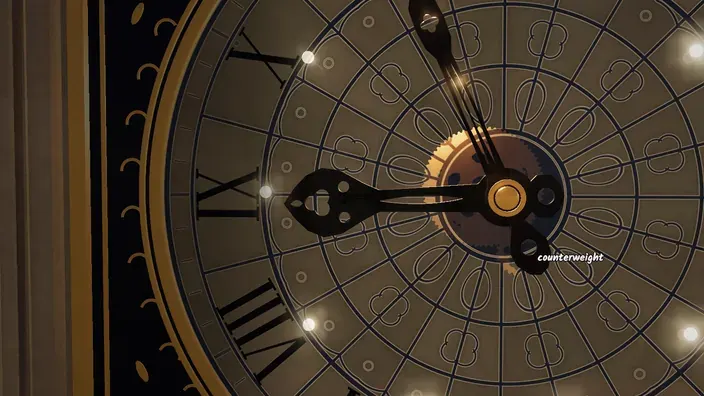 Topic 5.327 minTorque
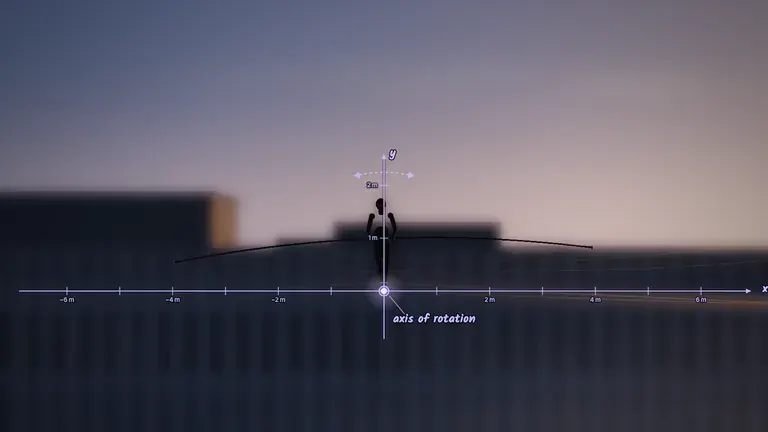 Topic 5.428 minRotational Inertia
 Topic 5.526 minRotational Equilibrium and Newton's First Law in Rotational Form
 Topic 5.623 minNewton's Second Law in Rotational Form
Unit 6: Energy and Momentum of Rotating Systems (5–8%)
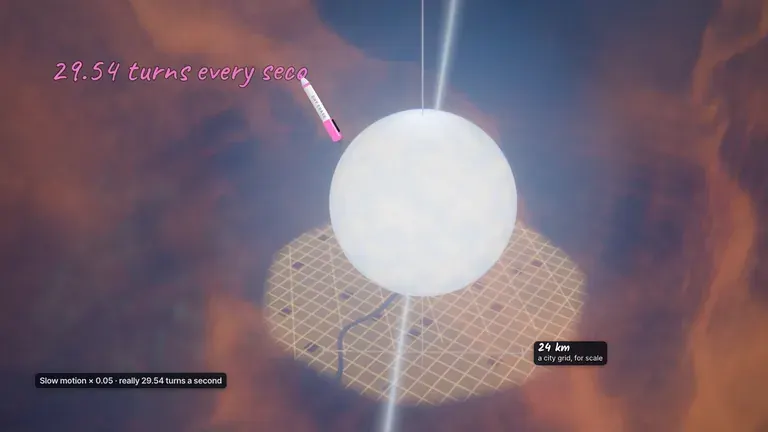
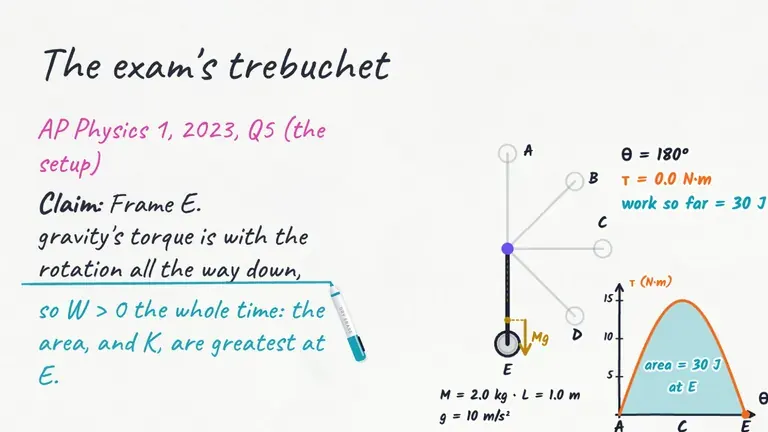
It's a light unit on the multiple choice, but it was the heart of a whole free-response question in 2026: Question 4, the two toys. Rotational kinetic energy, angular momentum, rolling, and orbits are the energy and momentum ideas of Units 3 and 4 in rotating form, so learn them side by side. The sample free-response Question 1 in College Board's Course and Exam Description, a disk rolling down a ramp, is good practice too. Then review with the Unit 6 cheat sheet.
 Topic 6.128 minRotational Kinetic Energy
 Topic 6.223 minTorque and Work
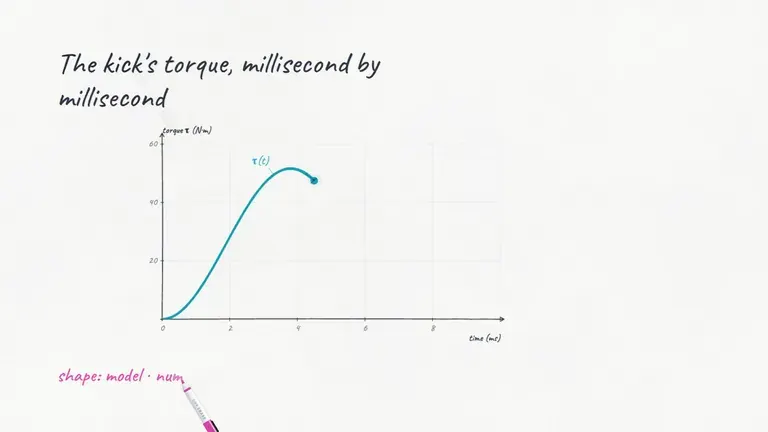 Topic 6.321 minAngular Momentum and Angular Impulse
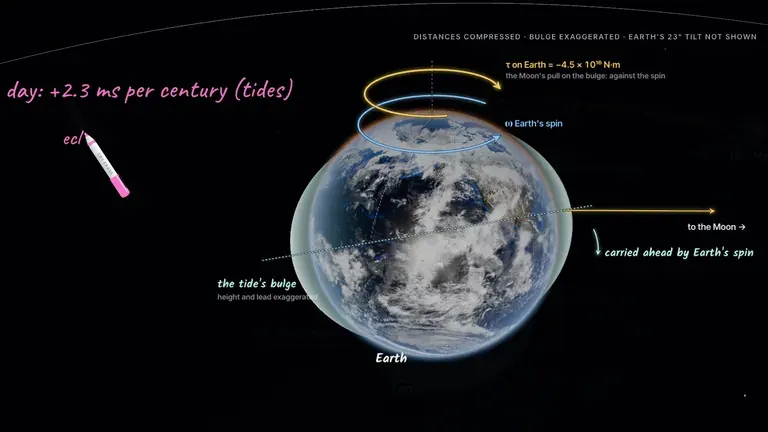 Topic 6.431 minConservation of Angular Momentum
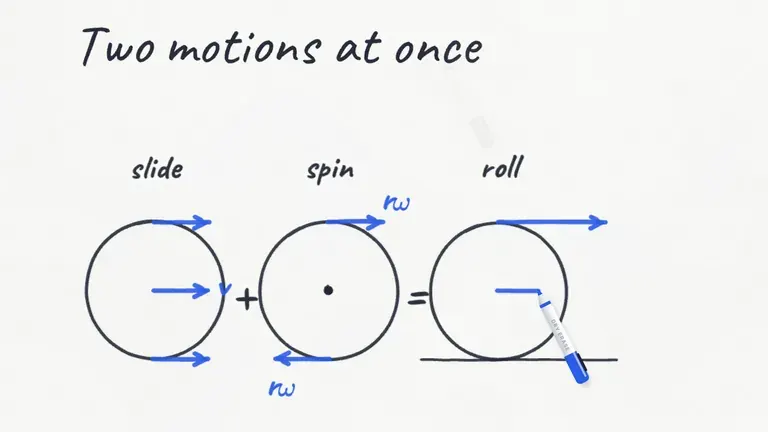 Topic 6.523 minRolling
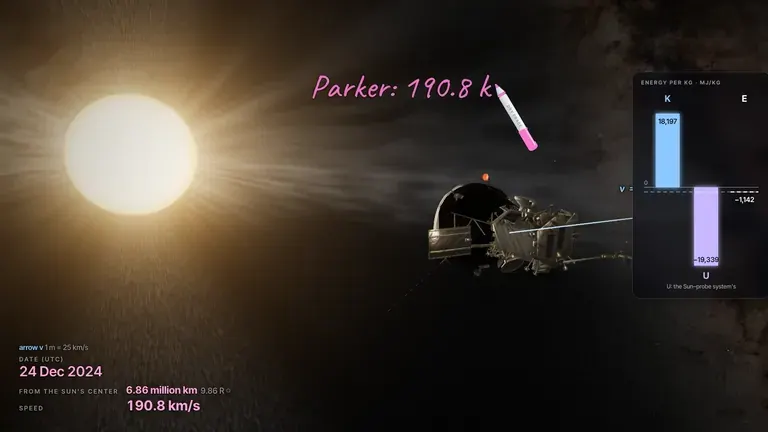 Topic 6.624 minMotion of Orbiting Satellites
Unit 7: Oscillations (5–8%)
The unit covers springs and pendulums: what sets the period, and how energy moves between kinetic and potential as the object swings. Neither new-format exam has had an oscillations question yet, so practice with the sample free-response Question 2 in the Course and Exam Description, a block on a spring, and with Questions 2 and 4 of the 2024 exam. Then review with the Unit 7 cheat sheet.
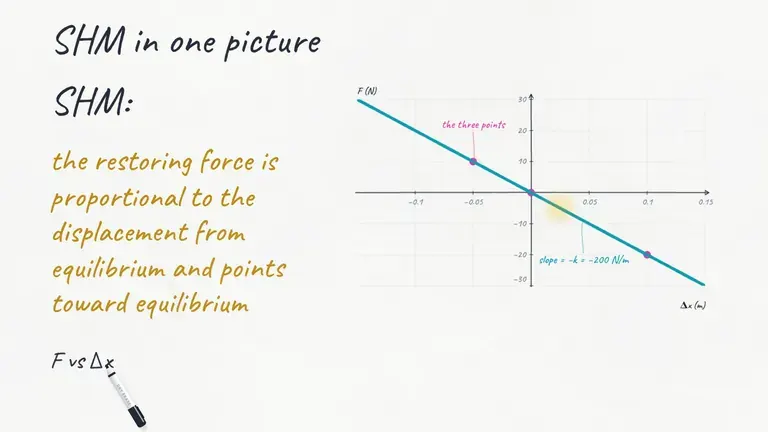 Topic 7.122 minDefining Simple Harmonic Motion (SHM)
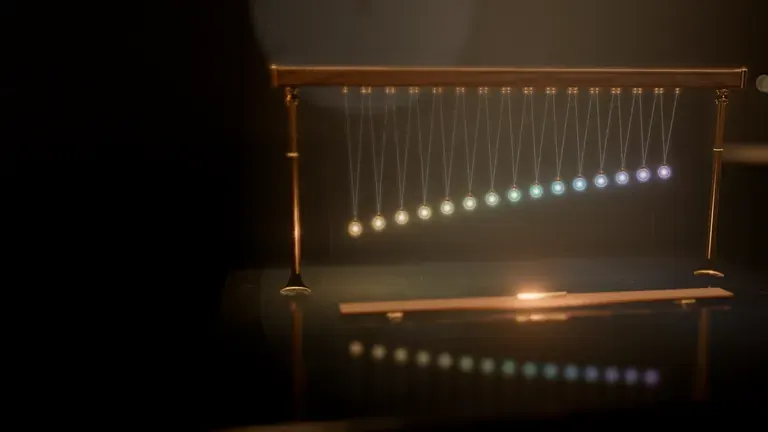 Topic 7.221 minFrequency and Period of SHM
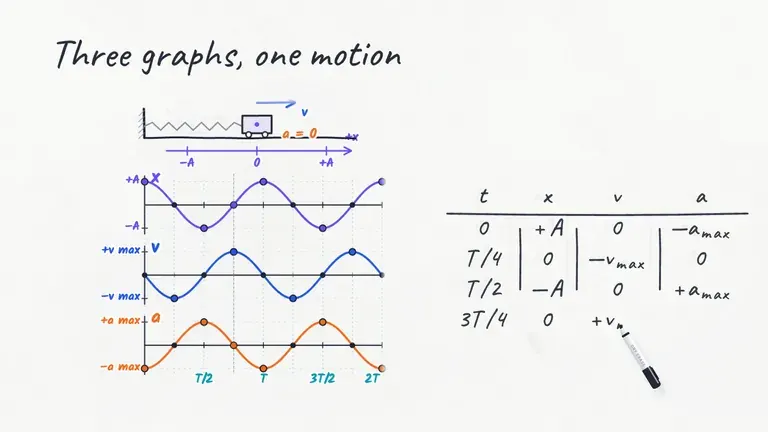 Topic 7.327 minRepresenting and Analyzing SHM
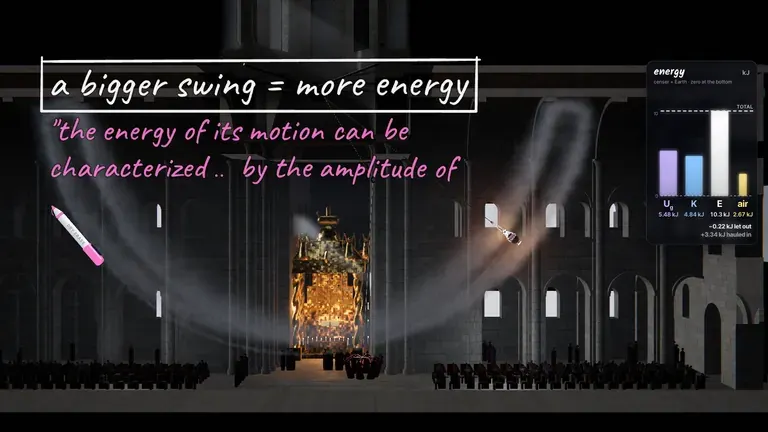 Topic 7.421 minEnergy of Simple Harmonic Oscillators
Unit 8: Fluids (10–15%)
This unit covers density, pressure, buoyancy, and fluids in motion. It's the last unit in the course and the newest, and the Chief Reader told teachers to make sure they leave time to teach it. If your class won't reach it until late April, start it on your own earlier: it's worth as much of the multiple choice as kinematics, and it appeared on both new-format exams. Practice with 2025 Question 4, the flow-rate part of 2026 Question 1, and the sample Question 3 in the Course and Exam Description, which asks you to find a liquid's density with a pressure sensor. Then review with the Unit 8 cheat sheet.
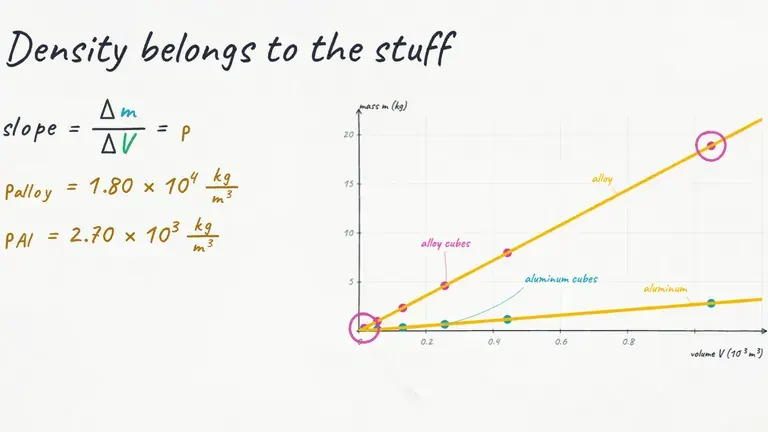 Topic 8.119 minInternal Structure and Density
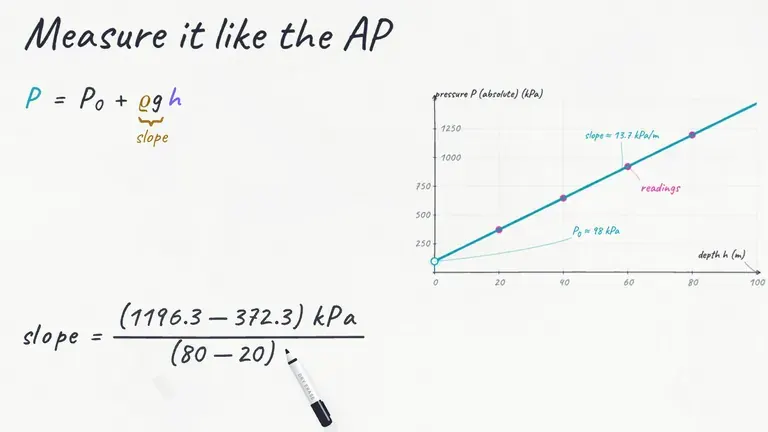 Topic 8.231 minPressure
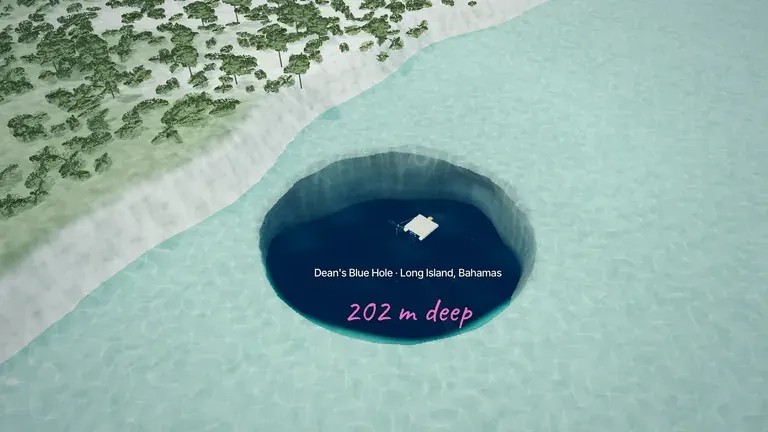 Topic 8.330 minFluids and Newton's Laws
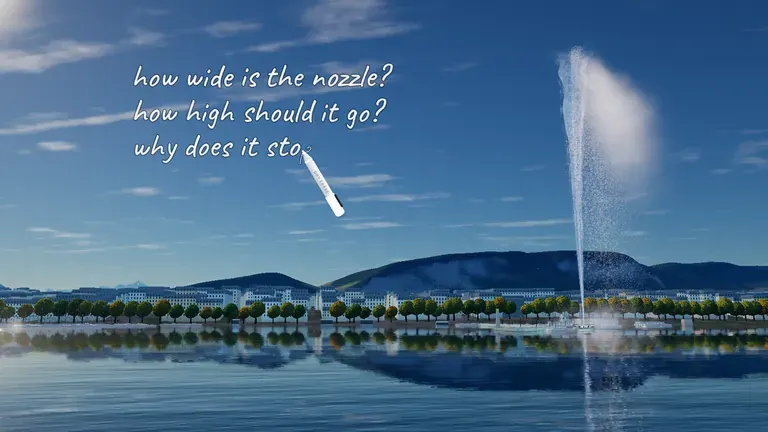 Topic 8.420 minFluids and Conservation Laws
March and April: practice the whole exam
- Sit the 2025 and 2026 free-response sections as real tests: 95 minutes, the official equation sheet, your exam calculator, and nothing else. Score them with the 2025 and 2026 scoring guidelines, then redo every part you missed before you look at the answer again.
- Do the 15 sample multiple-choice questions in the Course and Exam Description; the answers are in the same document. AP Classroom, if your teacher assigns it, has more questions written for this course.
- Open Bluebook's practice test preview so the app, its Desmos calculator, and its copy of the equation sheet are familiar before May.
- Linearize every equation on the sheet. The Chief Reader's advice for the experiment question: for each equation, decide what you would measure and plot on each axis to get a straight line, and what the slope would tell you. It goes straight at the points students missed most on the 2025 experiment question, and our experimental design guide shows how.
- Read the 2025 Chief Reader report. It's 13 pages, and it lists what lost points on each question and what the correct answers did instead.
The last two weeks
- Work through your mistakes log, one unit a day, the most heavily weighted units first. Redo each missed point cold, without looking at your old answer.
- Each day, do one derivation that starts from a principle on the sheet and one graph question with a slope to interpret.
- Check your school's start time, your calculator's batteries, and that you have pencils or black or dark blue pens.
- Ease off the day before. The exam is three hours of careful reading, and you'll want to be fresh for the last hour as much as the first.
Sources
- AP Physics 1: Algebra-Based, The Exam (AP Central): date, format, hybrid digital delivery, 2027 updates
- AP Physics 1: Algebra-Based, About the Exam (AP Students)
- AP Physics 1: Algebra-Based Course and Exam Description, 2026 revision: exam overview, unit and skill weights, free-response types, task verbs, prerequisites, the g = 10 m/s² convention, scoring (PDF)
- AP Physics 1 Course and Exam Description Clarifications and Corrections, fall 2026: the 2027 timing change (PDF)
- AP Physics 1: Algebra-Based course page (AP Central): unit and skill weights
- AP Physics 1: Algebra-Based, About the Course (AP Students): recommended prerequisites
- 2027 AP Exam Dates (AP Central)
- 2027 AP Exam Late-Testing Dates (AP Central)
- 2027 AP Exam Start Times (AP Central)
- Hybrid Digital AP Exams (AP Central)
- AP Exams Calculator Policy and 2026–27 approved graphing calculators (AP Central)
- Reference Information for Specific AP Exams (AP Central)
- AP Physics 1 Exam Reference Information, © 2025 (PDF)
- AP Exam Timing and Structure (AP Students): no points lost for wrong answers
- Ordering AP Exams for Students Who Don't Attend Your School or Independent Study Students (AP Central): November 13 and March 12 deadlines
- 2027 AP Exam Fees (AP Students)
- AP Physics 1: Algebra-Based Exam Questions, past free-response questions (AP Central)
- 2025 AP Physics 1 Free-Response Questions (PDF)
- 2025 AP Physics 1 Scoring Guidelines (PDF)
- 2025 AP Physics 1 Chief Reader Report (PDF)
- 2025 AP Physics 1 Scoring Statistics (PDF)
- 2026 AP Physics 1 Free-Response Questions (PDF)
- 2026 AP Physics 1 Scoring Guidelines (PDF)
- 2024 AP Physics 1 Free-Response Questions (PDF)
- 2024 AP Physics 1 Chief Reader Report (PDF)
- AP Physics 1 exam page as of February 26, 2024: the 2024 format (Internet Archive copy of AP Central)
- AP Physics 1 Score Distributions, 2015–2026 (AP Students)
- AP Score Scale Table (AP Students)
- Key EBSS Findings: AP Physics 1, July 1, 2025 (PDF)
- 2025 AP Exams: Scoring, Standards, and Security in a New Digital Era (College Board All Access): equating across years and formats
- View Your AP Scores (AP Students): scores released in July