
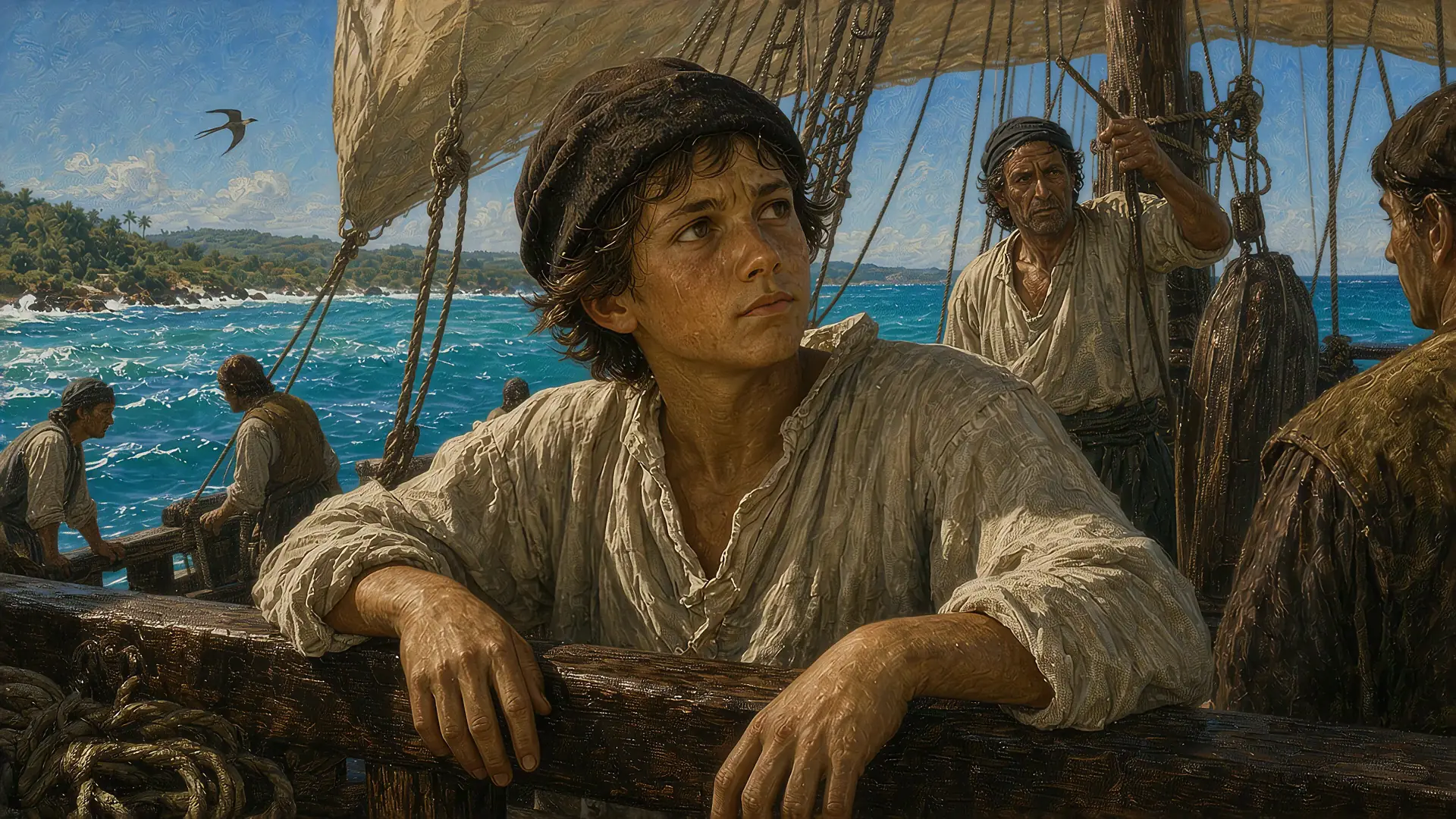
Columbian Exchange, Spanish Exploration, and Conquest in two minutes
- The Columbian Exchange moved plants, animals, and diseases between hemispheres after 1492: Spaniards brought wheat, cattle, horses, pigs, and sugarcane, while maize and potatoes crossed to Europe, Africa, and Asia.
- Smallpox and other Old World diseases struck peoples with no immunity; smallpox reached Mexico in 1520, and historians estimate that central Mexico lost most of its Native people by the 1590s.
- In 1519 Hernán Cortés landed in Mexico with about 500 soldiers, relied on the interpreter Malintzin and on Tlaxcalan allies who opposed the Mexica, and took Tenochtitlán in August 1521.
- Spain expanded: Pizarro conquered the Inca Empire by 1533, Spaniards found silver at Potosí in 1545, and by the 1570s galleons carried silver across the Pacific to Manila for Chinese goods.
- Spanish expeditions also probed North America: Ponce de León reached Florida in 1513, Hernando de Soto crossed the Southeast from 1539 to 1542, and Coronado entered the Southwest in 1540.
- American crops fed growing populations in Europe, Africa, and Asia, horses reached the Great Plains in the 1600s, and silver and joint-stock companies helped shift Europe from feudalism toward capitalism.
- On the exam: questions ask for causes and effects of the exchange in both hemispheres, and good conquest answers credit disease and Native allies alongside Spanish weapons.
Topic 1.4 key terms
- Smallpox and measles
Diseases from Europe, Africa and Asia that had never reached the Americas. With no one immune, epidemics killed far more Native people than war did.
- Encomienda
A grant from the Spanish crown that let a colonist collect tribute and labor from a Native town, in return for protecting the people and converting them to Christianity. In practice it was forced labor.
- Maize and potatoes
Food crops first grown by Native Americans. They fed more people per acre than Europe's grains, and over the next centuries they supported population growth in Europe, Africa and Asia.
- Horses
Brought by the Spanish in 1493. Spreading through Native trade, they reached the Great Plains by the 1600s and changed how Plains peoples hunted, traveled and fought.
- Feudalism and capitalism
Under feudalism, wealth and power came from land and the service owed by the people on it. Under capitalism, money invested in trade and business, called capital, mattered more. Europe's shift was slow and uneven.
- Joint-stock company
A business owned by many investors who each buy shares. They split the profits, and if a venture fails, each loses only what he put in. English joint-stock companies later paid for colonies such as Jamestown.
- Protestant Reformation
The break with the Catholic Church that began in Germany in 1517. Protestant churches spread across northern Europe, and Catholic and Protestant kingdoms competed for converts and colonies.
Transcript
Quotes are from the historical record and name their source. Lines marked Dramatized are reconstructions.
Enemies of the Mexica
1519
In 1519, about five hundred Spanish soldiers led by Hernán Cortés landed on the Gulf coast of Mexico. Inland, the Mexica, often called the Aztecs, ruled an empire that took tribute from hundreds of conquered towns.
After a battle at Tabasco, on the coast, local Maya lords gave Cortés twenty women. One of them, Malintzin, had been given away as a child, so she spoke both Nahuatl, the Mexica language, and Maya. A shipwrecked Spaniard who knew Maya put her words into Spanish, so Cortés could now talk with the Mexica.
In August, Cortés marched inland toward the Mexica capital, Tenochtitlan, an island city whose great market he later described to his king:
Cortés · Second Letter to Charles V, 1520
“There is one square, twice as large as that of Salamanca, all surrounded by arcades, where there are daily more than sixty thousand souls, buying and selling…”
In September, Cortés reached Tlaxcala, an independent state that the Mexica had fought for decades without conquering. Tlaxcala's army fought the Spanish at first, and then its leaders chose to ally with them against their old enemy.
In October, at Cholula, a city allied with the Mexica, Spanish and Tlaxcalan troops killed thousands of people and sacked the city. Cortés justified the killing by claiming that Cholula's leaders had planned an ambush.
Bernal Díaz, one of Cortés's soldiers, later remembered the first sight of the island city:
Bernal Díaz · his words, written decades later
“And some of our soldiers even asked whether the things that we saw were not a dream?”
On November 8, 1519, Moctezuma, the Mexica ruler, came out along a causeway to meet Cortés, with Malintzin between them.
When Cortés stepped forward to embrace Moctezuma, the ruler's attendants stopped him, and Malintzin translated Moctezuma's welcome. In a letter of 1520 to Charles V, Spain's king and Holy Roman Emperor, Cortés described that welcome as a surrender.
The Fall of Tenochtitlan
1519–1521; later population estimates
Key terms: Smallpox and measles, Encomienda
Within a week of the meeting, in November 1519, Cortés took Moctezuma hostage in his own city and tried to rule through him.
In May 1520, Spanish soldiers massacred Mexica nobles at a festival, and the city rose against them. Moctezuma died while still their prisoner, and at the end of June the Mexica drove the Spanish out across the causeways.
The survivors limped back to Tlaxcala, where a young war leader, Xicotencatl, urged the council to make peace with the Mexica instead. Hear each side's argument, and what it meant for the wounded Spanish waiting at the door. The council kept the alliance, choosing to destroy the Mexica, Tlaxcala's old enemy, with Spanish help.
That autumn, smallpox swept through central Mexico, and because the disease had never reached the Americas before, no one there was immune.
Nahua authors of the Florentine Codex, Book 12Adapted
They could not stir, move from their place, or turn from one side to the other.
Whole families fell sick at once, including Moctezuma's successor, Cuitláhuac, and many starved because no one was well enough to cook.
In May 1521, Cortés besieged the island city with thirteen small warships, built in Tlaxcala, and tens of thousands of Native allies. After nearly three months, in August 1521, Tenochtitlan fell to Spanish weapons, Native armies, hunger and smallpox together.
After the surrender, Cortés demanded the gold his men had lost in their retreat, and when the lords brought some, Malintzin spoke for him:
MalintzinAdapted
Our captain says it is not all here.
By the 1590s, central Mexico had lost most of its Native people, and historians' estimates of the loss range from about 65 to 95 percent. Disease did most of the killing, and war, hunger and forced labor made each epidemic worse. With so many dead, the survivors had far less strength to resist Spanish rule.
Under a system called encomienda, the Spanish crown granted colonists the tribute and labor of whole Native towns.
As Native workers died and sugar plantations spread, colonists turned to the system Portugal had built on its Atlantic islands. By the 1520s, Spanish ships were bringing enslaved Africans to work the sugar mills of Hispaniola.
Small World
The 1500s
Key terms: Maize and potatoes, Horses, Feudalism and capitalism, Joint-stock company, Protestant Reformation
In 1553, a Spanish soldier named Pedro de Cieza de León described the food that kept people alive in the Andes of South America:
Pedro Cieza de León
“They dry these potatoes in the sun, and keep them from one harvest to another.”
After 1492, plants, animals and germs crossed the ocean in both directions. Sort them by the direction each one crossed.
Potatoes and maize fed more people per acre than wheat, and farmers from Ireland to West Africa to China took them up. Over the next two centuries, those American crops fed growing populations across Europe, Africa and Asia.
Horses went the other way and spread north through Native trade, reaching the Great Plains in the 1600s. Plains peoples who had followed the bison on foot, with dogs hauling their gear, became hunters on horseback.
In 1545, after Francisco Pizarro's conquest of the Inca Empire, Spaniards found a mountain of silver at Potosí, in present-day Bolivia.
Silver was worth far more in Ming China than in Europe, and from 1571 Spanish galleons carried American silver across the Pacific. At Manila, in the Philippines, it bought Chinese silk and porcelain.
In Europe, American silver paid for trade and backed loans, and merchants and bankers grew rich alongside landowning nobles. Over time, money invested in trade came to matter as much as land, a slow shift from feudalism toward capitalism.
In 1553, London merchants pooled their money, each buying shares, to send three ships to look for a northern route to China. Two ships froze in the Arctic ice and their crews died, but the investors shared the loss, and the third opened a trade with Russia.
England had already sent John Cabot west in 1497, probably to Newfoundland, and in the 1530s France sent Jacques Cartier up the St. Lawrence River.
By the 1580s, the Protestant Reformation had split Western Christianity, and Protestant England saw Catholic Spain as its rival. In 1584, the writer Richard Hakluyt urged Queen Elizabeth to found English colonies in America, and his first reason was religion:
Richard HakluytAdapted
This western discovery will be greatly for the enlargement of the gospel of Christ.
His next reasons were trade, and power over Spain:
Hakluyt · Discourse of Western Planting, 1584 (spelling modernized)Adapted
This western voyage will yield unto us all the commodities of Europe, Africa, and Asia, as far as we were wont to travel.
Hakluyt · Discourse of Western Planting, 1584 (spelling modernized)Adapted
This voyage will be a great bridle to the Indies of the King of Spain.
England's first colony, on Roanoke Island off North Carolina, failed within a few years.
In the early 1500s, Spanish slave raiders carried Lucayans from homes like this one to work on other islands. Elsewhere, Native nations went on making their own alliances, as Guacanagarí and Tlaxcala had, even as disease killed millions of their people. Across Spain's empire, colonists forced Native survivors and enslaved Africans to work their mines and fields.