
Topic 5.5 key terms
- activation energy (Eₐ)
- The minimum energy a collision needs to reach the transition state; on an energy profile, the energy of the transition state minus the energy of the reactants.
- orientation
- How colliding particles are lined up; a collision can react only if the atoms that must bond actually meet.
- Maxwell–Boltzmann distribution
- The spread of particle energies in a sample at one temperature; the area beyond Eₐ is the fraction of particles with enough energy to react.
Transcript
807 words · 2 parts
Collision model: most collisions bounce
Look at what actually happens in this crowd. The particles hit each other constantly, and almost every time they just bounce off, so the collision meter is racing while the reaction meter barely moves. In most reactions only a small fraction of the collisions actually makes anything, and to see why, let’s go back to just two particles. This time A comes in fast, with plenty of energy, but it hits the C end of the molecule, and it just bounces off.
For B to leave with A, A has to reach B, because the new bond forms between A and B, and hitting C can’t build that bond, however hard you hit it. Now A comes in at the right end, but slowly. The bond between B and C stretches and then springs right back, because the collision didn’t have enough energy to pull B away from C.
And now the right end, with plenty of energy. For one instant A and C share B, with the old bond half broken and the new one half made, and then AB flies off and C drifts away.
Now you try it. Turn the BC molecule and pick an energy, and see if you can make this collision produce AB. So a collision has to get two things right at once. It needs enough energy to break the old bond as the new one forms, and that minimum is called the activation energy, and it has to hit the right way round, so the atoms that need to bond actually meet.
Let’s write this the way you’d want it on the AP exam. In a step like this one, bonds can only break and form when the particles actually collide. A successful collision needs enough energy to overcome the activation energy, and an orientation that lets the bonds rearrange. Most collisions miss on one of those or both, which is why only a small fraction of the collisions in most reactions ever leads to products.
Why the cold works
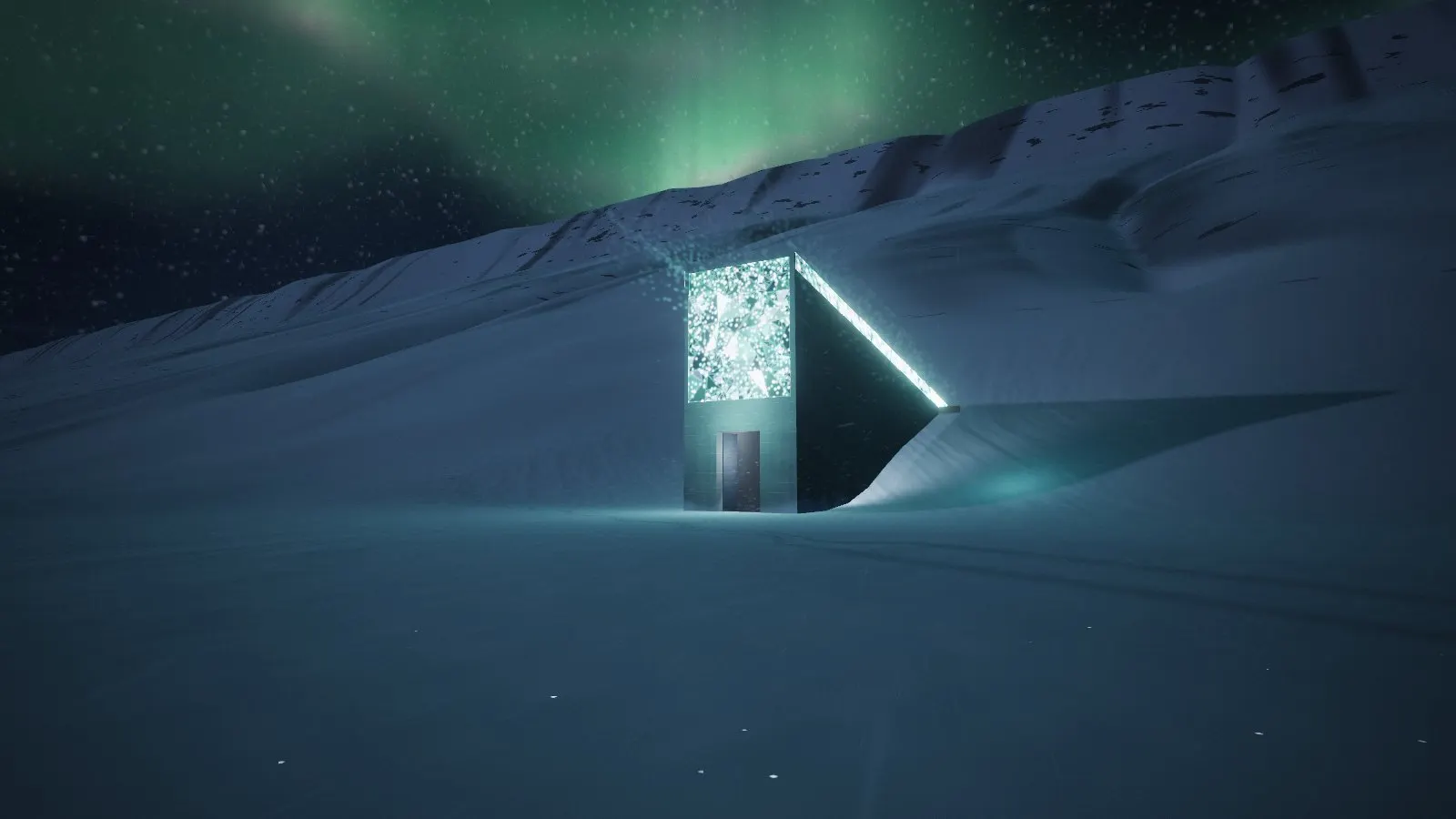
So where does temperature come in? You can see it with two glow sticks here at the vault door, one pushed into the snow and one standing in a mug of hot water. The warm one blazes and the cold one barely glows, because the reaction that makes the light runs faster when it’s warm, so the warm one uses up its chemicals sooner, while the cold one lasts much longer. What do you think happens if we swap them?
So why does warming speed a reaction up so much? Let’s go back to the crowd, with a lot more particles. Even at one temperature, the particles don’t all move at the same speed. If we sort them by their energy, we get this curve, which is called the Maxwell–Boltzmann distribution. Most of the particles have modest energies, around the hump, and a few out here in the tail have a lot.
This line is the activation energy, and only the particles past it, the glowing ones, have enough energy to react if they hit the right way round. Let’s heat it way up, to a hundred and fifty degrees. The curve gets lower and spreads out to higher energies, and the shaded tail gets much bigger. But look at the line, which didn’t move at all.
Now back to room temperature, and down to the vault’s minus eighteen. The curve hardly changes, but in the lens, the sliver past the activation energy has gotten a lot thinner. Let’s take this curve over to the board.
Here’s how you’ll see it on the AP exam, with energy across and the fraction of molecules up the side. This is room temperature, and this is minus eighteen, a little taller and narrower. Both curves hold the same area, because it’s the same number of molecules. The activation energy is one line in the same place for both, and the area past that line is the fraction of molecules with enough energy to react.
Let’s zoom in on the tail. At minus eighteen, fewer than half as many molecules clear this barrier as at room temperature. Don’t let the taller peak fool you, because only the area past the activation energy matters, and the cold doesn’t raise the activation energy either, since that line never moved.
So the sentence that explains it goes like this. At a higher temperature, a greater fraction of collisions have at least the activation energy, so more collisions every second are successful. Warmer molecules also collide a bit more often, but the big change is that fraction. So why is the rate at minus eighteen degrees so much lower?
And that’s the vault’s trick. The molecules barely slow down, but the ones energetic enough to react get much rarer. We keep saying enough energy, though, so enough energy to do what?