
Topic 5.6 key terms
- transition state
- The highest-energy arrangement along the path from reactants to products, with old bonds partly broken and new bonds partly formed; it lasts about one vibration and cannot be isolated.
- reaction energy profile
- A graph of energy along the reaction coordinate, from reactants through the transition state to products.
- reaction coordinate
- The horizontal axis of an energy profile: the progress of the atoms' rearrangement from reactants to products, not time.
- Arrhenius equation
- k = A e^(−Eₐ/RT): relates the rate constant to the activation energy and temperature (bigger Eₐ, smaller k; higher T, bigger k). Not used for calculations on the AP exam.
Transcript
1,183 words · 3 parts
Reaction energy profile: the map of the climb
Let’s follow one successful collision and keep track of its energy. At the start, A is far away and B is bonded to C. As A comes in, the B–C bond stretches, and the energy climbs, all the way to the top, and then the new A–B bond forms and the energy falls back down. Back at the very top, the old bond is half broken and the new one is half made, and this arrangement is called the transition state.
It only lasts about as long as a single vibration, so it’s nothing you could ever put in a bottle. Most elementary reactions break some bonds and form new ones, and pulling the old bond apart is what costs energy on the way up. This curve is called a reaction energy profile. Energy goes up the side, and along the bottom is the reaction coordinate, which tracks how far the atoms have gotten in rearranging from reactants into products.
The reaction coordinate isn’t time, though. We can play the collision slowly or quickly, and the curve doesn’t change, and if we stretch the drawing wider, every energy stays exactly the same. The activation energy is the climb from the reactants up to the transition state, and the difference between the products and the reactants is the overall energy change, which we call delta H.
Now it’s your turn, so drag the molecule to the transition state, where the old bond is half broken and the new one is half made. Let’s take this map over to the board.
Let’s put numbers on our collision. The reactants sit at twenty kilojoules per mole, the transition state at thirty-five, and the products at ten. The activation energy is the climb from the reactants, thirty-five minus twenty, fifteen kilojoules per mole, the same fifteen we put on the Maxwell–Boltzmann curve. It isn’t thirty-five, because the climb starts at the reactants, not at zero. Delta H goes from the reactants to the products, ten minus twenty, negative ten kilojoules per mole, so the products end up lower and the reaction is exothermic.
If the reaction ran backward, it would start at the products and climb to the same peak, so the reverse activation energy is thirty-five minus ten, which is twenty-five. That’s a bigger climb than the forward one, because the products sit lower than the reactants. Breaking the B–C bond costs energy and forming the A–B bond gives energy back, and delta H is the balance between the two.
Reading any energy profile
Let’s read a different profile together. The reactants are at forty, the peak is at a hundred, and the products are at ten. The activation energy is a hundred minus forty, so sixty kilojoules per mole, and delta H is ten minus forty, which is negative thirty. Now you finish it. What’s the activation energy for the reverse reaction, in kilojoules per mole?
Here’s one where the products end up higher. The reactants are at ten, the peak is at seventy, and the products are at forty. Which pair is right?
So exothermic doesn’t mean fast, and endothermic doesn’t mean slow. How fast a reaction goes depends on its barrier, and how much energy it gives off or takes in depends on where it ends up compared with where it started.
Now let’s bring temperature into the map. Each of these faint dots is one colliding pair, and how far it gets along the path depends on how much energy its collision had. Most of them only make it partway up and slide back, and every so often one has enough to cross the top. Now let’s cool it to minus eighteen. The map is exactly the same, with the same barrier, but fewer of the pairs make it over the top.
One equation ties all of this together, the Arrhenius equation. k equals A times e to the minus activation energy over R T. R is the gas constant, and T is the temperature in kelvins. This A is just a number that belongs to the reaction. It isn’t our atom A.
You won’t calculate with it on the AP exam. You do need to know what it tells you. A bigger barrier makes k smaller, and a higher temperature makes k bigger. On top of that, the bigger the barrier, the more the temperature matters. A tall barrier sits far out in the tail of the curve, and that’s where the cold thins it the most.
Cool two reactions from twenty-five degrees to minus eighteen. Our fifteen-kilojoule step runs about three times slower, but a fifty-kilojoule step runs about thirty times slower. We cool this reaction from twenty-five degrees down to minus eighteen. What happens?
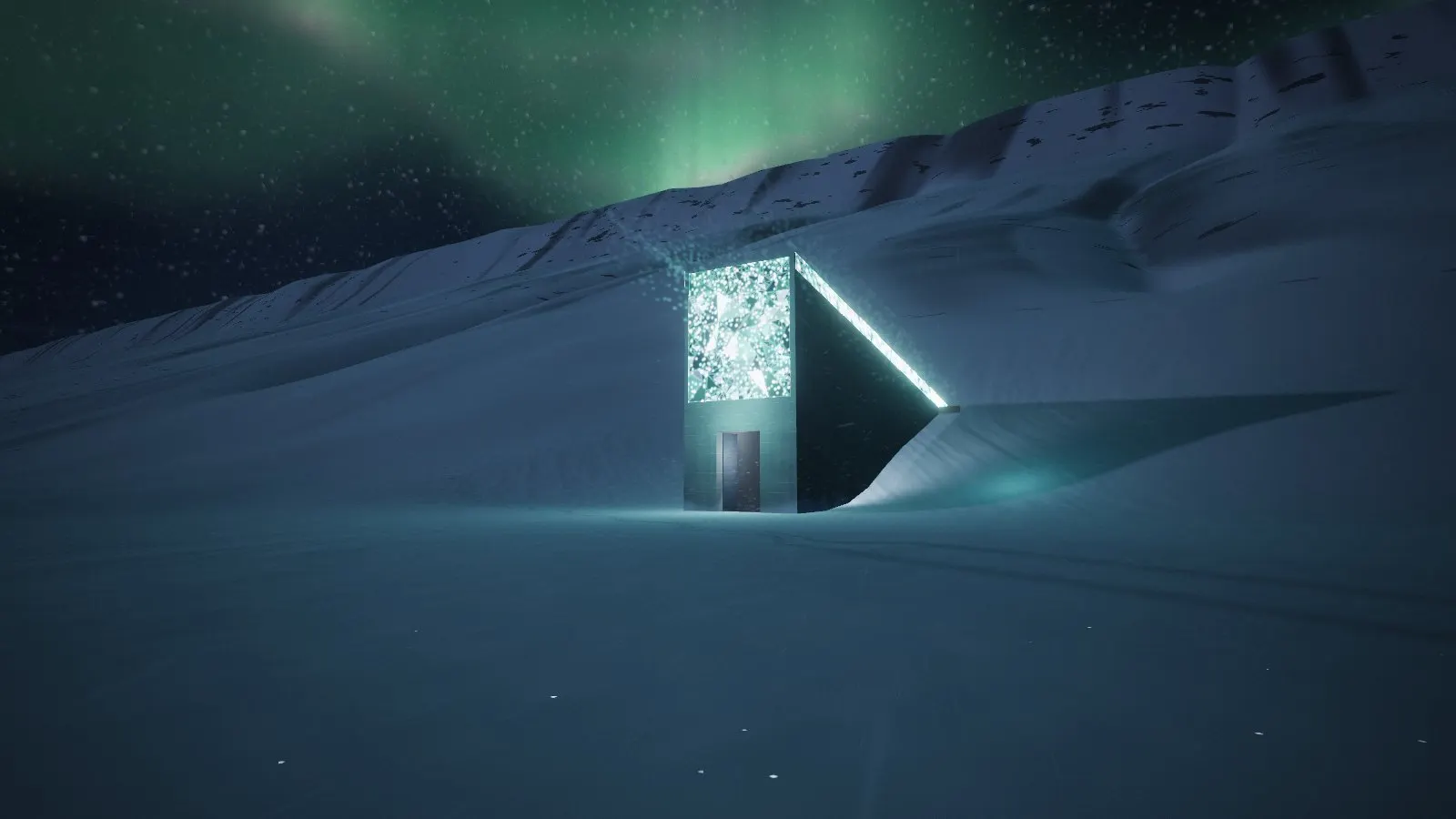
Back to the vault
Let’s finish with an AP question, adapted from one the College Board published. The step NO two plus F two makes NO two F plus F is elementary. Part a wants its rate law, and part b asks why most collisions between NO two and F two don’t produce NO two F. Because it’s elementary, one NO two meets one F two, so the rate is k times NO two times F two.
For part b, it’s tempting to write only that the collision needs enough energy, and that’s only part of the answer. The full answer needs both conditions, and it names the atoms. The collision has to have at least the activation energy, and the nitrogen of NO two has to hit a fluorine atom of F two, so the N–F bond can form while the F–F bond breaks. This is the sentence that earns the point.
Which of these explanations would earn full credit for part b? So, back to the vault and the question we started with. The cold doesn’t change the energy map of a reaction, or move the activation energy at all.
The average molecule is only seven or eight percent slower. But the tail thins out, and far fewer collisions can climb the barrier. For a tall barrier, it’s the thirty times slower we just saw. That’s how the cold slows the chemistry of aging.
A real seed is more complicated than our model, because it’s dry and almost solid inside, and keeping it dry matters a lot too. But the reason the cold works is the one you just learned.
And we know it works. In 2015, for the first time ever, someone came to take seeds back out, because a genebank in Aleppo had been cut off by the war in Syria. Thirty-eight thousand samples came out of this mountain, went into the ground in Lebanon and Morocco, and grew, and two years later fresh seeds from those plants came back in.
So now you can look at one collision and tell whether it’ll work, and write its rate law straight from who’s in it, and you can draw the energy map, and explain why a little cold that never touches it keeps the world’s seeds alive for decades. Next time, we’ll see what happens when a reaction needs more than one of these steps to get where it’s going.