
Contextualizing Period 2 in two minutes
- Period 2 ran from the founding of Jamestown in 1607 to 1754, when fighting broke out between Britain and France over the Ohio Valley.
- Spain held Mexico, Peru, and the Caribbean, while England, France, and the Dutch had only small footholds: Jamestown in 1607, Quebec in 1608, and the Hudson River after 1609.
- Native nations held most of the land, and New France, with only a few hundred colonists in its first thirty years, got nearly all its beaver pelts from Native hunters.
- In 1609 Samuel de Champlain fought beside the Innu, Algonquin, and Wendat against the Haudenosaunee, who later used Dutch guns in the Beaver Wars and had scattered the Wendat by 1649.
- French traders often married Native women, and Haudenosaunee families adopted captives to replace dead relatives, so kinship tied peoples together even while war over furs continued.
- Across the period, English colonies grew into distinct regions, slavery spread, trade tied the colonies to Britain and Africa, and conflict with Native nations and rival empires shaped colonial growth.
- On the exam: contextualization questions ask what each colonial power wanted around 1607 and why Native alliances mattered, and they set up the comparison questions of Topics 2.2 and 2.8.
Topic 2.1 key terms
- Trade alliances
Partnerships in which Native nations and Europeans traded goods and backed each other in war. French and Dutch colonies depended on them for furs.
- Fur trade
The trade of animal pelts, mostly beaver, from Native hunters for European kettles, cloth, knives and guns. In Europe, beaver fur was made into felt hats.
- Intermarriage
Marriage between European traders and Native women, common in New France. It tied traders to Native families and trade networks, and many wives worked as guides and interpreters.
- Beaver Wars
Wars of the 1600s in which the Haudenosaunee fought the French and France's Native allies for control of the fur trade, its routes and captives.
Transcript
Quotes are from the historical record and name their source. Lines marked Dramatized are reconstructions.
One of Her People
1652–1653
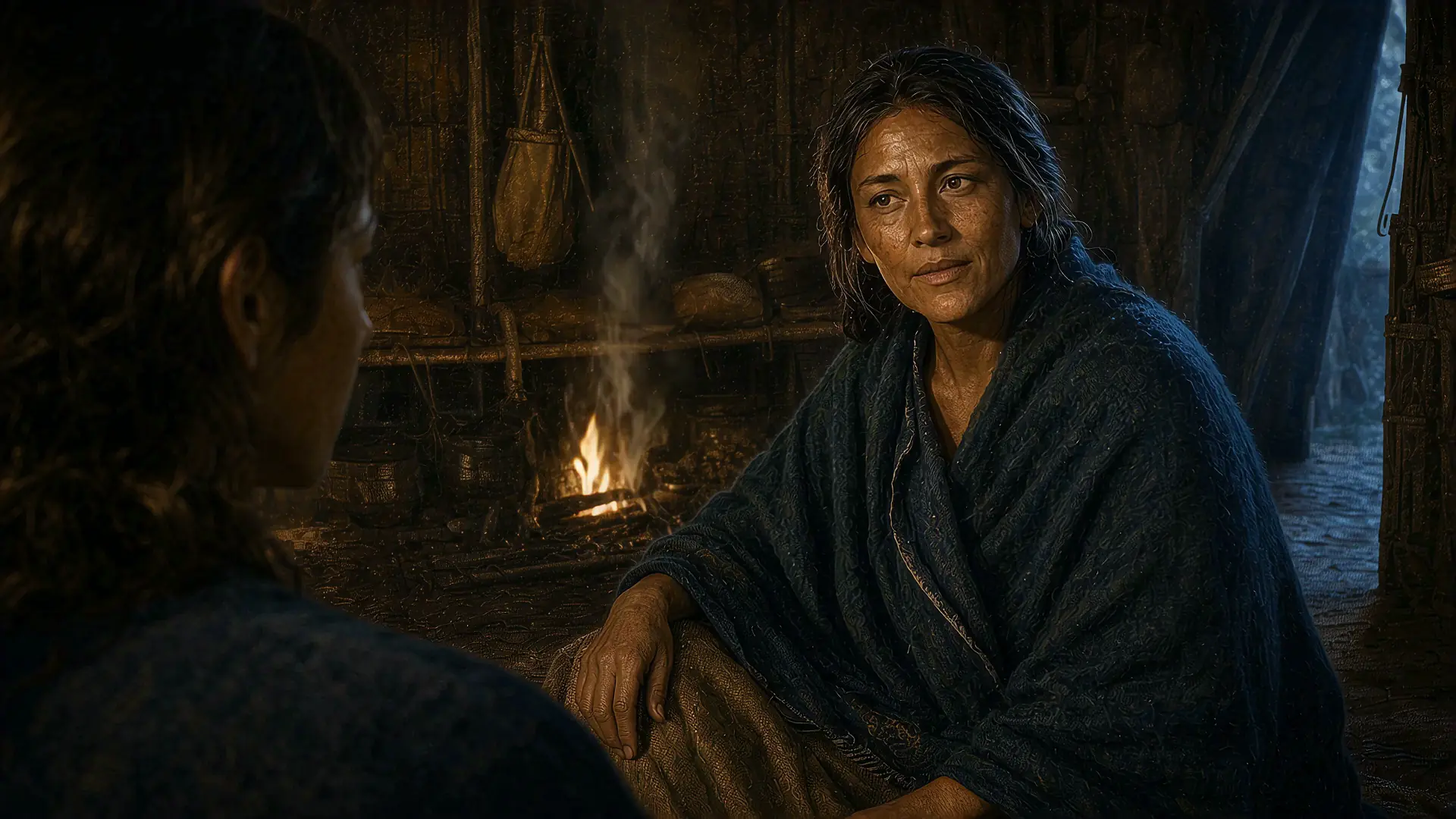
His Mohawk mother · reconstructed exchangeDramatized
Asserony?
Young Radisson · reconstructed exchangeDramatized
Panugaga.
In 1652, in a Mohawk town in what is now upstate New York, a woman asked a captured French teenager if he was French. He said no, he was one of her people.
His name was Pierre-Esprit Radisson, and weeks earlier Mohawk warriors had captured him near Trois-Rivières, a French settlement on the St. Lawrence River. Each side he joined wanted something different from North America, and each one needed Native people to get it.
The Shot and the Peace
1609–1652
Key terms: Trade alliances, Fur trade, Intermarriage, Beaver Wars
Forty-three years earlier, in July 1609, Samuel de Champlain, who had founded Quebec in 1608, fought beside his Native allies at Lake Champlain.
Champlain · his account
“With this shot two fell to the ground.”
His allies were the Innu, the Algonquin and the Wendat, whom the French called the Huron, and all three traded furs with France. Their enemies were the Haudenosaunee, or Iroquois, five nations that included the Mohawk.
In 1609, Europe's footholds in eastern North America were still small: Spain's St. Augustine in Florida, England's Jamestown in Virginia, and France's Quebec. That September, Henry Hudson, an English captain sailing for the Dutch, explored the river that now bears his name. Native nations already lived on that land and governed it.
For its first thirty years, New France had only a few hundred colonists, and almost all its beaver pelts came from Native hunters.
In 1633, the aging Champlain made his Innu allies an offer.
Champlain · through Le Jeune's account
“When that great house shall be built, then our young men will marry your daughters, and we shall be one people.”
Many French traders did marry Native women, who served as their guides and interpreters and tied them into Native families and trade.
That winter, the Jesuit priest Paul Le Jeune lived in an Innu hunting camp and wrote down his host's jokes about the beaver.
Le Jeune's Innu host · as he recorded him
“The Beaver does everything perfectly well, it makes kettles, hatchets, swords, knives, bread; and, in short, it makes everything.”
Le Jeune's Innu host · another remembered joke
“The English have no sense; they give us twenty knives like this for one Beaver skin.”
French and English traders were competing for his furs, and he knew which of them paid more.
By the 1640s, Dutch traders on the Hudson sold guns to the Mohawk for beaver pelts. With Dutch guns, the Haudenosaunee fought the French and their Native allies for furs, trade routes and captives, in the Beaver Wars.
In July 1645, a Mohawk envoy named Kiotsaeton came to Trois-Rivières to make peace with the French and their allies.
Kiotsaeton · tenth collar, as recorded
“Here is the knot that binds us inseparably; nothing can part us.”
In private, the Mohawk offered peace to the French and the Wendat alone, if the French would abandon their Algonquin allies.
Decide how the French governor, Montmagny, should answer the Mohawk, then see what he did.
Montmagny refused the gift and would not make peace without the Christian Algonquins, but he called the others masters of their own actions.
The peace lasted about a year, and by 1649 Haudenosaunee attacks had scattered the Wendat, France's most important trading partners. After that, Mohawk war parties raided along the St. Lawrence, right up to the French settlements.
Panugaga
1652–1653
In 1652, one of those war parties captured Radisson outside Trois-Rivières. The warriors killed his two friends and carried him south to their towns.
There, a Mohawk woman tied her own belt around him and took him into her family.
She named him Orinha, after a son she had lost. Disease and war had killed many Haudenosaunee, and grieving families often replaced their dead by adopting captives. Adopted captives took the names and places of the dead, though none of them had chosen to come.
Radisson wrote this story down around 1669, for English investors he hoped would pay for his next voyage. He was selling them what he knew about Native nations and their trade.