
Contextualizing Period 3 in two minutes
- In 1754 Britain, France and Spain held rival empires in North America, and Native nations such as the Iroquois Confederacy still controlled much of the interior.
- France, Virginia, Pennsylvania and the Iroquois all claimed the Ohio Country, the upper Ohio River valley, though Lenape, Shawnee and Mingo people lived there.
- Mercantilism and the Navigation Acts made the colonies suppliers and markets for Britain, but loose enforcement, later called salutary neglect, let elected assemblies run local affairs and tax their own voters.
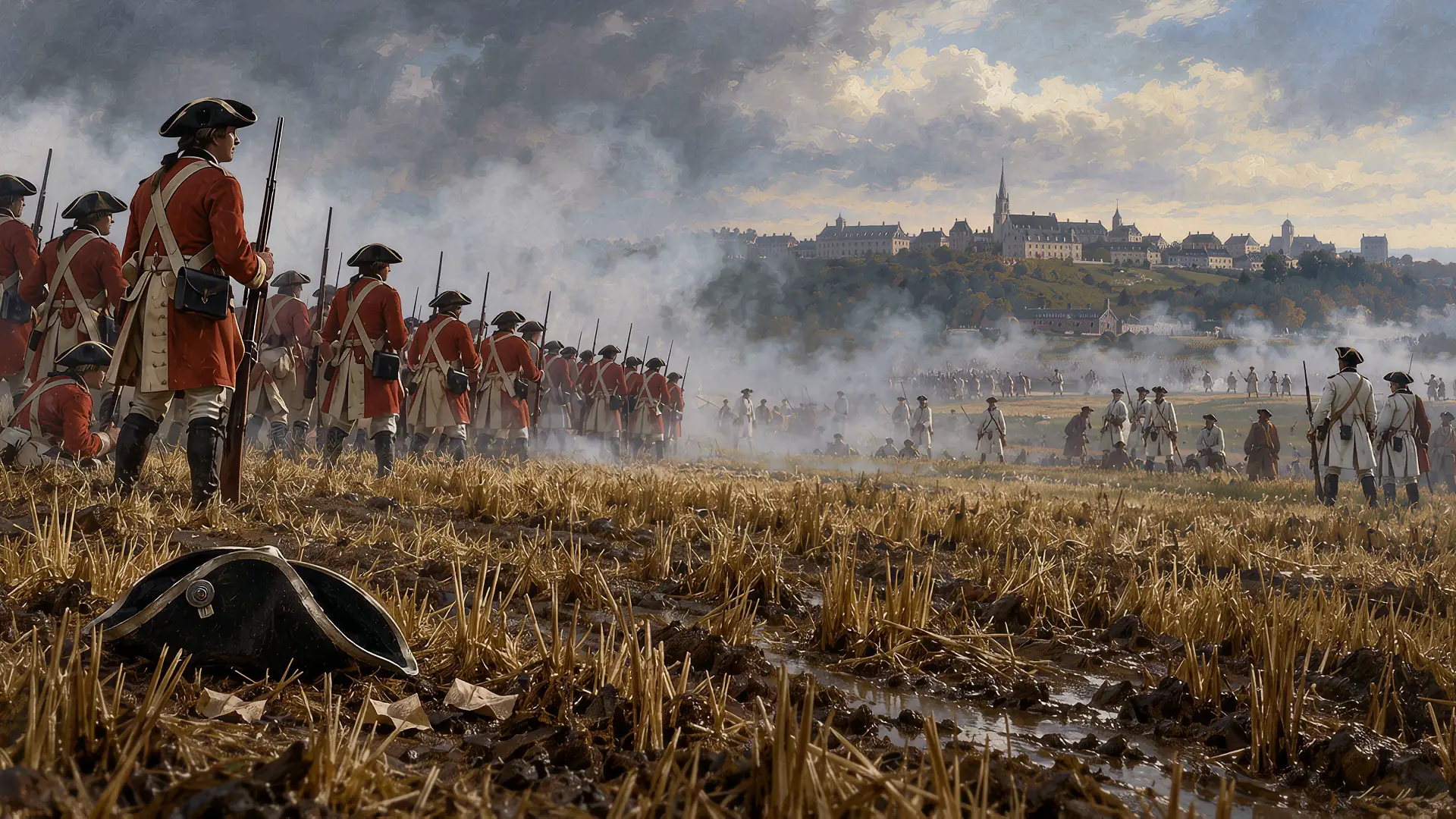
- On May 28, 1754, a skirmish between Virginians under George Washington and a French party at Jumonville Glen began the Seven Years' War, which later spread to Europe, Africa and India.
- From 1754 to 1800 the colonists moved from empire to independence to a federal republic: they resisted British taxes, won the Revolution by 1783 and ratified the Constitution in 1788.
- Continuity ran alongside change: slavery persisted and spread and Native nations kept losing land, while the loyal British subjects of 1754 had become citizens of a republic by 1800.
- On the exam: Contextualization prompts ask how Britain's imperial system, the rivalry with France and Native diplomacy set up the Revolution. Link back to Period 2's colonies and ahead to Period 4.
Topic 3.1 key terms
- Mercantilism
- 1600s–1700s; Parliament wrote it into the Navigation Acts from 1651
The economic theory that colonies existed to make the mother country rich by shipping it raw materials and buying its manufactured goods.
Most colonists accepted Parliament's right to regulate their trade, but after 1763 they denied its right to tax them for revenue.
- Salutary neglect
- c. 1720s–1763; Edmund Burke used the phrase in 1775
Britain's long habit of loosely enforcing its trade laws and letting colonial assemblies run local affairs and tax their own voters.
Decades of running their own affairs made colonists treat Britain's tighter control after 1763 as an attack on their rights.
- Ohio River Valley
- Rival claims in the 1740s and 1750s; the war began there in 1754
The region colonists called the Ohio Country, in today's western Pennsylvania and Ohio. France, Virginia, Pennsylvania, and the Six Nations all claimed it, though Lenape, Shawnee, and Mingo people lived there.
Virginia speculators pushed into the valley as France built forts to hold it, and the clash started the war in 1754.
Big questions
Evaluate how far mercantilism changed the British North American economy from 1660 to 1775.
Mercantilism made the colonial economy far more commercial, though it stayed mostly agricultural. The Navigation Acts gave colonial shipbuilders and merchants a protected market inside the empire, and the Atlantic trade in tobacco, sugar, and enslaved people boomed. Colonists also smuggled freely while Britain looked away, so the crackdown after 1763 hit an economy used to bending the rules.
Transcript
Quotes are from the historical record and name their source. Lines marked Dramatized are reconstructions.
The First Man
May 28, 1754
On May 28, 1754, in the mountains of western Pennsylvania, a French officer named Jumonville was carrying a letter. It ordered the English, as the French called all British colonists, off land that both France and Virginia claimed.
A French soldier in the glenDramatized
Les Anglais!
Monceau · adapted reportAdapted
We were sheltering from the rain. The English fired two volleys. Jumonville's interpreter called for them to stop. They stopped.
George Washington
“But that I know to be false, for I was the first man that approached them, and the first whom they saw; and immediately upon it, ran to their arms, and fired briskly till they were defeated.”
A French survivor and Washington told different stories about the same fifteen minutes, and a third story came out later. Whoever fired first, this skirmish started a war between Britain and France that spread around the world.
Fathers
November 1753 – May 1754
Key terms: Ohio Country, Ohio Company of Virginia, Fort Duquesne
Six months earlier, Virginia's governor had sent the French a letter of his own, ordering them out of the Ohio Country. The Ohio Country was the upper Ohio River valley, in today's western Pennsylvania and Ohio. His messenger was a twenty-one-year-old Virginian, George Washington, who very much wanted to be noticed. On the way, he studied the Forks of the Ohio, today's Pittsburgh, and judged it a perfect place for a fort.
Four claims overlapped at this river fork. One belonged to Virginia's Ohio Company, land investors who included the governor. Across North America, most Native nations preferred the French, who came mainly to trade, to the British, who came to farm. Tap a claim, and ask who actually lived here.
At Logstown, a Native trading town down the Ohio, Washington met the Seneca leader Tanaghrisson, whom the English called the Half King. He spoke for the Iroquois here, and he had already told the French to leave.
Tanaghrisson
“Fathers, both you and the English are white; we live in a country between; therefore the land belongs to neither one nor t'other.”
The French commander
“Child, you talk foolish; you say this land belongs to you, but there is not the black of my nail yours.”
At Venango, a French post on the road north, French officers drank wine with Washington and told him their plans.
Philippe-Thomas JoncaireAdapted
It is our absolute design to take possession of the Ohio, and by God, we will do it.
Philippe-Thomas JoncaireAdapted
The English can raise two men for our one. But they are too slow.
In fact, the British colonists outnumbered the French about twenty to one. But about the slow part, he was right.
Shingas, a leader of the Lenape, whom the English called the Delaware, saw the danger:
Shingas
“It is true I live here on the river side, which is the French road.”
Any army coming down the river would pass right through his town.
In April 1754, about five hundred French soldiers came down the Allegheny River with cannon. The Virginians' half-built fort at the Forks surrendered without a shot, and the French built Fort Duquesne in its place.
Tanaghrisson sided with the Virginians. On the night of May 27, he led Washington's men to the French camp in the glen.
Back in the glen, according to a deserter who later talked to the French, Tanaghrisson knelt by the wounded Jumonville and said:
Tanaghrisson
“You are not dead yet, my father.”
Then, in that account, he killed Jumonville himself. Tanaghrisson had wanted the English in this war against the French, and now they were in it.