
Topic 9.2 key terms
- third law of thermodynamics
- A perfect crystal at 0 K has only one possible arrangement, so its entropy is zero.
- standard molar entropy (S°)
- The absolute entropy of one mole of a substance in its standard state, counted up from zero at 0 K, in J/(mol·K). It is never zero at 298 K, even for elements.
- standard entropy change (ΔS°)
- ΔS° = ΣS°(products) − ΣS°(reactants), with each S° multiplied by its coefficient in the balanced equation.
Transcript
1,210 words · 3 parts
Absolute entropy and entropy change: counting up from zero
So now you can predict which way entropy goes, and roughly how big a change will be. Next we want to put a real number on it, and for that, we need to know where zero is. Let’s cool this gas down, a lot. The molecules slow down and start sticking together into a liquid, and then they lock into a crystal, shivering less and less as the temperature keeps falling.
And at absolute zero, zero kelvin, a perfect crystal settles into the lowest energy it can have, with every particle sitting in its own spot in the pattern. There’s exactly one way to arrange that, so this is the one place where entropy is zero, and chemists call that the third law of thermodynamics.
Now let’s warm it back up to room temperature, and as the crystal shakes, melts and boils back into a gas, its entropy builds up from that zero. Entropy counted all the way up from that zero is called absolute entropy, and for one mole under standard conditions, it’s the standard molar entropy, written as S with a little circle, which we read as S naught.
Here’s a table of standard molar entropies at twenty-five degrees Celsius, in joules per mole kelvin, with every value counted up from absolute zero. Now look at hydrogen, oxygen and nitrogen, which are elements, and none of them is zero. You might remember elements getting a zero in a table of enthalpies of formation, but that rule doesn’t carry over to entropy, because chemists count absolute entropies up from a perfect crystal at zero kelvin, so at room temperature every one of them is positive.
And the phase matters a lot, because liquid water is about seventy, and water vapor is almost a hundred and ninety, for exactly the same molecule. To get the standard entropy change for any process, delta S naught, we add up the entropies of everything at the end and subtract everything at the start, and each entropy gets multiplied by its coefficient from the balanced equation.
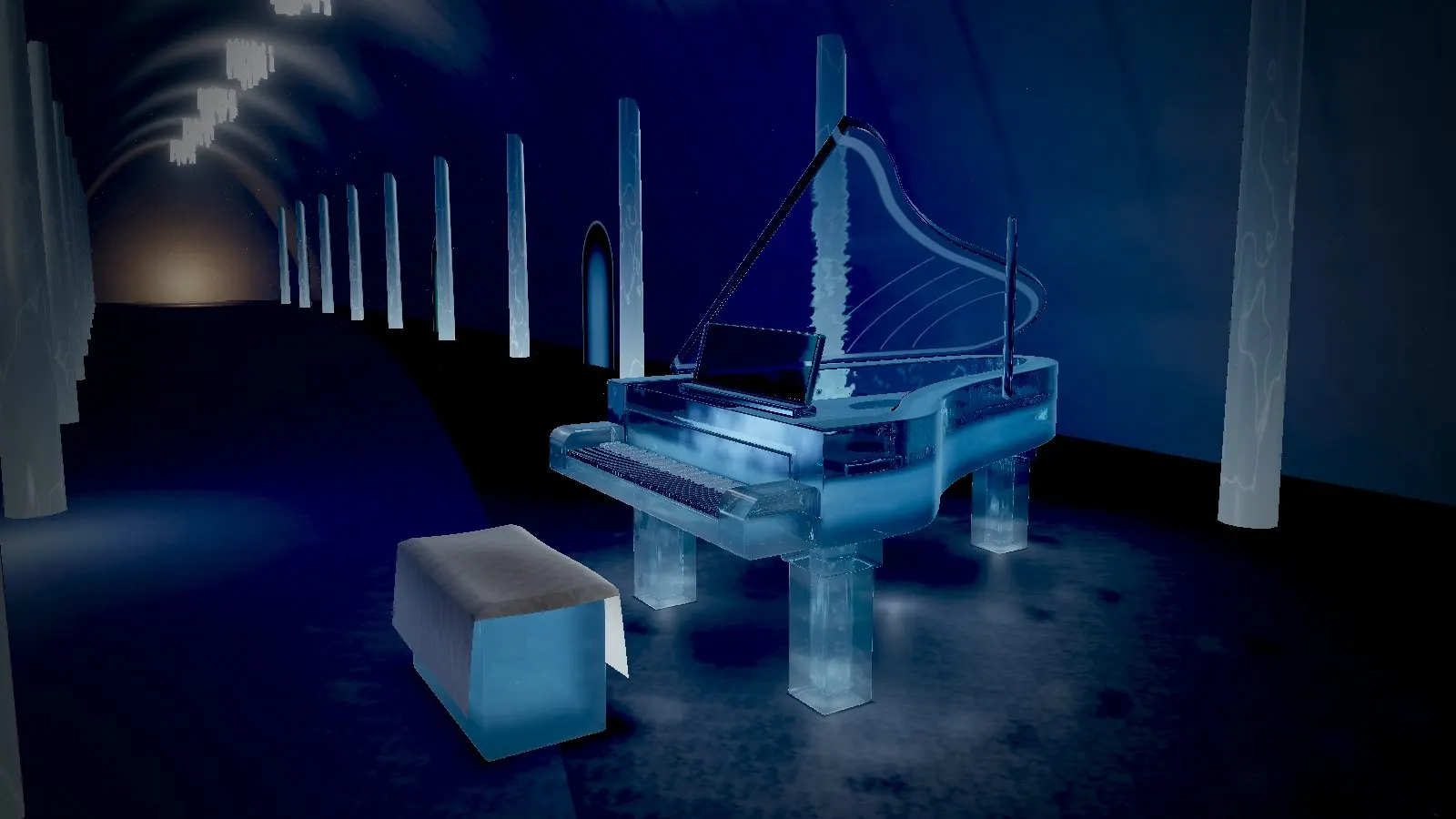
Let’s do the piano first. At zero degrees Celsius, where ice actually melts, a mole of ice has a standard molar entropy of forty-one point three, and a mole of liquid water has sixty-three point three.
So the entropy change for melting is the liquid minus the ice, sixty-three point three minus forty-one point three, which is plus twenty-two point zero joules per mole kelvin. It’s positive, exactly what we predicted when the molecules let go, and both values are for zero degrees, where ice really melts, which is why the liquid here doesn’t match the twenty-five degree table. Here’s a quick check. Which of these has a standard molar entropy of zero at twenty-five degrees Celsius?
Now it’s your turn. Use the table to find the standard entropy change when water vapor condenses into liquid water at twenty-five degrees Celsius, in joules per mole kelvin.
ΔS° for a reaction: every coefficient counts
A phase change has just one thing on each side, but a reaction has several, and that’s where the coefficients come in. Let’s go back to our sulfur dioxide reaction, and before we touch the table, let’s predict. Three moles of gas become two, so we expect the entropy to go down. For the products, there are two moles of sulfur trioxide, so that’s two times two hundred fifty-six point seven seven, which is five hundred thirteen point five four.
Now the reactants. Before I write anything, think about what has to go in this bracket, and make sure you don’t leave anything out. There are two moles of sulfur dioxide at two hundred forty-eight point two two each, plus one mole of oxygen at two hundred five point one five, which comes to seven hundred one point five nine.
Products minus reactants comes to negative one hundred eighty-eight point oh five joules per mole kelvin, which is exactly the sign we predicted. And on the AP exam, this is the setup that earns the point, with every species multiplied by its coefficient, products minus reactants, and the units, plus a sign that you can check against the moles of gas.
Now watch what happens if you leave oxygen out because it’s an element. You’d get plus seventeen point one, which is the wrong sign entirely, and your prediction would catch that mistake right away. And if you forget the coefficients, you get negative one hundred ninety-six point six, which has the right sign by pure luck, so only writing out the setup carefully catches that one.
Your turn with a whole reaction. Here’s nitrogen and hydrogen making ammonia, so use the table to find the standard entropy change, in joules per mole kelvin.
Remember the tie I said we’d come back to? Here’s carbon monoxide reacting with water vapor, and there are two moles of gas on each side, so counting gas moles tells you nothing at all.
The table settles it. The products add up to three hundred forty-four point four seven, and the reactants to three hundred eighty-six point five, so the entropy change is negative forty-two point oh three, which isn’t zero at all. Different gases have different entropies, and here hydrogen, the lightest and simplest molecule on the table, has by far the lowest, so when the gas moles tie, the table is the only way to know.
Back to the river: one kilogram of the piano
We made a promise at the start of this lesson, standing next to this river, so let’s keep it. Here’s one kilogram of the piano’s ice, sitting at the water’s edge at zero degrees Celsius. As it melts, it goes from ice to liquid water at the same temperature, and we already know that change is plus twenty-two point zero joules per kelvin for every mole of water. So how much entropy does the whole block gain? Let’s work it out.
We start with one point zero zero kilograms, turn that into grams, and then into moles using water’s molar mass of eighteen point oh two grams per mole, and then we multiply by twenty-two point zero joules per mole kelvin. Kilograms cancel kilograms, grams cancel grams, and moles cancel moles, which leaves joules per kelvin.
That’s about twelve hundred twenty joules per kelvin, which to three significant figures is plus one point two two kilojoules per kelvin, for that one block. And notice the units changed. This answer is for the whole block, so it’s in joules per kelvin, and the per mole is gone because we multiplied by the number of moles.
Last one. Next winter the river freezes that same kilogram of water back into ice at zero degrees Celsius. What’s its entropy change, in kilojoules per kelvin?
So now you can look at this river and say exactly what happened to the piano. Its molecules went from shivering in place to sliding past each other, so its entropy went up, and for every kilogram, by about one point two two kilojoules per kelvin.
There’s one thing this lesson can’t explain yet, though. Freezing lowers the water’s entropy, and the Torne still freezes over every single winter, and every March, they cut the next hotel out of it. So there must be something else we haven’t counted yet, and that’s where the next lesson picks up.