
Topic 6.7 key terms
- bond enthalpy (bond energy)
- The energy required to break one mole of a given bond in the gas phase; always positive. The same amount is released when that bond forms.
- average bond enthalpy
- A tabulated bond enthalpy averaged over many different molecules containing that bond, so a ΔH calculated from it is an estimate.
Transcript
1,122 words · 5 parts
Bond enthalpies: where the heat comes from
Let’s go back to the flame one more time, because the answer is hiding in the bonds, the connections that hold atoms together. In a chemical reaction, bonds can break, form, or both, so let’s start with just one bond. Here’s a single hydrogen molecule, two hydrogen atoms held together by one bond, and this graph is one you might have seen before, the energy of the pair as the two atoms get farther apart.
Before you touch it, make a prediction. If you pull these two atoms apart, what happens to the energy? Okay, grab one of the hydrogen atoms and pull it all the way away from the other one.
And if the two atoms come back together, the same energy comes out again, and it doesn’t vanish, it goes into whatever’s nearby, like this molecule that just got knocked flying. So breaking a bond always takes energy, and forming a bond always releases it, which is why every time bonds break or form in a reaction, the potential energy of the system changes.
Which means the explanation a lot of people give for a flame, that the heat comes from breaking the hydrogen apart, is exactly backwards, because breaking the hydrogen apart costs energy. So if breaking costs, the heat has to come from the forming.
The energy ledger
Let’s keep a ledger for the whole reaction, two H two plus O two, the way you’d keep track of money coming in and going out. Each molecule here stands for a whole mole of them, so the numbers come out in kilojoules per mole of reaction. First we break everything, and each H–H bond costs four hundred thirty-six kilojoules, and there are two of them, and the double bond in O two costs four ninety-eight, so the total we have to pay is thirteen seventy.
That leaves six loose atoms way up here, and I want to be clear that this is just a way of keeping the books, because in a real flame the atoms never all come apart at once. Before we build the products, find every bond that’s going to form, and tap each one in the two water molecules.
Now watch what happens as they form, because every O–H bond pays back four sixty-four kilojoules, so the four of them pour out eighteen fifty-six, which is more than we paid, and the waters land lower than where we started. We paid thirteen seventy and got back eighteen fifty-six, so four eighty-six kilojoules are left over, and that leftover energy is the heat of the flame.
Here’s how you’d write it on a test. Draw the structures so you can count the bonds, two H–H bonds and the double bond in O two to break, and two waters with two O–H bonds each to form.
Delta H is approximately the energy it takes to break the bonds minus the energy released forming them, thirteen seventy minus eighteen fifty-six, which is minus four eighty-six kilojoules per mole of reaction. Breaking goes first in that subtraction because it’s the energy going in, so whenever more comes back out than went in, the answer is negative, the same minus sign as heat leaving a flame.
Compare that with the measured value we used before, minus four eighty-three point six. That’s remarkably close for something we added up from a table, but it’s still an estimate, and in a minute we’ll see why. And if I had to explain it in one sentence, I’d say that more energy is released forming the bonds in the products than is required to break the bonds in the reactants, so the reaction is exothermic.
When breaking wins
Now let’s run the ledger on the ammonia cracker, which we know takes heat in. Two ammonia molecules have six N–H bonds between them, at three ninety each, so breaking them costs twenty-three forty kilojoules.
Forming the products pays some of that back, so drag the products floor to wherever you think the nitrogen and hydrogen will end up. Notice that forming the products still released energy, twenty-two fifty-four kilojoules of it. It just released less than the breaking cost, and that’s what makes a reaction endothermic.
So the bonds predict plus eighty-six kilojoules per mole of reaction, and the measured value is plus ninety-one point nine, which is close, but it isn’t exact, and the reason is the word average. The table gives average bond enthalpies, because an N–H bond in ammonia isn’t exactly the same as an N–H bond in some other molecule, so the table averages them over lots of different molecules, which means any answer you build from it is an estimate. The table is also for molecules in the gas phase, which is why we wrote the water from the flame as a gas.
Working backward, the AP way
This exact question was on the 2019 AP exam, and it runs the ledger backward. Two bromine chloride molecules turn into one bromine molecule and one chlorine molecule, with a delta H of plus one point six kilojoules per mole of reaction, and they give you the bond enthalpies for the bromine–bromine bond and the chlorine–chlorine bond, but not for the bromine–chlorine bond.
So we write the ledger with the bromine–chlorine bond as our unknown, D. Two molecules of bromine chloride means two of those bonds to break, so the cost is two D, and forming one bromine–bromine bond and one chlorine–chlorine bond pays back one ninety-three plus two forty-three. This is the line that earns the point, plus one point six equals two D minus four thirty-six, and the two in front of D is where people slip. Now you solve it for D, the bond enthalpy of the bromine–chlorine bond.
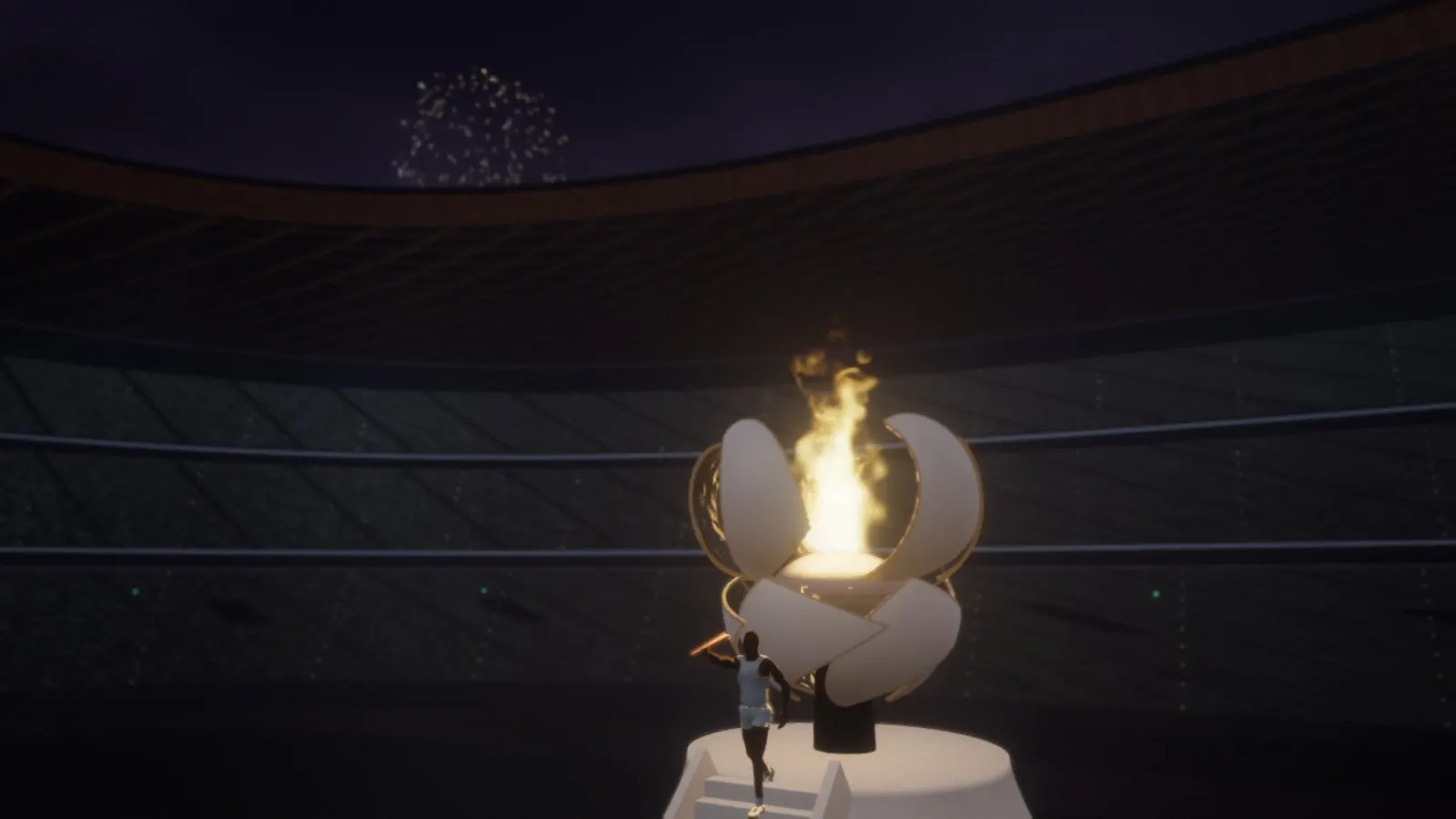
One megajoule
So let’s go back to Tokyo and finish what we promised. How much hydrogen does it take to get a million joules out of this flame, one megajoule? Use the heat per mole of hydrogen, minus two forty-one point eight kilojoules, and work out the mass in grams.
Eight point three four grams, about the mass of a couple of coins, although hydrogen is so light that it’s about a hundred liters of gas. And that’s a million joules, roughly enough to take three liters of water from room temperature all the way up to its boiling point.
And now you can say where every bit of that heat came from. Breaking the H–H bonds and the double bond in O two costs energy, forming the O–H bonds in the water releases more, and the difference is the flame. The sodium made it yellow so the world could see it, but the heat was always coming from the water being made, two new molecules and four new bonds at a time.