
Topic 6.9 key terms
- Hess's law
- A process can be broken into steps, each with its own ΔH; because energy is conserved, the ΔH of the overall process (at constant pressure) equals the sum of the steps' ΔH values. Reverse a reaction → flip the sign; multiply by c → multiply ΔH by c; add reactions → add ΔH values.
Transcript
1,417 words · 6 parts
Hess’s law: two routes, one answer
To answer that, let’s go back to the weld’s two trays, because there’s a third tray we haven’t looked at yet. Way up here, above both of them, are the elements themselves, the iron, the aluminum and the oxygen gas, sitting on the zero line we measure every number in our table from. That gives us a second way down. First we climb from the reactants up to the elements by un-making the iron oxide, and then we fall to the products by making aluminum oxide.
These two cards are the formation reactions straight from our table, and one of them points the wrong way for our trip. Flip the card that has to run backward to get us from the reactants to the products.
So the trip goes up by eight twenty-five point five and down by sixteen seventy-five point seven, and the oxygen we freed on the way up gets used again on the way down, so it cancels. Add the two steps together and we get negative eight fifty point two, which lands on exactly the same number as the direct drop, and that is not a coincidence.
Now, the crucible never actually does this, because it never makes oxygen gas, and the oxygen passes straight from iron to aluminum. But the energy comes out the same either way, because both routes start and end in the same place. This idea is called Hess’s law, and it says you can break a process into a series of steps, each with its own delta H, and the steps add up to the delta H of the whole thing.
Clamping a mold and pouring iron are steps for the crew, which is a different thing from these energy steps. And this is the real reason products minus reactants works. Subtracting the reactants’ total is the climb up to the elements, because un-making the reactants flips the sign of their formation values, and adding the products’ total is the fall back down.
Why the route doesn’t matter
Let’s take the chemistry away for a moment and look at any start and any finish. This route takes three steps between the same start and the same finish, so compared with going straight down, how much energy does it release?
Let’s slide a stopover up and down and keep an eye on the numbers. Whatever the first step changes by, the second step changes by exactly the same amount the other way, so the total never changes.
It can’t change, because if one route gave off more energy than another, you could go down that route and come back up the other one and come out ahead with free energy every single lap. Energy is conserved, so that never happens, and every route between the same start and finish adds up to the same delta H.
Each step’s energy comes from potential energy changing as particles let go of some attractions and form new ones, and at constant pressure, the heat each step exchanges is its delta H, so the delta H of the whole process is the sum of its steps. Pause any time and drag the stopover yourself, and see if you can break it.
Flip, scale, add
Hess’s law comes with three rules, and every one of them is really saying that a reaction and its delta H always move together. Reverse a reaction and delta H keeps its size but flips its sign, so turning iron and aluminum oxide back into rust and aluminum would take in eight fifty point two kilojoules, a delta H of positive eight fifty point two.
If you multiply a reaction by some number, you multiply delta H by the same number, so rusting written the simple way, four moles of iron and three of oxygen gas making two moles of iron oxide, is twice the formation reaction, two times negative eight twenty-five point five, or negative sixteen fifty-one. The same rust that eats rails is what welds them back together. And if you add reactions together, you add their delta H values, which is exactly what we did on the trays.
The mistake I see most is flipping the equation and forgetting to flip the sign, so think of each reaction and its delta H as one card that always turns over together. Using the weld’s negative eight hundred fifty point two, what’s delta H for this reaction?
The number nobody can measure
So, back to carbon monoxide. We can’t burn carbon to carbon monoxide and nothing else, but there are two burns we can measure really well. Burning carbon all the way to carbon dioxide releases three ninety-three point five kilojoules, and burning carbon monoxide to carbon dioxide releases two eighty-three.
So we go down the first one, then back up the second one, which flips its sign to positive two eighty-three, and we land at negative one ten point five, the exact number in our table. That’s how chemists get numbers for reactions nobody can run cleanly, by finding a route made of reactions they can measure.
On paper, equation A stays as it is, and we reverse equation B, so its delta H turns positive. When we add them, the carbon dioxide cancels, and half a mole of oxygen cancels from each side, leaving carbon plus half an O two making carbon monoxide, at negative one ten point five.
Here’s a real question from the 2023 AP exam that works the same way. They wanted delta H for pulling a gaseous aluminum chloride molecule completely apart into atoms, using these three reactions. First I look at where each substance needs to end up. Aluminum chloride is a reactant in the target but a product in reaction two, so we reverse reaction two, and its delta H becomes positive five eighty-three.
And that one line, reversing reaction two and flipping its sign, already earns the first point on the real scoring guide, before you’ve even added anything up. Reaction three already makes the gaseous aluminum, so it stays as it is, and reaction four makes two chlorine atoms when we need three, so we multiply it by three halves.
And when we stack the three, the solid aluminum and the three halves of chlorine gas cancel, leaving exactly the target. Now add them up and finish the AP question, in kilojoules per mole of reaction.
When the product condenses
Here’s one more way the AP exam tests steps, and this one needs no calculator. Sulfur dioxide and oxygen make sulfur trioxide gas, with a delta H of negative one ninety-eight kilojoules. What if the product were liquid sulfur trioxide instead? Before I draw it, think back to the two water rows in our table, and decide where the liquid would sit on this picture. So when the product is liquid, what happens to the size of delta H, and why?
Water has the same extra step, and our table already measures it. Liquid water sits at negative two eighty-five point eight, and water vapor at negative two forty-one point eight. Condensing one mole takes us from the gas row down to the liquid row, a step of negative forty-four kilojoules. Propane’s flame makes four moles of water. Letting all four condense is one more step down, four times negative forty-four, or negative one hundred seventy-six kilojoules.
Back to the rail
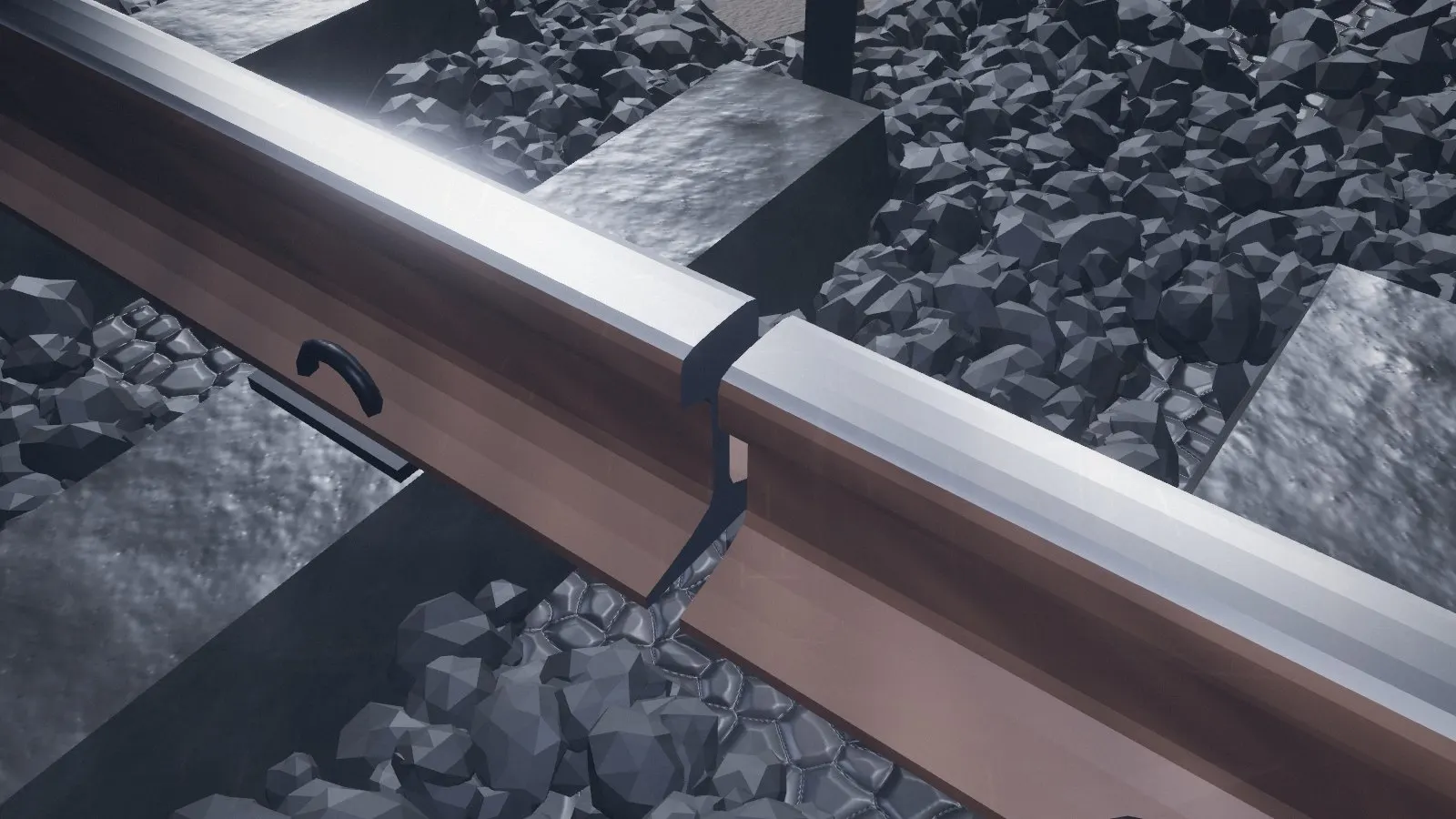
And now we can finally go back to the rail, right where we left it. From the table we got negative eight fifty point two kilojoules, and from a route through steps this crucible never takes, we got negative eight fifty point two again, the very same number. There’s one more thing I want you to see clearly, because it trips a lot of people up.
Tap the picture that negative eight hundred fifty point two kilojoules actually describes. So delta H tells us the energy released between those cool starting and ending states, but by itself it can’t give you the temperature of the pour, because for that you’d also need how much heat the iron and slag soak up, the energy to melt them, and the heat lost to the rails and the sand.
And that heat really does escape, as the joint cools from white to orange to red to grey and the crew strips the mold and trims away the extra metal. By morning there’s no gap at all, and the first train rolls straight over it without a click. So every time a train rolls over a weld like this one, it’s rolling over a reaction you can now calculate two different ways.