
Topic 6.8 key terms
- standard enthalpy of formation (ΔH°f)
- The enthalpy change when exactly one mole of a compound forms from its elements in their standard states, e.g. 2Al(s) + 3/2 O₂(g) → Al₂O₃(s), ΔH°f = −1675.7 kJ/mol.
- standard state
- The reference form a substance is specified in at standard pressure (1 bar); the temperature and phase are stated with the table (here 25 °C). An element in its reference form at these conditions, such as O₂(g), Fe(s), Al(s) or C(s, graphite), has ΔH°f = 0.
- enthalpy of reaction from formation enthalpies
- ΔH°rxn = Σ n ΔH°f(products) − Σ n ΔH°f(reactants), each ΔH°f multiplied by its coefficient; the result is in kJ per mole of reaction as written.
- per mole of reaction
- For the equation exactly as written: ΔH° = −850.2 kJ/mol_rxn for Fe₂O₃(s) + 2Al(s) → 2Fe(s) + Al₂O₃(s) means 1 mol Fe₂O₃ reacting with 2 mol Al.
Transcript
1,432 words · 5 parts
Enthalpy of formation: a railway welded at midnight
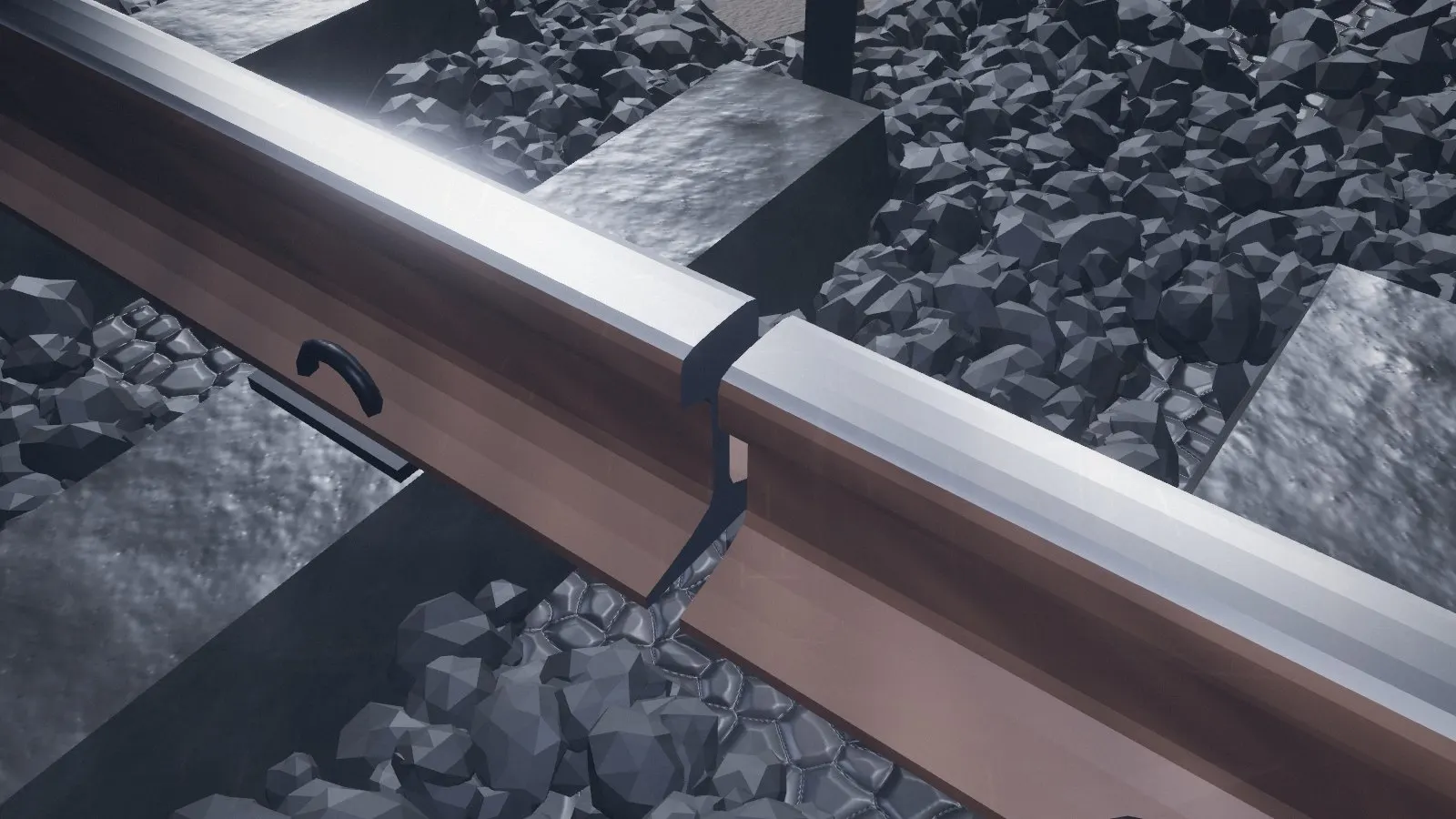
It’s a little after midnight on a railway line in Germany, the last train went through hours ago, and the crew out here has one job tonight. It’s this gap in the track, about as wide as your thumb, and they’re going to fill it with iron that doesn’t exist yet. First they clamp a mold around the gap and warm up the rail ends with a gas flame, but that flame isn’t what’s going to fill it.
That job belongs to the pot on top, called a crucible, which is packed with a powder of iron oxide, basically rust, mixed with aluminum. In just a few seconds, the aluminum rips the oxygen right off the iron, and what’s left behind is iron so hot that it pours like water. It drains into the mold and fills the gap, the lighter leftovers spill over into the pans on the side, and by morning, those two rails will be one piece of steel.
Crews have been joining rails with this reaction since 1899, when it first welded the tram tracks of Essen, and it’s a big part of why modern trains don’t go clickety-clack, because that sound was the wheels hitting the gaps between the rails. Nobody melted this iron in a furnace. The reaction made the iron, and it released enough energy to leave it liquid, so I want to know how much energy that is.
By the end of this lesson, you’ll be able to calculate exactly how much energy this reaction releases, using nothing but a table of numbers, and then check your answer a second way, by breaking the reaction into steps this crucible never actually takes, and watching both answers land on the very same number. So let’s look inside that crucible, because the answer starts with where the oxygen goes.
The reaction races through the powder like something alive, the heavy iron it makes rains down to the bottom, and the much lighter aluminum oxide floats on top as slag. Then the bottom opens, and the iron drains into the mold first, with the slag riding on top of it. Down at the level of atoms it’s simpler than it looks, because each unit of iron oxide hands its three oxygen atoms to two aluminum atoms, and the two iron atoms are left behind as metal.
Nothing comes in from the air, because the mixture brings its own oxygen. Real rail portions add a few extras to make rail steel, but the energy comes from this same swap, oxygen moving from iron to aluminum.
Now hand each of these three oxygen atoms over to an aluminum atom yourself, the way the reaction does. The oxygen leaves iron for aluminum because aluminum holds on to oxygen much more tightly than iron does, and the energy this weld gives off comes out of that difference.
One number, one reaction
To put a number on that difference, we need a table of standard enthalpies of formation, and this is a classic AP setup, where they hand you a table like this and an equation and ask for delta H. Every number in this table is the delta H of one particular reaction, and for aluminum oxide it’s the reaction that makes one mole of it from aluminum metal and oxygen gas.
That three halves in front of the oxygen looks a little strange, but the table promises exactly one mole of product, and its three moles of oxygen atoms come as three halves of a mole of O two, so we let the oxygen be a fraction. Let’s do iron three oxide together. One mole of it needs two moles of iron and three halves of a mole of O two, and the table gives it a delta H of negative eight hundred twenty-five point five kilojoules.
Every element here starts in its standard state, which for this table means its most stable form at one bar and twenty-five degrees, so oxygen is O two gas, iron and aluminum are solid metals, and carbon is graphite. And elements in their standard states always get a zero. Forming iron from iron isn’t a reaction at all, so nothing changes and delta H is zero, and that zero is the starting line we measure every compound from.
But that doesn’t mean every element gets a zero, because a lone oxygen atom isn’t oxygen’s standard state, so oxygen atoms in the gas have a value of their own. Phases matter too, which is why water shows up twice in our table, as a liquid and as a gas, with two different numbers.
So which of these equations has a delta H that’s exactly the standard enthalpy of formation of iron three oxide? And which one of these has a standard enthalpy of formation that isn’t zero?
Products minus reactants
Back to the weld, and before calculating anything, let’s predict the sign. The reactants add up to negative eight twenty-five point five, since aluminum counts as zero, and the products sit way down at negative sixteen seventy-five point seven, so delta H has to come out negative.
Delta H is the products’ total minus the reactants’ total, with each formation value multiplied by its coefficient, because the table gives kilojoules per mole and the equation tells us how many moles. For the products, two moles of iron times zero, plus one mole of aluminum oxide times negative sixteen seventy-five point seven kilojoules per mole, where moles cancel moles and we’re left with kilojoules.
For the reactants, one mole of iron oxide times negative eight twenty-five point five, plus two moles of aluminum times zero. So delta H is negative sixteen seventy-five point seven, minus negative eight twenty-five point five, which comes out to negative eight hundred fifty point two kilojoules for each mole of reaction.
Both oxides hold exactly three oxygen atoms, so this subtraction is really saying that moving those three oxygens from iron over to aluminum releases the difference between the two numbers. The classic mistake is subtracting the other way around, reactants minus products, which gives positive eight fifty point two and says the weld absorbs energy, which it clearly doesn’t.
Here’s what that number looks like, with two trays holding exactly the same atoms, the reactants up here and the products far below, and the reaction is one long drop. That’s enough energy to bring almost three liters of water from room temperature to a boil, from only about two hundred fourteen grams of powder. So our answer means negative eight hundred fifty point two kilojoules for one mole of iron oxide reacting with two moles of aluminum, exactly as the equation is written.
The flame that warms the rails
Remember the blue flame that warmed the rail ends? It burns propane, so let’s use the same table to see how much energy that flame releases. Here’s propane burning, with liquid water as the product, the way these tables usually write it. From the table, oxygen is an element in its standard state, so it’s zero, and for water we want the liquid row, negative two eighty-five point eight.
The reactants are quick, one mole of propane at negative one oh four point seven plus five moles of oxygen at zero, so negative one oh four point seven. For the products, we have three moles of carbon dioxide and four moles of liquid water, and I’ll let you finish this one. What’s delta H for burning propane, in kilojoules per mole of reaction?
Why thermite melts its own iron
Most of the world’s iron starts out in a blast furnace, where carbon monoxide, not aluminum, pulls the oxygen off iron oxide. It’s the same iron oxide and the same iron coming out, with a different thief. This one’s all yours, so use the table to find delta H for the blast furnace reaction.
Negative twenty-three point five is tiny next to the weld’s negative eight fifty. When carbon monoxide takes the oxygen, the products end up only a little lower than the reactants, but when aluminum takes it, the products end up far lower, because aluminum oxide sits so far down the table. That’s why the weld can melt its own iron, while a blast furnace has to keep burning coke, a fuel made from coal, the whole time just to stay hot.
And now I have a confession to make about our table. Look at carbon monoxide, negative one ten point five. If you burn carbon, you always get some carbon dioxide too, so nobody can run the one reaction that makes carbon monoxide by itself and measure it, which makes you wonder where that number came from.