
Date and start time
AP Precalculus is on Tuesday, May 11, 2027, in Session 1, the slot the College Board used to call the morning session. At schools in the lower 48 states, Hawaii and Washington, D.C., Session 1 starts at 8 a.m. local time. In Alaska it starts at 7 a.m. An exam can begin up to an hour after the listed time, and your AP coordinator tells you exactly when and where to report. For schools outside the US, the College Board’s start-time table gives the local time for each time zone where AP exams are given.
| Exam | Date | Session |
|---|---|---|
| AP Precalculus | Tuesday, May 11 | Session 1 |
| AP Precalculus, late testing | Thursday, May 20 | Session 1 |
| AP Calculus AB and BC | Monday, May 10 | Session 1 |
| AP Statistics | Tuesday, May 11 | Session 2 |
Statistics is the same afternoon, so a student taking both has a long day but no conflict. Late testing uses a different version of the exam, and your AP coordinator has to order it for you.
The format, part by part
The exam has two sections. Section I is 42 multiple-choice questions in 1 hour 45 minutes. Section II is four free-response questions in 1 hour 10 minutes. Each section is split into a calculator part and a no-calculator part, and each part has its own time limit.
| Part | Questions | Time | Share of score | Calculator |
|---|---|---|---|---|
| Section I, Part A: multiple choice | 29 | 65 min | 43.75% | Not allowed |
| Section I, Part B: multiple choice | 13 | 40 min | 18.75% | Graphing calculator required |
| Section II, Part A: free-response questions 1 and 2 | 2 | 35 min | 18.75% | Graphing calculator required |
| Section II, Part B: free-response questions 3 and 4 | 2 | 35 min | 18.75% | Not allowed |
| Total | 46 | 2 h 55 min | 100% |
AP Precalculus exam timing: 2027 and 2026
Look at the share column before you plan anything. The two calculator-free parts carry 62.5% of your score, and the first of them, Part A of the multiple choice, is the largest block on the exam at 43.75%. That one hour and five minutes counts for more than all four free-response questions put together. The College Board says plainly that most of the exam has to be done without technology, and that when an equation can be solved with precalculus algebra, you’re expected to solve it by hand.
Points are also worth about the same everywhere. A Part A question is worth about 1.51% of the weighted score, a Part B question about 1.44%, and a single free-response point about 1.56%. So one point on a free-response question counts about as much as one multiple-choice question, and a question has six available points, so partial work can earn credit even when you cannot finish it. (We got these values by dividing the published weights by the number of questions or points; the College Board doesn’t publish a value per question.)
How the hybrid format works
AP Precalculus is a hybrid digital exam. You answer the multiple-choice questions in the Bluebook app on a laptop or tablet. For the free response you read the questions in Bluebook but write your answers by hand in a paper booklet, which is sent off for scoring. Only what’s in the booklet is scored, not your scratch paper.
The 2026 free-response directions said you could move back and forth between the two questions in a part until time ran out, and that the clock on screen would turn red when five minutes remained, with no warning from the proctor. The 2027 directions aren’t out yet, so plan on the same and keep an eye on the clock yourself. The College Board’s exam page links a Bluebook test preview and a sample free-response booklet. Try both before May so neither is new on exam day.
What changed for 2027
May 2027 is the first exam with the new timing. The College Board announced it in its fall 2026 update to the course description. The sample question 1 also has a minor wording change in C(i), with no scoring change. Practice tests and score calculators written before then describe the old exam, so check any you use against this table.
| Part | 2026 | 2027 |
|---|---|---|
| Multiple choice, Part A (no calculator) | 28 questions, 80 min | 29 questions, 65 min |
| Multiple choice, Part B (calculator) | 12 questions, 40 min | 13 questions, 40 min |
| Free response, Part A (calculator) | 2 questions, 30 min | 2 questions, 35 min |
| Free response, Part B (no calculator) | 2 questions, 30 min | 2 questions, 35 min |
| Total testing time | 3 h | 2 h 55 min |
| Time per question, Part A | about 2 min 51 s | about 2 min 14 s |
| Time per question, Part B | about 3 min 20 s | about 3 min 5 s |
| Time per free-response question | 15 min | 17½ min |
The squeeze is in Part A. It gained a question and lost 15 minutes, so you now get about 37 seconds less per question than students had in 2026. The free-response parts went the other way, with 2½ more minutes per question. If you practice with older materials, time Part A at the new pace.
Question 2 has a new shape
The other change is inside free-response question 2, the one that models a real, non-repeating situation. From 2024 to 2026, its part B ended with B(iii): explain, using concavity, why estimates from a secant line land above or below the model. It was one of the hardest points on the exam. The Chief Reader reports put its average at 0.04 in 2024 and 0.06 in 2025, so about 1 student in 20 earned it. For 2027 the College Board removed it and widened part C.
In the updated sample question in the course description, part B asks for an average rate of change and what it means in context. Part C then has two points: write and solve an equation for when the model reaches a cutoff, which is calculator work, and explain how that answer limits the domain where the model makes sense. That sample is a public example of the 2027 shape. Here is one built the same way, with our own numbers and a six-point practice rubric based on the sample’s tasks.
A runner starts a training plan. At the start of the plan (), the runner’s time for a 5-kilometer race is 31.5 minutes. After 8 weeks (), it is 27.9 minutes. The race time can be modeled by , where is the time in minutes and is the number of weeks since the plan began. A. (i) From the two data points, set up two equations you could solve for and . (ii) Give and as decimals. B. (i) Compute the average rate of change of the race time from to , in minutes per week, and show how you got it. (ii) Say what that number means for the runner. C. The coach will rely on model only while it predicts a time of at least 26 minutes. (i) Set up and solve an equation for the week when the predicted time is exactly 26 minutes, giving as a decimal. (ii) Use that value to say what the domain of should be, and why, in terms of the training plan.
A (i) gives , and gives .
A (ii) Since , . Then (stored in the calculator as ). So .
B (i) minutes per week.
B (ii) From week 0 to week 8, the runner’s race time decreased by an average of 0.45 minutes per week.
C (i) , so and weeks.
C (ii) The coach uses the model only while the predicted time is 26 minutes or more. is decreasing, so the predicted time reaches 26 minutes at and is below 26 after that. The plan starts at . So an appropriate domain for is weeks.
How it scores
| A (i): two equations (1 point) | 1/1 | Both equations come straight from the two data points, substituted into the model. |
|---|---|---|
| A (ii): values of a and b (1 point) | 1/1 | Both values are right to three decimal places. Solving the system on the calculator is fine; the 2024 and 2025 reports say no algebra was required on the matching part, but the decimals must be accurate. |
| B (i): average rate of change (1 point) | 1/1 | The difference quotient is written out, not just the answer, because the question asks for the computations. |
| B (ii): interpretation (1 point) | 1/1 | It names the interval, says the time decreased, says “on average” and gives the units. The College Board’s model answer for its sample has the same four pieces. |
| C (i): equation and value of w (1 point) | 1/1 | The equation is written before it is solved, and the answer is accurate to three places because the unrounded b was used. |
| C (ii): explanation (1 point) | 1/1 | It ties the upper end of the domain to the 26-minute cutoff in the context and gives the starting point too. A bare “” gives no reason, and the question asks why. |
Why it works
- Rounding to before part C gives , wrong in the first decimal place. Keep the full value stored and use it.
- Four of the six points are calculations. The two written points, B (ii) and C (ii), are the kind the Chief Reader reports say students lose most often, so write those sentences out in full and name the context.
What’s on it, and what isn’t
The exam covers Units 1, 2 and 3 of the course. Unit 4 is not tested. The College Board’s reason is that Units 1–3 are what colleges usually expect students to know before they give credit or placement, while Unit 4 is there for schools whose state or district requires it. Your school may still teach it, and its parametric functions and vectors come back in Calculus BC, so learn it for your class. Just don’t spend May on it.
| Unit | Topics | Share of multiple choice | Free-response questions it feeds |
|---|---|---|---|
| 1. Polynomial and Rational Functions | 1.1–1.14 | 30–40% | 1 and 2 |
| 2. Exponential and Logarithmic Functions | 2.1–2.15 | 25–40% | 1, 2 and 4 |
| 3. Trigonometric and Polar Functions | 3.1–3.15 | 30–35% | 3 and 4 |
| 4. Functions Involving Parameters, Vectors, and Matrices | 4.1–4.14 | Not tested | None |
The College Board also weights the exam by the kind of thinking it asks for. Procedural and symbolic fluency (doing the algebra) is 35–50% of the exam, moving between graphs, tables, equations and words is 20–30%, and communication and reasoning is 30–40%. So up to 40% of a math exam asks you to interpret results and justify conclusions, which is why a vague sentence costs so much on the free response.
Not tested, even inside Units 1–3
- Half-angle and tangent sum identities. Neither is tested, and neither is any other identity the course doesn’t list. The Pythagorean identity and the sum, difference and double-angle identities for sine and cosine are tested (topic 3.12).
- Root-hunting rules and partial fractions. The rational root theorem and Descartes’ rule of signs are left to Algebra 2, and partial fractions aren’t in the course. Polynomial long division is; synthetic division isn’t required.
- Series. Arithmetic and geometric sequences are tested, but adding up their terms is outside the course.
- Open or closed ends on intervals of increase and decrease. The fall 2026 course description puts that distinction outside the course and the exam.
- Log scales on the horizontal axis. Semi-log plots on the exam use a log scale on the vertical axis only.
No formula sheet is provided
The College Board prints reference sheets for some AP exams, among them Chemistry, Physics and Statistics, and lists them on its reference-information page. AP Precalculus isn’t on that list, and the course description and the released exams include no formula sheet. Plan on every identity, exact value and log property coming from memory. Our formula sheet page sorts what to memorize from what you can work out, and the AP Precalculus cheat sheets cover each unit and the whole course.
The four free-response questions
Every free-response question has three lettered parts and six points, and each point is for one specific thing: an equation, a value, a reason. The four questions do the same jobs every year.
| Question | Calculator | Units | What it asks you to do |
|---|---|---|---|
| 1. Function Concepts | Yes | 1–2 | Work with functions given as a graph, a table or a formula: compositions, inverses, zeros, end behavior and asymptotes, and choosing a type of function |
| 2. Modeling a Non-Periodic Context | Yes | 1–2 | Build a model of a real situation from data, find and interpret an average rate of change, then use the model to decide where it stops applying |
| 3. Modeling a Periodic Context | No | 3 | Turn a repeating motion, like a point on a turning wheel, into a sinusoid: label points on its graph, find the constants in its equation, describe its behavior on an interval |
| 4. Symbolic Manipulations | No | 2–3 | Solve exponential, logarithmic, trigonometric and inverse trigonometric equations and rewrite expressions, with exact values and every step shown |
Questions 1 and 2 come first, with the calculator, in one 35-minute part. Questions 3 and 4 follow without it. In both 2024 and 2025, question 4 had the lowest average of the four, and the average student earned under half of the 24 points (the averages are in the section on how hard the exam is). The AP Precalculus FRQ guide takes each question apart with its point-by-point scoring.
Calculators: what’s allowed, and when
A graphing calculator is required in multiple-choice Part B (13 questions) and for free-response questions 1 and 2, and you can’t use one anywhere else. Even in Part B, the College Board says only some questions need it, so don’t reach for it out of habit when the algebra is quicker.
Desmos on the exam
Bluebook has a Desmos graphing calculator built in, and it appears only in the calculator parts, including free-response questions 1 and 2, which you read in Bluebook. That built-in version is the only Desmos allowed. The Desmos website and app are fine all year in class but not on exam day.
Handheld calculators
You can also bring up to two handheld graphing calculators from the College Board’s approved list. You can’t share them, and you don’t have to clear their memory. The AP Precalculus calculator page lists the models that have every capability the exam expects, among them the TI-83 Plus, the TI-84 Plus family (CE included), the TI-84 Evo, the TI-Nspire family (CAS models included), the TI-89 Titanium, the NumWorks with software version 19.3 or later, the HP Prime, the Sharp EL-9900, the Zero ZGC4, and Casio’s FX-9750, FX-9860, FX-CG-50 and FX-CG-500 (without its stylus). Phones and laptop calculator apps aren’t allowed as calculators, and neither are calculators with a typewriter-style keyboard. Your laptop or tablet running Bluebook is your testing device.
What the calculator has to do
The College Board lists the jobs your calculator must handle, and the calculator questions are built around them. Practice each one on the calculator you’ll use until it takes seconds:
- calculations with exponents, roots, trig values and logarithms
- graphing a function and reading its behavior from the graph
- making a table of values
- finding real zeros
- finding where two graphs intersect
- finding minimums and maximums
- solving a one-variable equation numerically
- regressions (linear, quadratic, cubic, quartic, exponential, logarithmic and sinusoidal) and their residual plots
Habits the directions ask for
- Radian mode. The directions say so for every calculator part.
- Three decimal places. Unless a question says otherwise, a decimal answer must be accurate to three places after the decimal point.
- No rounding along the way. Store intermediate values in the calculator and use the stored values. In the runner example above, rounding one constant moved the answer by about a tenth.
How the exam is scored
Multiple choice is scored by computer. Your score is the number you get right, and a wrong or blank answer costs nothing, so answer every question, even if it’s a guess.
The free-response booklets are scored in June at the AP Reading, by college faculty and experienced AP teachers. They use the scoring guidelines, which allow credit for some partial or consistent follow-through work. In 2025, 714 readers scored the AP Precalculus exams.
The two sections are combined into a composite score, weighted 62.5% for multiple choice and 37.5% for free response, and the composite is converted to a score from 1 to 5. The College Board sets that conversion with statistical methods so that a 3 means the same level of work every year, and it hasn’t published the cutoffs for AP Precalculus. Any site that tells you exactly how many points a 5 takes is estimating. Our AP Precalculus score calculator gives its estimate as a range and shows what it’s based on.
| Year | 5 | 4 | 3 | 2 | 1 | 3 or higher | Students | Mean score |
|---|---|---|---|---|---|---|---|---|
| 2026 | 29% | 29% | 24% | 11% | 7% | 82% | not yet posted | not yet posted |
| 2025 | 28.1% | 25.8% | 26.8% | 11.2% | 8.0% | 80.8% | 253,596 | 3.55 |
| 2024 | 25.9% | 23.9% | 25.9% | 14.6% | 9.8% | 75.6% | 184,394 | 3.42 |
Most scores come out in July. Each college decides what a score earns there; the College Board’s credit policy search lets you look up each college’s rule for AP Precalculus.
Is AP Precalculus hard?
By the numbers, AP Precalculus is one of the kinder AP exams. In 2026, 82% of students scored 3 or higher and 29% earned a 5. Here’s how that compares with other exams the same year:
| Exam | Scored 5 | Scored 3 or higher |
|---|---|---|
| AP Precalculus | 29% | 82% |
| AP Calculus AB | 20% | 65% |
| AP Calculus BC | 46% | 82% |
| AP Statistics | 17% | 62% |
| AP Physics 1 | 19% | 68% |
| AP Chemistry | 15% | 76% |
| AP United States History | 14% | 74% |
Read the comparison with care, because each exam is taken by a different group of students, and a higher pass rate doesn’t prove an easier exam. What the table does show is that a 3 or better is the normal result in AP Precalculus, not the exception.
Where it is hard
The College Board hasn’t published question-level results for the multiple choice, but its free-response numbers show exactly where students lose points. These are the average scores out of 6:
| Question | 2024 | 2025 |
|---|---|---|
| 1. Function Concepts | 2.95 | 3.51 |
| 2. Modeling a Non-Periodic Context | 2.03 | 2.16 |
| 3. Modeling a Periodic Context | 2.96 | 3.13 |
| 4. Symbolic Manipulations | 1.28 | 1.93 |
| All four, out of 24 | 9.22 | 10.73 |
The Chief Reader reports break those averages down point by point, and three kinds of point stand out:
- Explaining where a model stops working. The written reasons at the end of question 2 were earned by 4% to 8% of students in 2024 and 2025. The 2025 report notes that few answers pointed out the key fact in the context: a song’s total number of plays can never go down, while the model starts to fall after its maximum.
- Turning a period and a starting point into an equation. On question 3, the point for and in was earned by 20% of students in 2024 and 18% in 2025. The point for and , the amplitude and midline, was earned by 60% or more.
- Finishing the algebra. The last point of question 4 was earned by 4% of students in 2024 and 10% in 2025. In 2025 it was an equation in and , and the report says few students recognized it as a quadratic in .
None of those points needs exotic content. They need algebra without a calculator and precise sentences about what the numbers mean. If your Algebra 2 is solid, the course is manageable. The College Board expects you to arrive able to handle linear and quadratic functions, factoring and the quadratic formula, right-triangle trigonometry and systems of equations, and to be familiar with piecewise functions, exponent rules, radicals and complex numbers. If those are shaky, that’s where the difficulty will come from, and it’s worth fixing in the first month.
A study plan that follows the points
Spend your time the way the exam spends its points. Calculator-free algebra carries most of the score, so it’s the backbone of the plan, and the free response rewards a few habits you can practice on purpose. The three units carry similar weight, so none can be skipped.
All year: build no-calculator speed
Multiple-choice Part A gives you about 2¼ minutes a question with no calculator, and it’s 43.75% of your score. Speed there comes from algebra you no longer have to think about: factoring, exponent and log rules, exact trig values, and reading a graph or a table at a glance. Do a few calculator-free questions every week, timed, from the start of the year. The 24 sample multiple-choice questions in the course description are official practice with an answer key.
Unit 1: Polynomial and Rational Functions (30–40% of multiple choice)
Unit 1 sets up the language of the whole course: rates of change, concavity, end behavior, zeros, holes and asymptotes. It feeds free-response questions 1 and 2. Question 1 asks about zeros, end behavior written as a limit, and asymptotes, and question 2 is built on choosing and constructing a model (topics 1.13 and 1.14). For review, there’s a Unit 1 sheet among the AP Precalculus cheat sheets. Every Unit 1 topic, in course order:
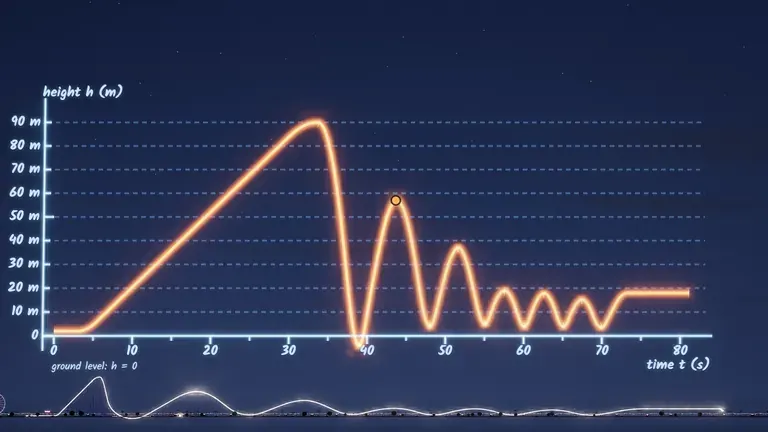 Topic 1.120 minChange in Tandem
 Topic 1.225 minRates of Change
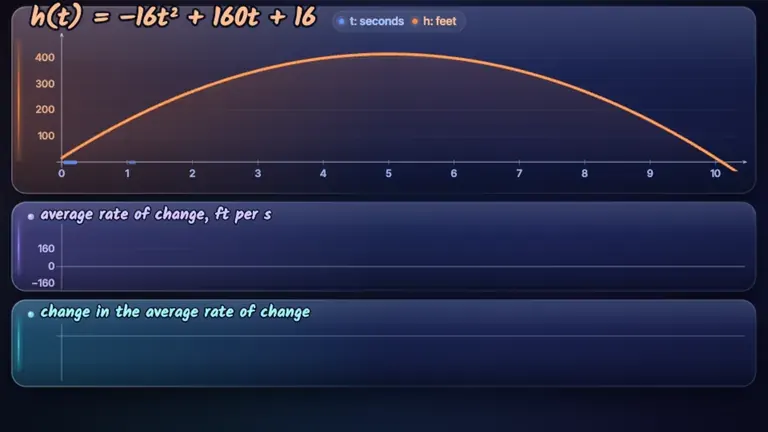 Topic 1.325 minRates of Change in Linear and Quadratic Functions
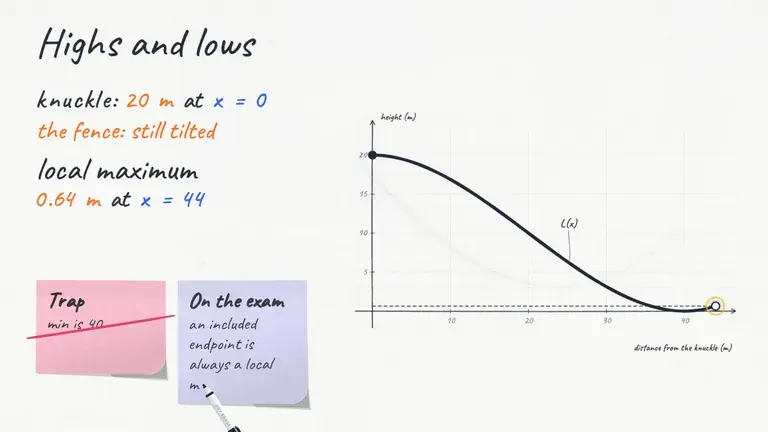 Topic 1.420 minPolynomial Functions and Rates of Change
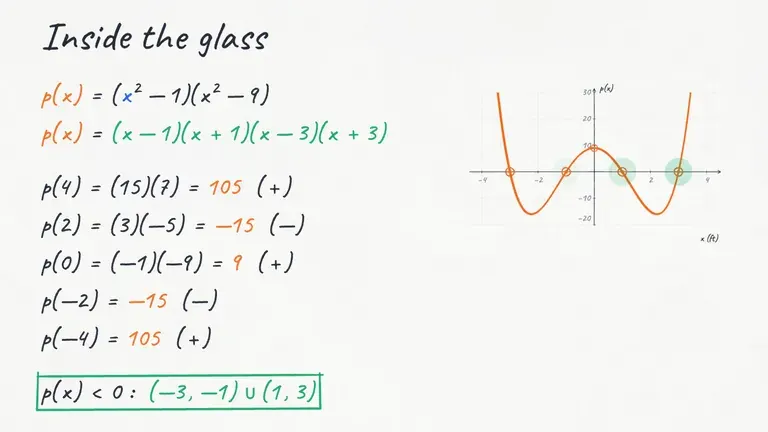 Topic 1.523 minPolynomial Functions and Complex Zeros
 Topic 1.619 minPolynomial Functions and End Behavior
 Topic 1.723 minRational Functions and End Behavior
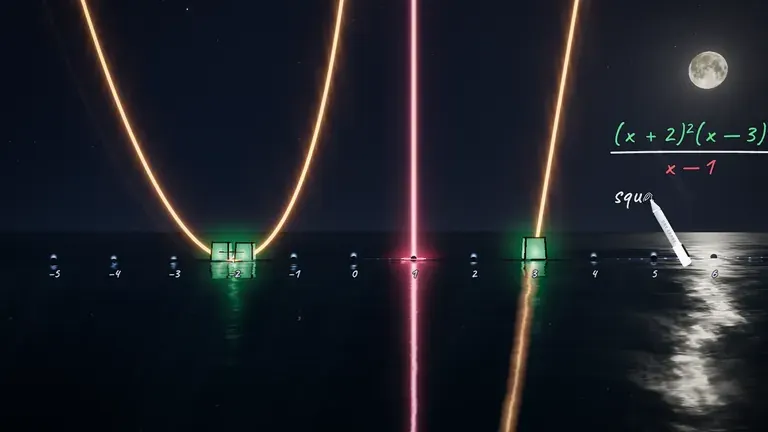 Topic 1.821 minRational Functions and Zeros
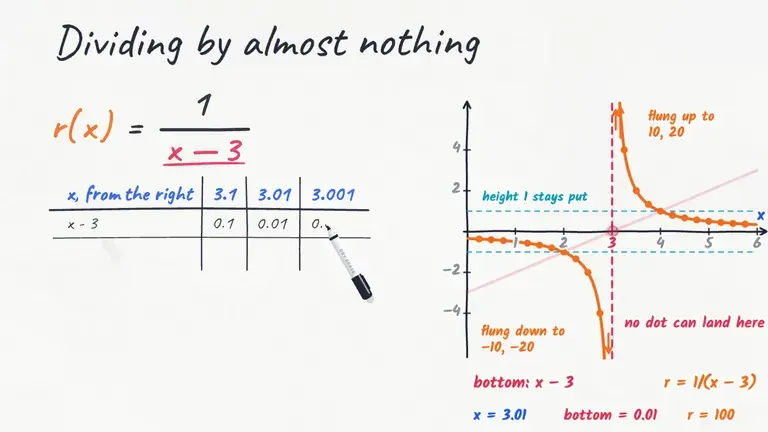 Topic 1.922 minRational Functions and Vertical Asymptotes
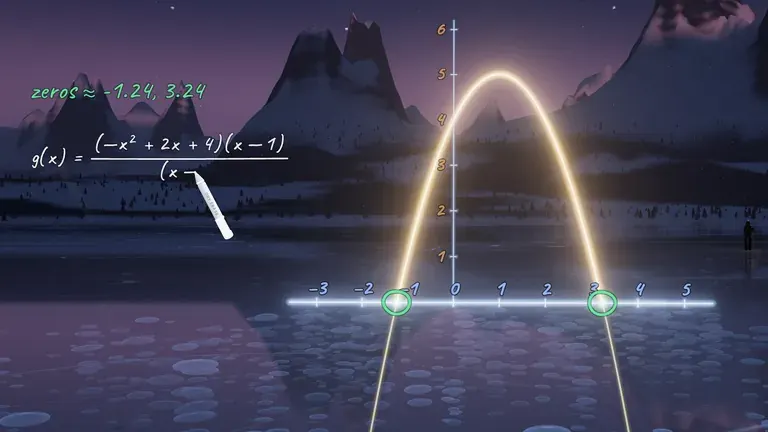 Topic 1.1018 minRational Functions and Holes
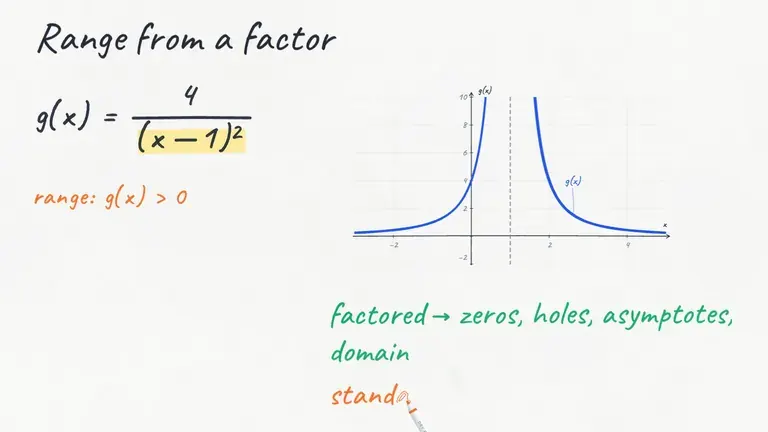 Topic 1.1124 minEquivalent Representations of Polynomial and Rational Expressions
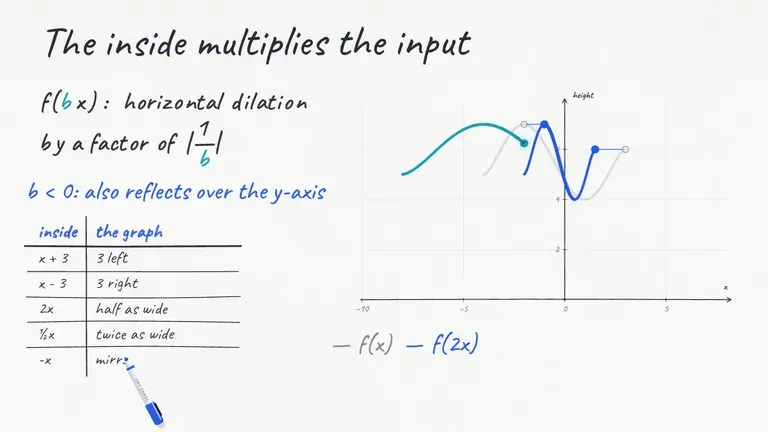 Topic 1.1219 minTransformations of Functions
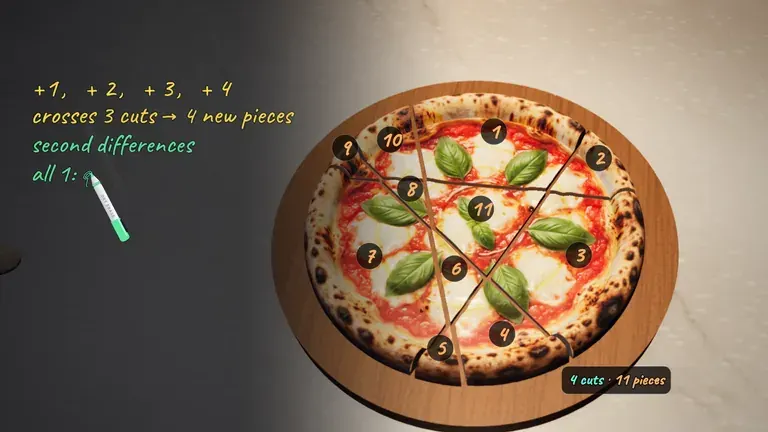 Topic 1.1319 minFunction Model Selection and Assumption Articulation
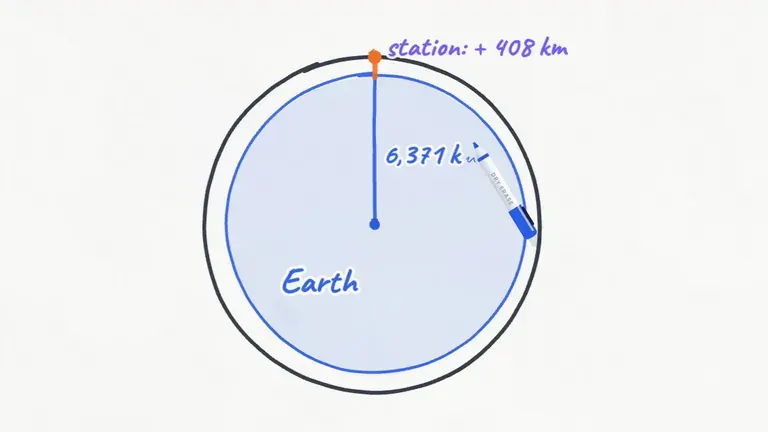 Topic 1.1423 minFunction Model Construction and Application
Unit 2: Exponential and Logarithmic Functions (25–40% of multiple choice)
Unit 2 is the only unit that can show up in three of the four free-response questions (1, 2 and 4). Know how to build an exponential function from two points, the difference between equal differences (linear) and equal ratios (exponential), composition and inverses across tables and graphs, and the log rules cold. Practice equations that are quadratics in disguise, like , which factors as . Then check each answer: can’t be negative, so only survives, and the input of a logarithm must be positive. Every Unit 2 topic:
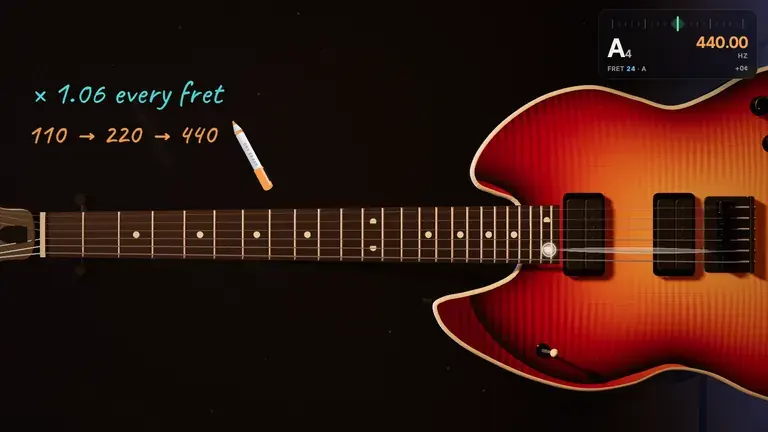 Topic 2.121 minChange in Arithmetic and Geometric Sequences
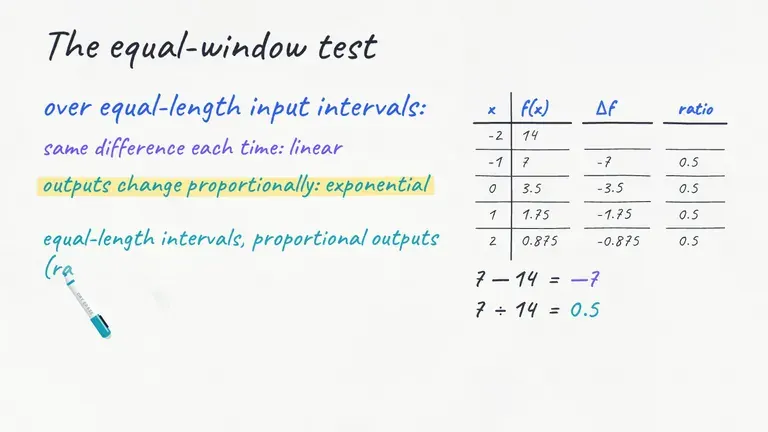 Topic 2.221 minChange in Linear and Exponential Functions
 Topic 2.322 minExponential Functions
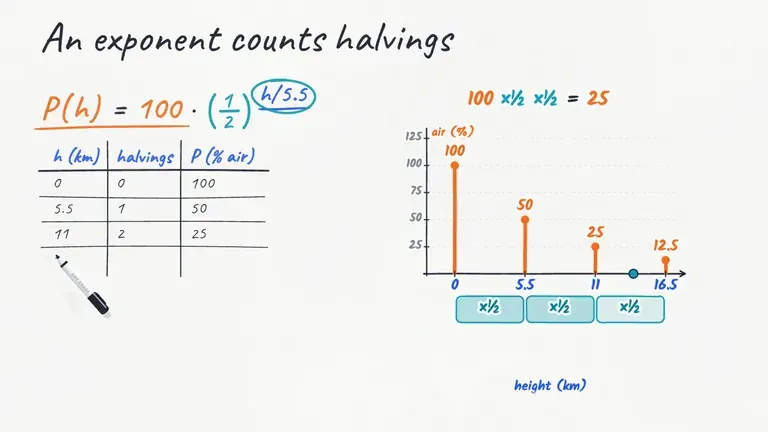 Topic 2.421 minExponential Function Manipulation
 Topic 2.523 minExponential Function Context and Data Modeling
 Topic 2.618 minCompeting Function Model Validation
 Topic 2.722 minComposition of Functions
 Topic 2.819 minInverse Functions
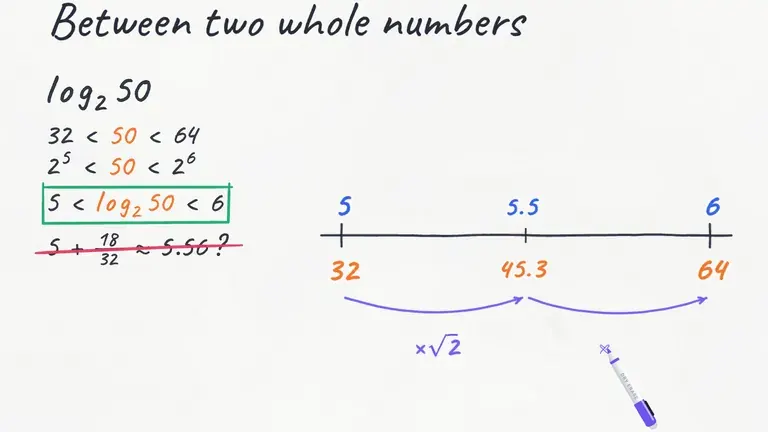 Topic 2.920 minLogarithmic Expressions
 Topic 2.1020 minInverses of Exponential Functions
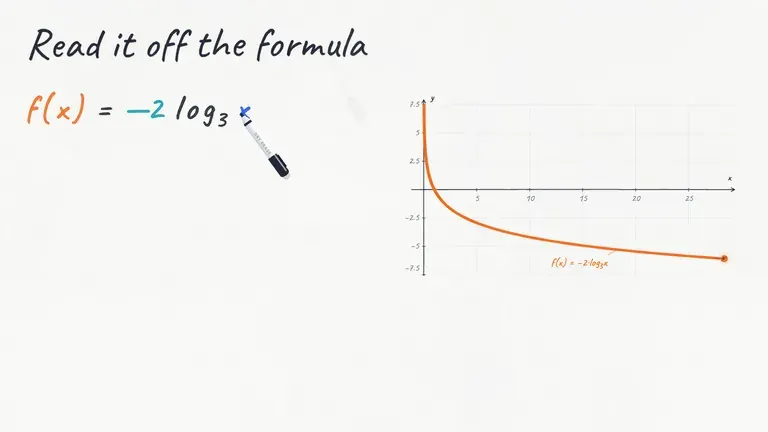 Topic 2.1121 minLogarithmic Functions
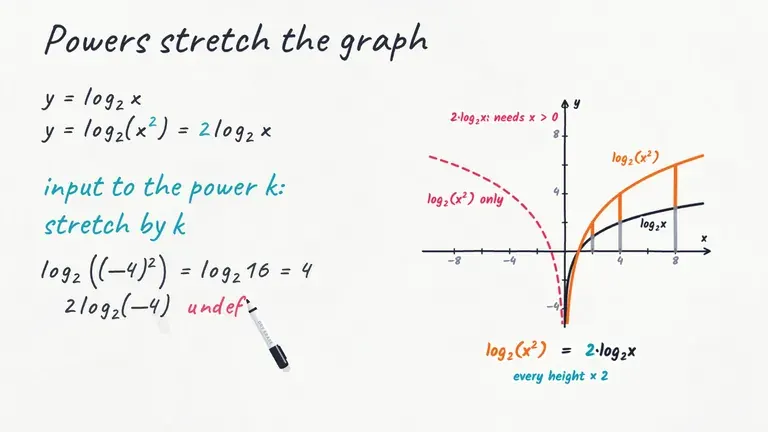 Topic 2.1221 minLogarithmic Function Manipulation
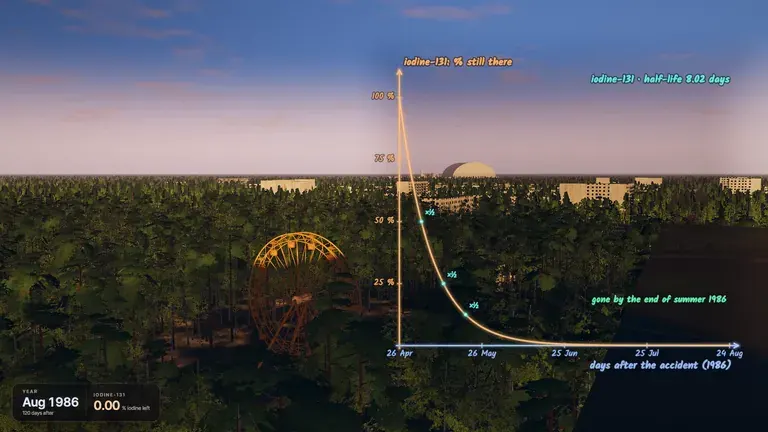 Topic 2.1320 minExponential and Logarithmic Equations and Inequalities
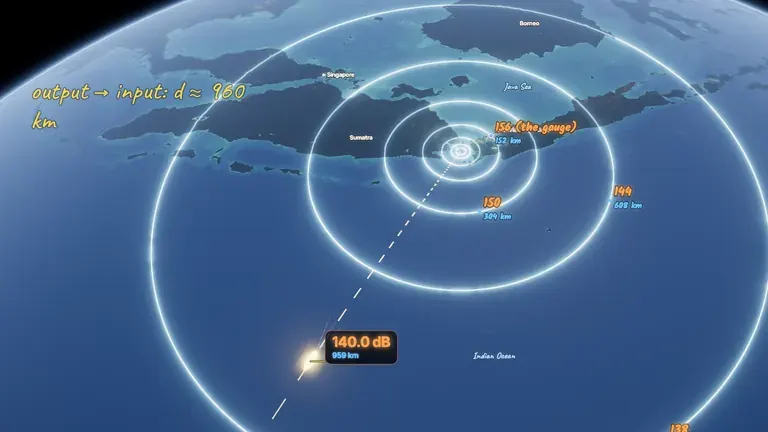 Topic 2.1420 minLogarithmic Function Context and Data Modeling
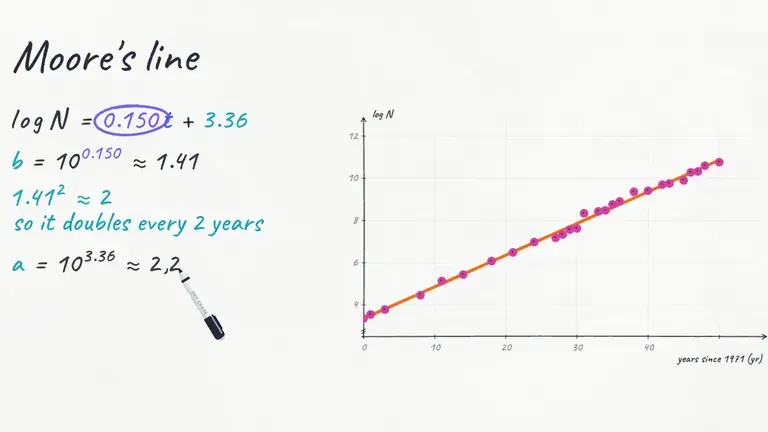 Topic 2.1519 minSemi-log Plots
Unit 3: Trigonometric and Polar Functions (30–35% of multiple choice)
Unit 3 owns question 3 and shares question 4, and both are calculator-free. Learn the unit circle until the exact values for multiples of and come without effort. For question 3, drill the point students miss most, the constants and . Getting from the period, , is the easier half; the 2024 report says few students found , which comes from where the cycle starts. Skip half-angle and tangent sum identities, which aren’t tested. Polar functions (3.13–3.15) come last in the course order, and they still count on the multiple choice. Unit 3 lessons:
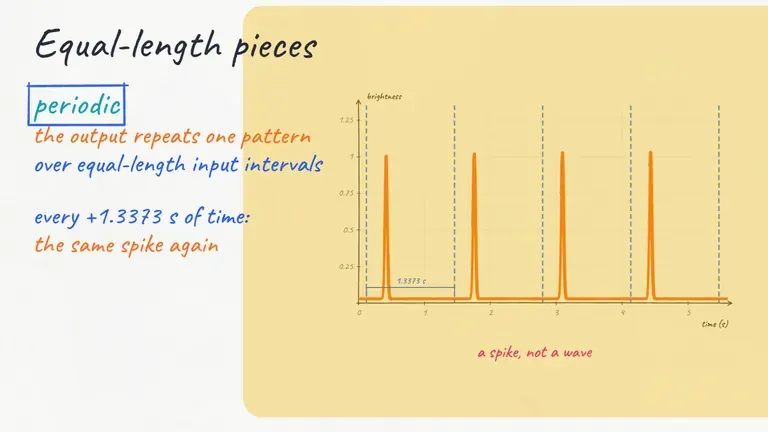 Topic 3.118 minPeriodic Phenomena
 Topic 3.219 minSine, Cosine, and Tangent
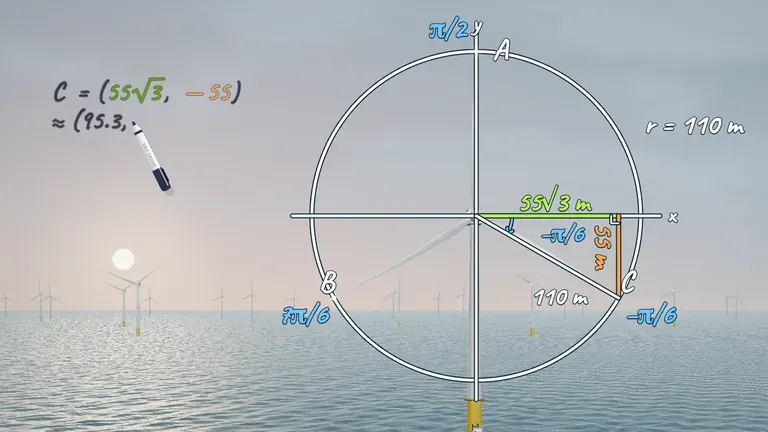 Topic 3.319 minSine and Cosine Function Values
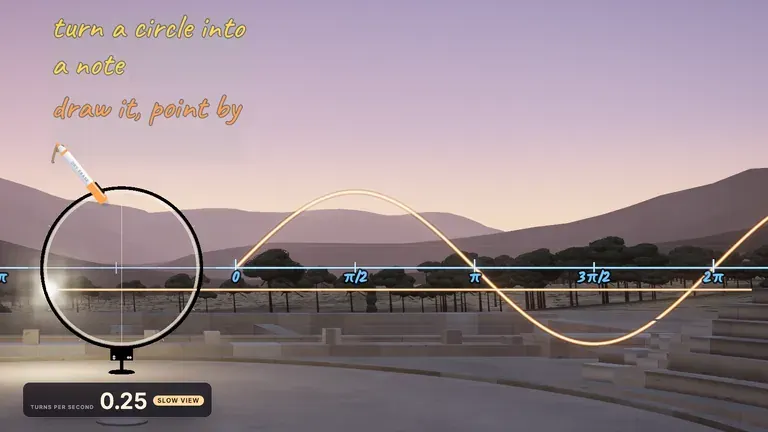 Topic 3.416 minSine and Cosine Function Graphs
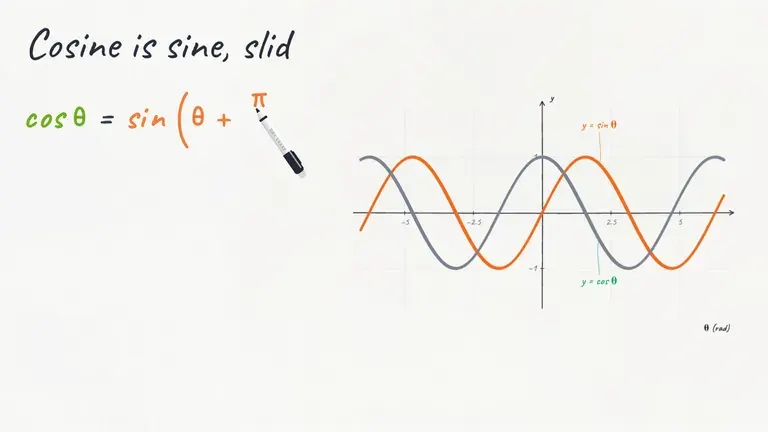 Topic 3.516 minSinusoidal Functions
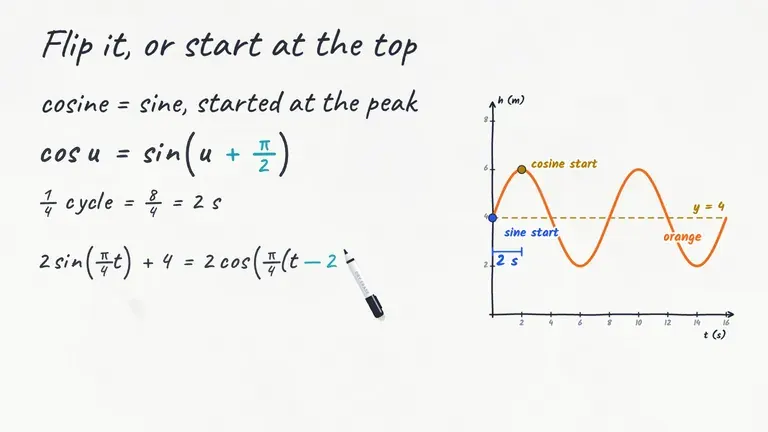 Topic 3.620 minSinusoidal Function Transformations
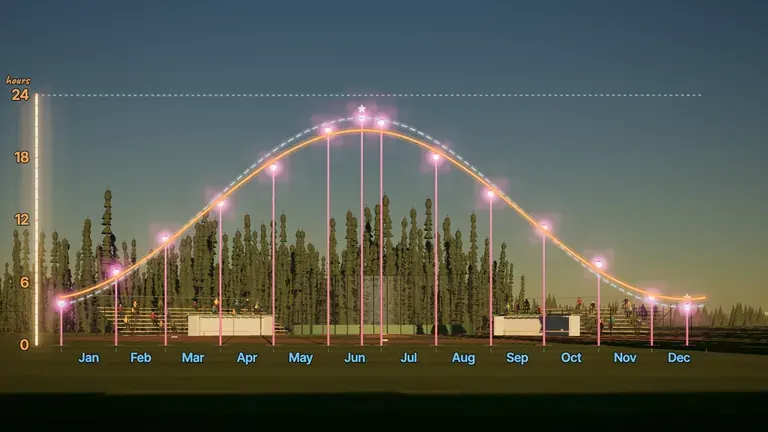 Topic 3.718 minSinusoidal Function Context and Data Modeling
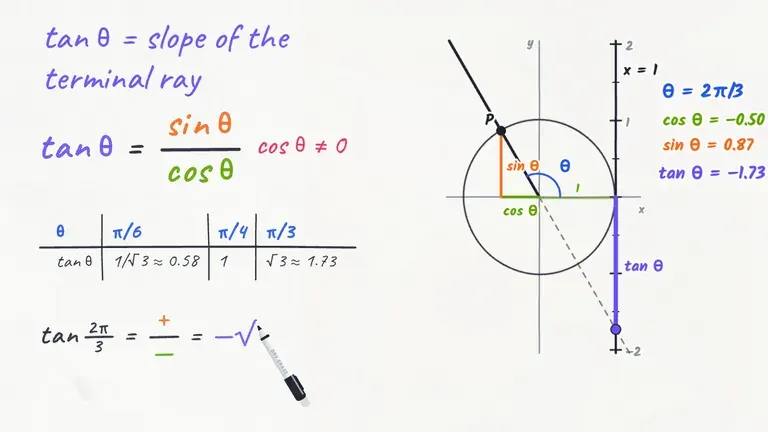 Topic 3.820 minThe Tangent Function
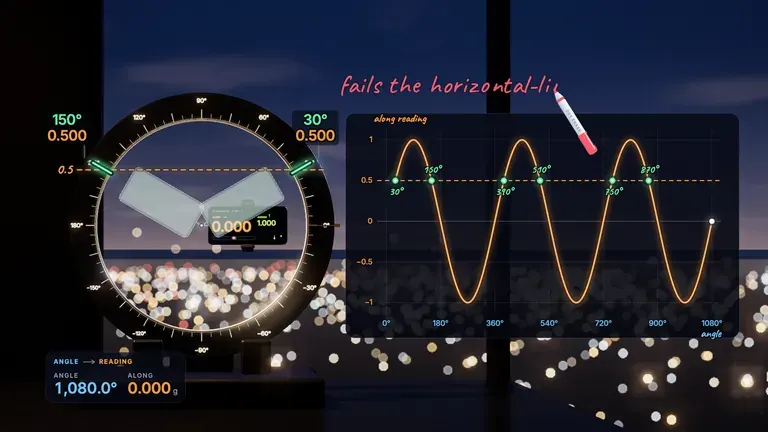 Topic 3.918 minInverse Trigonometric Functions
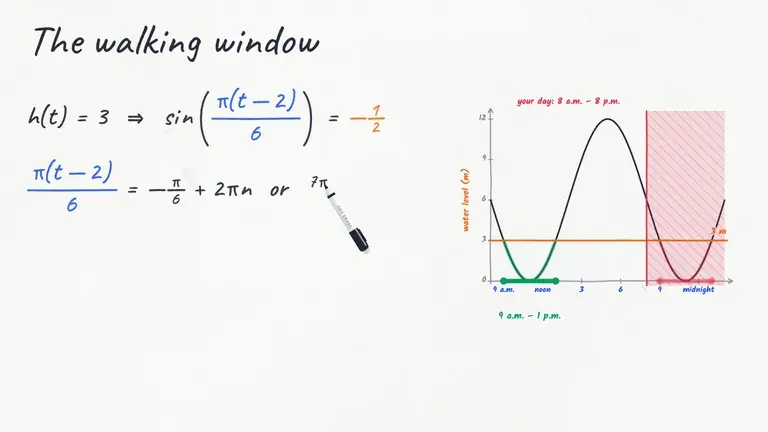 Topic 3.1019 minTrigonometric Equations and Inequalities
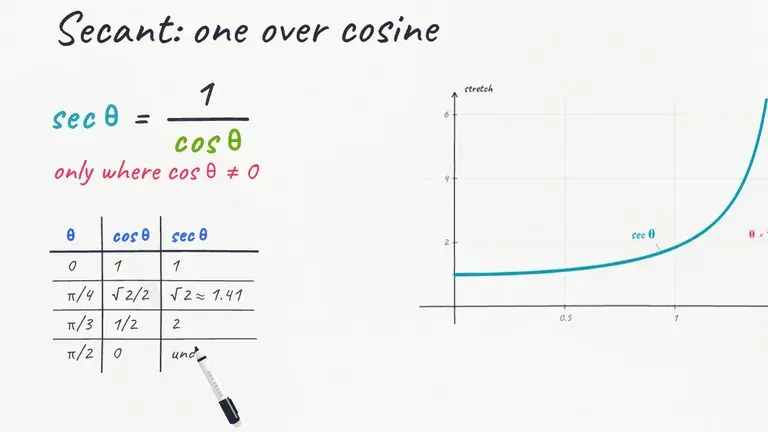 Topic 3.1118 minThe Secant, Cosecant, and Cotangent Functions
 Topic 3.1221 minEquivalent Representations of Trigonometric Functions
 Topic 3.1320 minTrigonometry and Polar Coordinates
 Topic 3.1418 minPolar Function Graphs
By time left before May 11
| Time left | What to do |
|---|---|
| More than 3 months | Keep pace with your class. After each topic, do a few questions without a calculator and write one explanation in full sentences. Keep a list of every mistake and what caused it. |
| 3 months to 6 weeks | Review one unit at a time, oldest first, using its cheat sheet and the topics on your mistake list. Do timed multiple-choice sets at the real pace: about 2¼ minutes a question without a calculator, about 3 with one. |
| 6 weeks to 2 weeks | Work the released free-response questions as timed pairs: questions 1 and 2 together in 35 minutes with a calculator, then 3 and 4 in 35 minutes without. The 2024, 2025 and 2026 releases give you six pairs. Add the course description’s updated question 2, a public example in the 2027 shape. |
| Last 2 weeks | If your teacher assigns a full practice exam in AP Classroom, take it in the real order and timing: 65, 40, 35 and 35 minutes. Click through the Bluebook test preview. Rework your mistake list without looking at the answers. |
Grade every practice question against the official scoring guidelines on AP Central, one point at a time. For each point you missed, write down exactly what was missing: an equation, a domain check, a value, a reason. Then redo that part a week later. The FRQ guide shows what earns each point on each question.
What to bring
- Two sharpened No. 2 pencils with erasers, or pens with black or dark blue ink, for the free-response booklet. Mechanical pencils aren’t allowed.
- Your testing device, fully charged, with Bluebook installed and its charger, unless your school provides the device.
- Your College Board username and password. You sign in to Bluebook on exam day, and a password saved on the device won’t work.
- Up to two approved graphing calculators, if you’d rather use one than the built-in Desmos.
- A watch, if you want one, as long as it isn’t a smartwatch and doesn’t beep.
- A government-issued or school-issued photo ID, if you’re testing at a school that isn’t yours.
Leave your phone, smartwatch, notes, food and drinks outside the room. The proctor gives you scratch paper. The full list is on the College Board’s What to Bring on AP Exam Day page.
Quick answers
When is the AP Precalculus exam in 2027?
Tuesday, May 11, 2027, in Session 1, which starts at 8 a.m. local time at most US schools. The late-testing date is Thursday, May 20.
How long is the AP Precalculus exam?
2 hours 55 minutes of testing: 1 hour 45 minutes of multiple choice, then 1 hour 10 minutes of free response.
How many questions are on the exam?
46 in all: 42 multiple-choice questions and 4 free-response questions worth 6 points each.
Is Unit 4 on the AP Precalculus exam?
No. Only Units 1, 2 and 3 are tested.
Is there a formula sheet?
No. The College Board doesn’t list one for AP Precalculus, so the identities, exact values and log rules you need have to come from memory.
Can I use Desmos?
Only the Desmos calculator built into Bluebook, and only in the two calculator parts. You can also bring an approved handheld.
Is there an AP Precalculus AB or BC?
No. There’s one AP Precalculus course and one exam. AB and BC are the two AP Calculus exams.
When do scores come out?
Most scores are expected in July 2027; the exact release date has not been announced.
Sources
- AP Precalculus Course and Exam Description, effective fall 2026 (PDF)
- AP Precalculus Course and Exam Description: Clarifications and Corrections, fall 2026 (PDF)
- AP Precalculus: The Exam (AP Central)
- AP Precalculus: About the Exam (AP Students)
- AP Precalculus course page: units, weights, prerequisites (AP Students)
- 2027 AP Exam Dates (AP Central)
- 2027 AP Exam Start Times (AP Central)
- 2027 AP Exam Late-Testing Dates (AP Central)
- Graphing Calculators for AP Precalculus (AP Central)
- AP Exams Calculator Policy (AP Central)
- Reference Information for Specific AP Exams (AP Central)
- AP Exam Timing and Structure: multiple-choice scoring (AP Students)
- How are AP Exams scored? (AP Students)
- AP Precalculus Score Distributions (AP Students)
- 2026 AP Score Distributions, all subjects (AP Students)
- 2025 AP Precalculus Scoring Statistics (PDF)
- 2024 AP Precalculus Scoring Statistics (PDF)
- 2025 AP Precalculus Chief Reader Report (PDF)
- 2024 AP Precalculus Chief Reader Report (PDF)
- 2026 AP Precalculus Free-Response Questions, with the exam directions (PDF)
- AP Precalculus past free-response questions and scoring guidelines, 2024–2026 (AP Central)
- AP Calculus BC course page: Unit 9, parametric equations, polar coordinates and vector-valued functions (AP Students)
- What to Bring on AP Exam Day (AP Students)
- View Your AP Scores: scores released in July (AP Students)
- AP Chemistry score distributions, AP Students: subject-specific 2026 results