
Topic 8.7 key terms
- predominant form
- [A-]/[HA] = 10pH⁻pKa: when pH < pKa the acid form HA has the higher concentration; when pH > pKa the base form A⁻ does; at pH = pKa they are equal.
- acid–base indicator
- A weak acid HIn whose protonated and deprotonated forms have different colors, so its color shows which form predominates at the solution's pH. It changes over roughly pKa ± 1.
- choosing an indicator
- For an accurate titration, choose an indicator whose pKa (color-change range) is close to the pH at the equivalence point, not the analyte's pKa.
Transcript
1,409 words · 5 parts
pH and pKa: which form wins
Let’s go back to the night market, because that’s the question this glass has been answering all along. The lime changed the pH, and the pigment, with pKa values of its own, responded. To see it with real numbers, let’s use acetic acid. Its pKa is four point seven six, and we get to choose the pH.
Each of these twenty-two molecules stands for a huge number of real ones, pink with the proton on and blue with it off. We can get the rule straight from Ka. Divide both sides by the hydronium concentration, and the ratio of the base form to the acid form is just Ka over hydronium.
Ka is ten to the negative pKa and hydronium is ten to the negative pH, and dividing powers of ten subtracts their exponents, so that ratio comes out as ten to the pH minus pKa. That’s the Henderson–Hasselbalch equation from your equation sheet, solved for the ratio. So when the pH equals the pKa, the power is zero, ten to the zero is one, and half of the molecules are in each form.
One unit below the pKa, the ratio is ten to the negative one, so the acid form wins ten to one, because there are more protons around for the molecules to hold. And one unit above the pKa, it flips the other way, ten to one, and the base form wins. And look closely, because the molecules keep trading protons the whole time, but the count holds steady, since this is an equilibrium.
So below the pKa the acid form wins, above it the base form wins, and every unit of difference is another factor of ten, so two units below the pKa it’s one to a hundred, and two units above it’s a hundred to one. Let’s do one. Acetic acid in a solution at pH five point seven six is exactly one unit above its pKa, so acetate outnumbers acetic acid ten to one, and ten out of every eleven molecules, about ninety-one percent, are in the base form.
And that’s a little strange, because pH five point seven six is acidic, and still most of the acetic acid has lost its proton. The only line that matters is the molecule’s own pKa, and this solution sits a whole unit above it.
Now let’s put structure and pH together. Put acetic acid and chloroacetic acid each in a solution held at pH three point eight. Which form do you think wins for each one?
Acetic acid’s pKa is four point seven six. Three point eight is about one unit below it. Below the pKa, the acid form wins, about ten to one. Chloroacetic acid’s pKa is two point eight five. Three point eight is about one unit above it.
Above the pKa, the base form wins, about ten to one. Same pH, opposite winners. The only difference is one chlorine atom. The structure sets the pKa. The pH decides which form wins.
Let’s see you do one. Acetic acid, pKa four point seven six, is in a solution held at pH two point seven six. What’s the ratio of acetate to acetic acid? Now you set the pH. The window’s holding chloroacetic acid now, so drag the dial until chloroacetate outnumbers chloroacetic acid ten to one.
Weak bases: ammonium and ammonia
The same rule works for bases, as long as you compare the right numbers. Ammonia’s Kb is one point eight times ten to the negative five, and to use our rule we need the pKa of its conjugate acid, ammonium. Ammonia’s pKb is the negative log of that, four point seven four, and at twenty-five degrees a conjugate pair’s pKa and pKb add up to fourteen, so ammonium’s pKa is nine point two six.
So in a solution at pH eight point two six, which is basic, we’re still a full unit below ammonium’s pKa, and ammonium wins ten to one. Raise this solution to pH ten point two six. Which form wins? Don’t compare the pH with the pKb. The pH always goes with the pKa of the acid form, here nine point two six.
Indicators: molecules that wear their form
Now we can say what the drink’s pigment is doing. It’s an acid–base indicator, a weak acid whose two forms have different colors, so you can actually see which form is winning. Methyl orange is a classic one. Its acid form, H I N, is red. Its base form, I N minus, is yellow.
Its pKa is about three point four. At pH two point four, one unit below, red wins ten to one. You see red. At three point four the two forms are equal and you see orange, and at four point four the yellow form wins ten to one.
So an indicator changes color over about two pH units, from roughly one unit below its pKa to one unit above, and for methyl orange the range you’ll see on the AP exam is three point one to four point four. Methyl orange, with a pKa of three point four, goes into a solution at pH five point four. What color will the solution be?
The butterfly-pea pigment does the same thing with more forms. Measurements on an extract of the flower found it blue from about pH five to eight, purple around three to four, and magenta below three, so the lime pushed the drink’s pH down through those changes, and the proton-on forms took over. Because the pigment has several forms, it doesn’t have one single pKa, and you can’t read an exact pH off its color, but the idea is the same, since more protons around means more molecules with their proton on.
Choosing the right indicator
Indicators earn their keep in titrations. Here’s twenty-five milliliters of point one oh oh molar acetic acid with point one oh oh molar sodium hydroxide dripping in. It starts at pH two point eight eight, and halfway to equivalence, at twelve and a half milliliters, the pH equals the pKa, four point seven six.
At twenty-five milliliters the acid runs out and the flask holds acetate, a weak base, so the equivalence point is at pH eight point seven three. So which indicator should we use? A lot of students pick one whose pKa matches the acid’s, four point seven six, because that number is right there on the curve. Methyl orange isn’t far below that, and look where it changes color, long before we’ve added enough base.
The color change has to happen at the equivalence point, because that’s the moment we’re trying to catch, so the indicator’s pKa, and the range around it, should sit near the pH at equivalence. Thymol blue changes between eight point oh and nine point six, right across the steep part.
And the 2026 AP exam asked almost exactly this, about a student who titrated nitrous acid with sodium hydroxide using methyl orange. The answer that earned the point says disagree, because methyl orange changes between three point one and four point four, but the equivalence point is around pH eight to nine. And Clayton yellow, at about twelve to thirteen, would only start to change long after equivalence, once there’s lots of extra base in the flask.
Here’s a different titration. A student titrates ammonia with hydrochloric acid, and the equivalence point is at pH five point two eight. Which indicator is the best choice?
Back to the night market
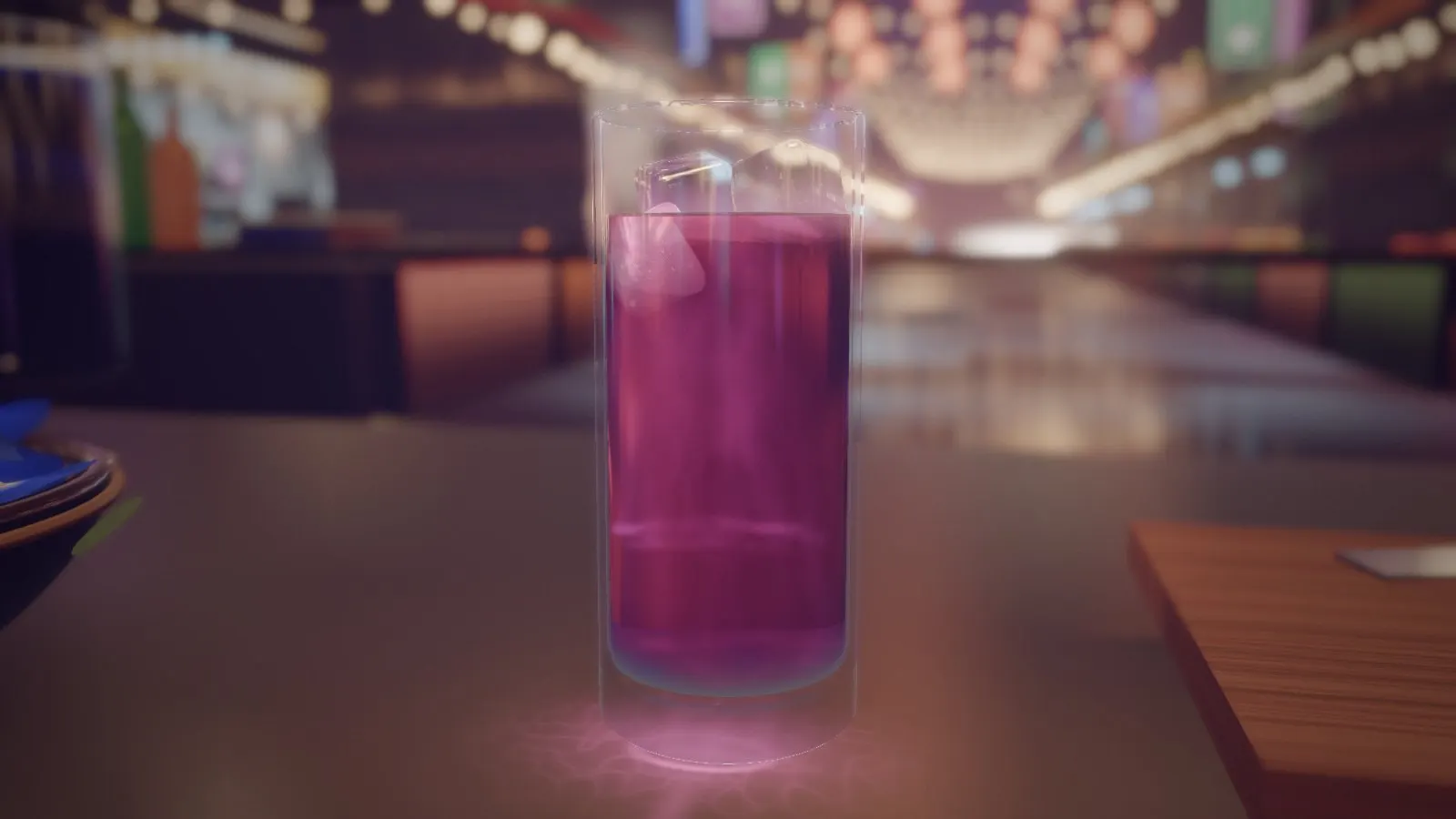
So let’s go back to where we started: a fresh glass of blue tea. And this time, you know everything that’s about to happen. Before you squeeze, make a call. Once the lime is in, which form of the pigment is going to win?
Now it’s your turn. Squeeze the lime yourself, and see if you were right. So here’s the whole story. The lime’s citric acid gives up the protons on its carboxyl groups, because what’s left behind shares its charge between two oxygens. Those protons end up as hydronium, the pH drops below the pigment’s color changes, and the proton-on forms win, so the drink turns pink.
A molecule’s structure decides how tightly it holds its proton, and that’s its pKa, while the solution decides how many protons are around, and that’s the pH. Put the two side by side and you can predict which form wins, in a glass of tea or in a titration flask. So the next time you see a drink change color, look closely. You’ll know exactly which molecule is holding the protons.